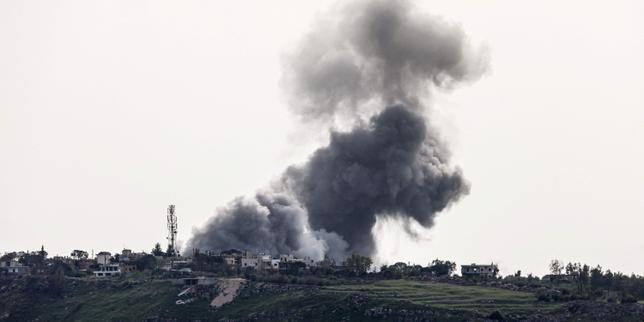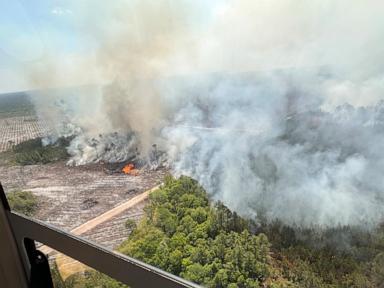
The headlines are a masterclass in atmospheric ignorance. "Rain slows wildfires," they scream, as if a few inches of water over a weekend solved a systemic failure of forest management. Every major news outlet treats a storm like a divine intervention that resets the clock on disaster. They are dead wrong.
Rain isn't the savior of the Georgia timberlands. It is a sedative. It lulls the public into a false sense of security, halts the political momentum required for aggressive fuel reduction, and ensures that when the ground dries out in ten days, the next blaze has even more thick, lush undergrowth to consume. You might also find this connected coverage insightful: The White House Blames Left Wing Hatred for Press Gala Shooting.
The Rain-Induced Amnesia Loop
The "lazy consensus" among environmental reporters is that fire is a binary event: either it is burning (bad) or it is raining (good). This ignores the biological reality of the sprawling Georgia landscape. In the Southeast, moisture doesn't just put out fires; it grows fuel.
When a heavy weekend rain hits a "sprawling" fire, it creates a temporary reprieve that stops the literal flames but accelerates the carbon buildup. This is the Growth Paradox. We celebrate a wet spring or a stormy autumn, ignoring the fact that we are just charging a biological battery. As reported in detailed coverage by NBC News, the effects are worth noting.
I have spent years looking at the data on controlled burns and fuel loading. The moment the rain stops, the state’s PR machine stops talking about fire mitigation. Funding for prescribed burns—the only actual tool we have to prevent catastrophic crown fires—gets pushed to the back burner because the immediate "crisis" has evaporated. We are managing by reaction rather than by ecology.
Why Slowing Down is Actually Speeding Up
The competitor articles love to use the word "slows."
- "Rain slows 2 sprawling Georgia wildfires."
Slowing a fire is not the same as solving the fire. In some ways, a fire that is "slowed" by moisture becomes a tactical nightmare for crews on the ground. It creates heavy smoke, poor visibility, and prevents the "clean" burn-off of organic material. A low-intensity fire that creeps through the understory is actually healthy for the longleaf pine ecosystem. When we cheer for rain to "stop" these fires, we are often stopping a natural process that would have prevented a much larger, uncontrollable inferno five years down the line.
We have pathologized fire. We treat it like an intruder rather than a resident. By relying on rain to do the heavy lifting, we ignore the $250 billion problem of the Wildland-Urban Interface (WUI). People are building homes in the middle of tinderboxes, then expecting the clouds to bail them out of their bad real estate decisions.
The Myth of the "New Blaze"
The reports cite "new blazes" starting even as the rain falls. They frame this as a cruel irony of nature. It isn't. It is the result of a landscape so choked with debris that it has become hydrophobic.
When a forest is neglected—when we don't allow it to burn for decades—the soil develops a waxy coating. Rain doesn't soak in; it runs off. You can have a literal flood on the surface while the roots and deep duff layers remain bone dry. Lightning strikes, or a stray cigarette, and the fire starts under the wet canopy.
This isn't a freak occurrence. It is the predictable outcome of the Suppression Trap.
- We put out every fire immediately.
- Fuel builds up to unnatural levels.
- The ecosystem loses its ability to absorb moisture.
- "New blazes" start regardless of the weather.
If you want to stop the "sprawling" fires, you have to stop praying for rain and start demanding more smoke.
The Business of Disruption: Forest Management as Tech
We treat forest management like it’s 1950. We use shovels and planes. The tech industry talks about "digital twins" for factories, but we don't have a functional, real-time heat map of the Georgia understory.
The real disruption isn't in a new type of fire retardant. It is in the aggressive, unapologetic use of LiDAR (Light Detection and Ranging) to map fuel density in every square meter of the state. We should be treating the forest like a supply chain. If the "inventory" (dead wood and pine straw) is too high, we need to move it.
The industry is terrified of the liability of prescribed burns. One stray spark from a controlled fire makes the 6 o'clock news. Ten thousand acres of "wild" fire fueled by neglect is treated as an "Act of God." We have incentivized cowardice.
Stop Asking if the Rain Helped
People always ask, "Will this rain end the fire season?"
It's the wrong question. It’s like asking if a $20 bill will end your bankruptcy. It's a temporary liquidity injection that doesn't touch the underlying debt.
The honest answer is that the rain made the 2027 fire season significantly more dangerous. It provided the nitrogen and water necessary for the invasive shrubs and thickets to grow an extra six inches. It gave the politicians an excuse to slash the budget for mechanical thinning.
If you are a homeowner in the Georgia woods, the rain is your enemy. It’s the period of time where you stop clearing your defensible space because you think the danger has passed. It’s the time where the state forgets that it’s sitting on a powder keg.
The Brutal Truth of the WUI
We have to stop rebuilding in the burn zones. The insurance industry is finally waking up to this, but the "news" cycle is still stuck in a cycle of pity.
Imagine a scenario where we treated wildfire risk like flood zones. In high-risk flood areas, you can’t get a mortgage without astronomical insurance. In the Georgia woods, we let developers clear-cut a patch of forest, drop 500 "luxury" homes in it, and then act surprised when the local fire department can't protect a $20 million cul-de-sac from a wall of flame.
The rain doesn't change the physics of a crown fire. It doesn't change the fact that pine needles have a high resin content and burn at temperatures exceeding 1,500°F.
Actionable Advice for the Uncomfortable
If you actually care about the Georgia landscape, stop checking the Doppler radar and start checking the state’s burn plan.
- Demand more fire, not less. Support agencies that conduct prescribed burns during the "shoulder seasons." If your neighborhood smells like smoke in February, that is the smell of a disaster being averted.
- Defund the suppression-only model. Moving money from "emergency response" to "pre-suppression" is the only way to break the cycle.
- Harden your assets. If your roof is covered in the very pine needles that "slowed" fires are supposed to ignore, you are part of the problem.
The "sprawling" fires are a symptom. The rain is a cosmetic fix. The only way out is through a scorched-earth policy of radical forest management that prioritizes ecological reality over the comfort of a rainy weekend forecast.
Put down the umbrella. Pick up a drip torch.