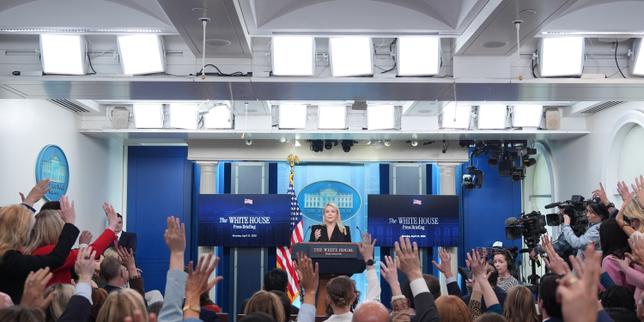
Political violence just hit a new, terrifying peak. When a gunman opened fire at the press gala, the shockwaves didn't just stay in the room. They rippled straight to the White House briefing room. The administration isn't pulling punches. They're pointing the finger directly at what they call a "cult of hate" bubbling up from the political left. This isn't just another heated press release. It's a fundamental shift in how the executive branch talks about domestic radicalization.
You've probably seen the headlines, but the nuance is getting lost in the noise. This wasn't just an attack on individuals. It was an attack on the very concept of a free press, occurring at an event meant to celebrate the First Amendment. The White House's decision to blame "left-wing hatred" specifically marks a departure from the usual calls for "unity" we hear after national tragedies. They’re taking a side. They're making a claim about where the danger actually lives in 2026. Don't miss our previous post on this related article.
The Rhetoric Behind the Press Gala Attack
Words have consequences. That's the core of the White House's argument. According to official statements, the shooter didn't act in a vacuum. The administration claims that months of vitriolic rhetoric against journalists who don't align with specific progressive agendas created a permission structure for violence. They’re basically saying that if you spent a year calling the press "enemies of the people" from the other side of the aisle, you can't be surprised when someone takes it literally.
It's a bold move. Usually, after a shooting, the focus is on gun laws or mental health. Those things matter, sure. But the White House wants to talk about the "ecosystem of grievance." They're highlighting specific social media trends and activist circles where the language has shifted from disagreement to dehumanization. When you stop seeing a reporter as a person and start seeing them as a "tool of the state," the safety barriers of a civilized society start to crumble. To read more about the context of this, The Guardian offers an informative summary.
Why the Cult of Hate Narrative Matters Right Now
The phrase "cult of hate" isn't accidental. It’s designed to stick. By framing the radical left as a cult-like entity, the administration is trying to marginalize these groups. They’re drawing a line between the "reasonable left" and what they describe as a fringe that has lost its way. This matters because it changes the investigative focus. Federal law enforcement is now under immense pressure to track these groups with the same intensity they’ve used for far-right extremists in the past.
Critics say this is just a distraction. They argue the White House is trying to avoid talking about their own policy failures. But if you look at the evidence presented in the initial briefings, the shooter’s digital footprint was a mess of radical manifestos and extremist forum posts. It wasn’t just "politics as usual." It was a deep-seated obsession with silencing dissent through force.
The Role of Social Media Echo Chambers
We talk about echo chambers all the time, but we rarely talk about the specific mechanics of how they radicalize. It’s not just about seeing things you agree with. It’s about the constant escalation of tone. In these groups, the most extreme voice gets the most engagement. The person calling for peace gets ignored. The person calling for "direct action" gets the likes.
- Algorithms prioritize high-arousal emotions like anger and fear.
- The lack of face-to-face interaction makes it easier to dehumanize "the other."
- Anonymity provides a shield for saying things that would get you fired or shunned in real life.
The shooter was reportedly active in several of these high-intensity digital spaces. These weren't just political discussion groups. They were pressure cookers.
Breaking Down the White House Statement
The official response was direct. No flowery language. No "thoughts and prayers" filler. They called the attack a "predictable outcome of a culture that rewards rage." This is a pivot. In the past, administrations were careful to avoid broad-brushing entire political movements. Not anymore. The gloves are off.
The statement pointed to specific instances where activists disrupted press events or harassed journalists at their homes. To the White House, the gala shooting was just the logical conclusion of those smaller, unchecked acts of aggression. If you let people throw water at reporters in the street without consequence, eventually someone’s going to bring a gun to a ballroom. It’s the "broken windows theory" applied to political discourse.
The Media Under Fire Literally and Figuratively
Journalists are in a weird spot. On one hand, they’re the victims here. On the other, the White House is using the attack to critique the very media environment these journalists work in. It’s a bit of a "we told you so" moment from the administration. They've been complaining about biased reporting for years, and now they’re linking that bias—and the reaction to it—to physical danger.
The gala was supposed to be a night of celebration. Instead, it became a crime scene. This sends a message to every young person thinking about going into journalism: your job is now a high-risk profession. That’s a win for the extremists. They want to scare people away from the truth. They want to make the cost of reporting so high that only the bravest (or most radicalized) stay in the game.
What Happens When the Blame Game Turns Deadly
Blaming the "left" isn't just about winning an argument. It has real-world implications for how we police our country. If the government truly believes that a significant portion of the political spectrum is trending toward violence, expect to see more surveillance. Expect to see more "preventative" actions. This is how civil liberties start to get tucked away in the name of safety.
The White House is betting that the public is tired of the chaos. They think people are ready for a "law and order" approach that targets the sources of radicalization, regardless of which side of the aisle they’re on. But by naming the left specifically, they’ve ensured that the response will be partisan. The conversation won't be about how to stop shootings; it'll be about whether the White House is "attacking its political enemies."
Moving Beyond the Political Finger Pointing
If we’re going to actually solve this, we have to look past the press releases. The White House is right that hate is a problem. They’re right that rhetoric has reached a boiling point. But blaming one side exclusively is a move for the polls, not for the peace.
Real security for journalists and public figures requires a two-pronged approach. First, there needs to be a serious crackdown on online platforms that allow for the planning of violence. Second, we need a cultural reset. We have to stop rewarding the most extreme voices in our personal lives and our professional networks.
Stop engaging with the rage-bait. If an account is calling for violence or celebrating "street justice," block it. Don't share it to "expose" it. That just gives them more reach. The "cult of hate" only grows when it has an audience. If you want to protect the press and the democratic process, start by demanding better from the people you follow and the leaders you support. The White House made their stance clear—now the rest of the country has to decide if they’re going to keep feeding the fire or finally start putting it out.