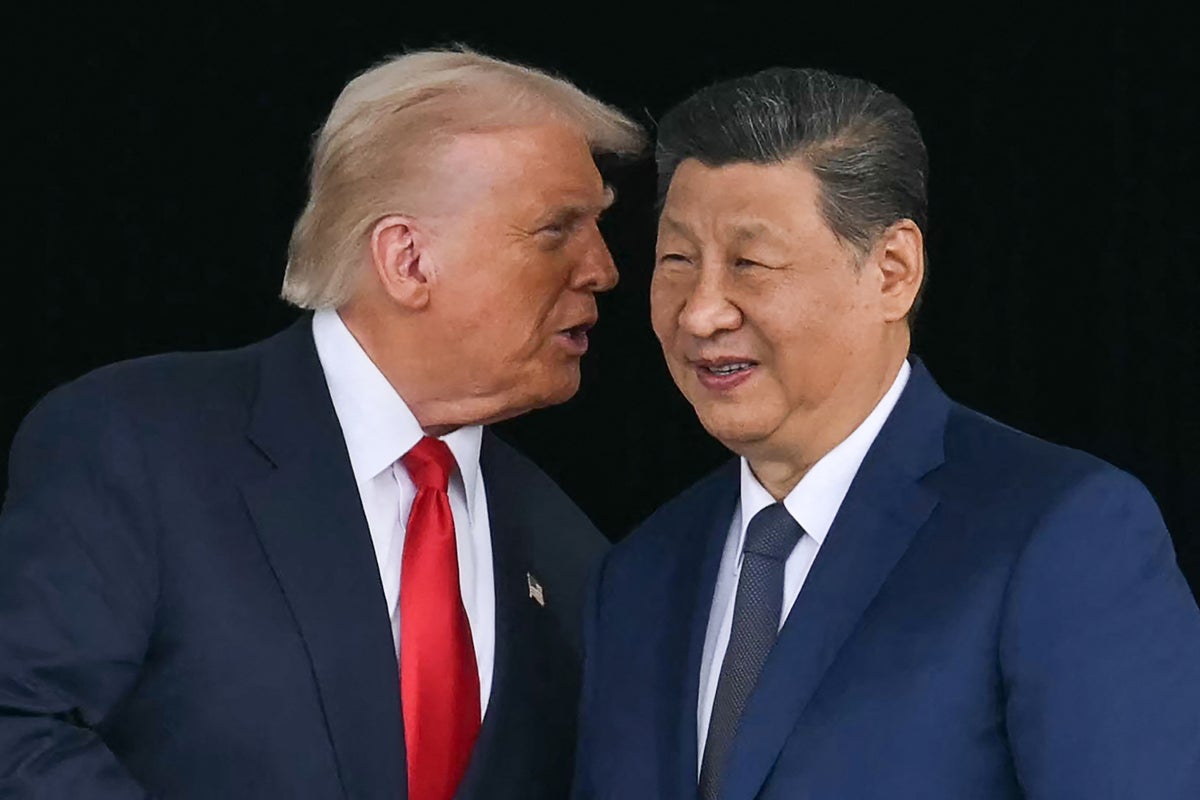
The push by Congressional Democrats to secure a preemptive ban on Chinese Electric Vehicles (EVs) ahead of the Beijing summit represents a pivot from traditional tariff-based protectionism toward a strategy of total market exclusion. This demand is not merely a political maneuver; it is a response to an asymmetric cost advantage that threatens to decouple the American automotive sector from global price benchmarks. The current friction rests on three structural pillars: state-sponsored overcapacity, the vertical integration of the Chinese battery supply chain, and the national security implications of software-defined vehicles.
The Cost Function Advantage
The primary driver of the call for a ban is the inability of Western manufacturers to compete with the Chinese "Cost-Integrated Model." Unlike traditional OEMs that rely on a fragmented tier-one supplier network, Chinese firms like BYD and Xiaomi utilize a high degree of vertical integration that internalizes the margin usually captured by third parties. If you found value in this post, you might want to read: this related article.
- Subsidized Capital Expenditure: Estimates of Chinese state support for the EV sector between 2009 and 2023 exceed $230 billion. This capital injection creates an environment where firms can operate with negative or razor-thin margins to capture market share, a luxury not afforded to publicly traded American firms beholden to quarterly earnings reports.
- Battery Dominance: China controls approximately 70% of global lithium-ion battery production and nearly 85% of the processing for essential minerals like cobalt and graphite. For a domestic U.S. manufacturer, the battery represents 35% to 40% of the total vehicle cost. A Chinese OEM, sourcing from its own internal divisions or state-favored local partners, can reduce this cost component by 20% to 30% compared to a U.S. counterpart.
- Labor and Energy Arbitrage: While automation is increasing, the operational expenditure (OPEX) of Chinese manufacturing facilities remains significantly lower due to a combination of lower industrial electricity rates and a massive engineering talent pool that scales production faster than Western counterparts.
This creates a price floor for American-made EVs that is fundamentally higher than the ceiling Chinese firms require for profitability. Tariffs, even at 100%, may fail to bridge this gap if the Chinese domestic market experiences a significant contraction, forcing firms to dump inventory at any price to maintain factory utilization rates.
Data Sovereignty as a Trade Barrier
The shift from mechanical vehicles to software-defined vehicles (SDVs) has transformed the car into a mobile data node. This is the pivot point where trade policy merges with national security. Modern EVs are equipped with an array of sensors, including LiDAR, ultrasonic sensors, and high-definition cameras, all managed by centralized compute platforms. For another angle on this story, see the recent update from Financial Times.
The Democratic caucus argues that the risks associated with these systems are dual-natured. First, the collection of geospatial data by a foreign adversary poses a risk to sensitive infrastructure. Second, the reliance on over-the-air (OTA) updates means that the operational integrity of the vehicle fleet depends on software servers located outside domestic jurisdiction. If a foreign entity maintains the "kill switch" for a significant portion of the national transportation network, the economic vulnerability becomes a matter of defense policy.
A ban, rather than a tariff, addresses the binary nature of this risk. You cannot partially mitigate a data leak via a tax; the only resolution in a high-trust environment is the complete removal of the hardware-software stack from the ecosystem.
The Counterparty Logic of the Beijing Summit
The timing of this pressure—coinciding with a presidential meeting in Beijing—serves as a tactical "poison pill" for negotiations. By signaling a domestic consensus for a total ban, the administration gains a credible threat to use as leverage for concessions in other sectors, such as semiconductor exports or fentanyl precursor regulation.
However, a total ban carries significant systemic risks that are often obscured by political rhetoric:
- Innovation Stagnation: The removal of the most efficient global competitors reduces the pressure on Detroit-based OEMs to innovate. In a protected market, the incentive to drive down battery costs or improve software efficiency diminishes, potentially leaving the U.S. automotive sector as a regional anomaly—expensive and technologically lagging behind the rest of the world.
- Retaliatory Escalation: China remains a critical market for American icons like Tesla and Apple, as well as a primary destination for agricultural exports. A ban on cars could trigger a reciprocal ban on American high-tech services or critical minerals.
- The Mexico Backdoor: Under the USMCA framework, Chinese firms are already investing heavily in Mexican manufacturing hubs. Unless the "Rules of Origin" are radically redefined to account for the ultimate parent company rather than the site of assembly, a ban on "Chinese cars" may be bypassed by vehicles assembled in Monterrey using 70% Chinese components.
Market Distortions and the Consumer Surplus
The economic cost of this protectionism is a direct hit to the consumer surplus. The transition to green energy in the United States is currently gated by the high entry price of EVs. By excluding the world's lowest-cost producers, the government is effectively slowing the rate of EV adoption to protect industrial jobs.
This creates a tension between climate goals and labor policy. The Inflation Reduction Act (IRA) attempts to bridge this with consumer tax credits, but these are essentially taxpayer-funded subsidies to offset the inefficiency of a protected domestic market. If a Chinese EV can be sold for $25,000 and a comparable American EV costs $45,000, the $7,500 tax credit is insufficient to achieve price parity.
Strategic Realignment Requirements
To move beyond a reactive ban and toward a sustainable industrial strategy, the U.S. must address the "Primary Input Gap."
- Securing the Midstream: The U.S. has focused on lithium mining, but the "midstream" (refining and precursor chemicals) is where China holds its monopoly. A ban is useless if American-made cars still rely on Chinese-refined anodes and cathodes.
- Software Reciprocity: Instead of a blanket ban, a "Verified Architecture" requirement could be implemented. This would mandate that any vehicle sold in the U.S. must run on a domestic or "Five Eyes" approved operating system, with local data hosting and hardware-level security audits.
- Infrastructure Decoupling: If the concern is the "kill switch," the focus should shift to the charging infrastructure and the grid interface. Ensuring that the hardware communicating with the vehicle is secure provides a layer of defense without necessitating the complete removal of the vehicle from the road.
The current trajectory suggests that the era of the globalized automobile is ending, replaced by "Technological Blocs." The push for a ban is the first definitive step toward a bifurcated global market where the Western hemisphere and the Chinese sphere of influence operate on mutually exclusive hardware and software standards. The success of this strategy will be measured not by whether it keeps Chinese cars off the streets, but by whether American manufacturers can use the breathing room to achieve a cost structure that doesn't require permanent protection.
The most effective play for the administration in Beijing is to present the ban as an inevitable domestic certainty, then offer a structured "Managed Access" framework in exchange for total transparency in battery supply chains and the divestment of state-linked software components. This transforms a blunt instrument of protectionism into a scalpel for trade rebalancing.