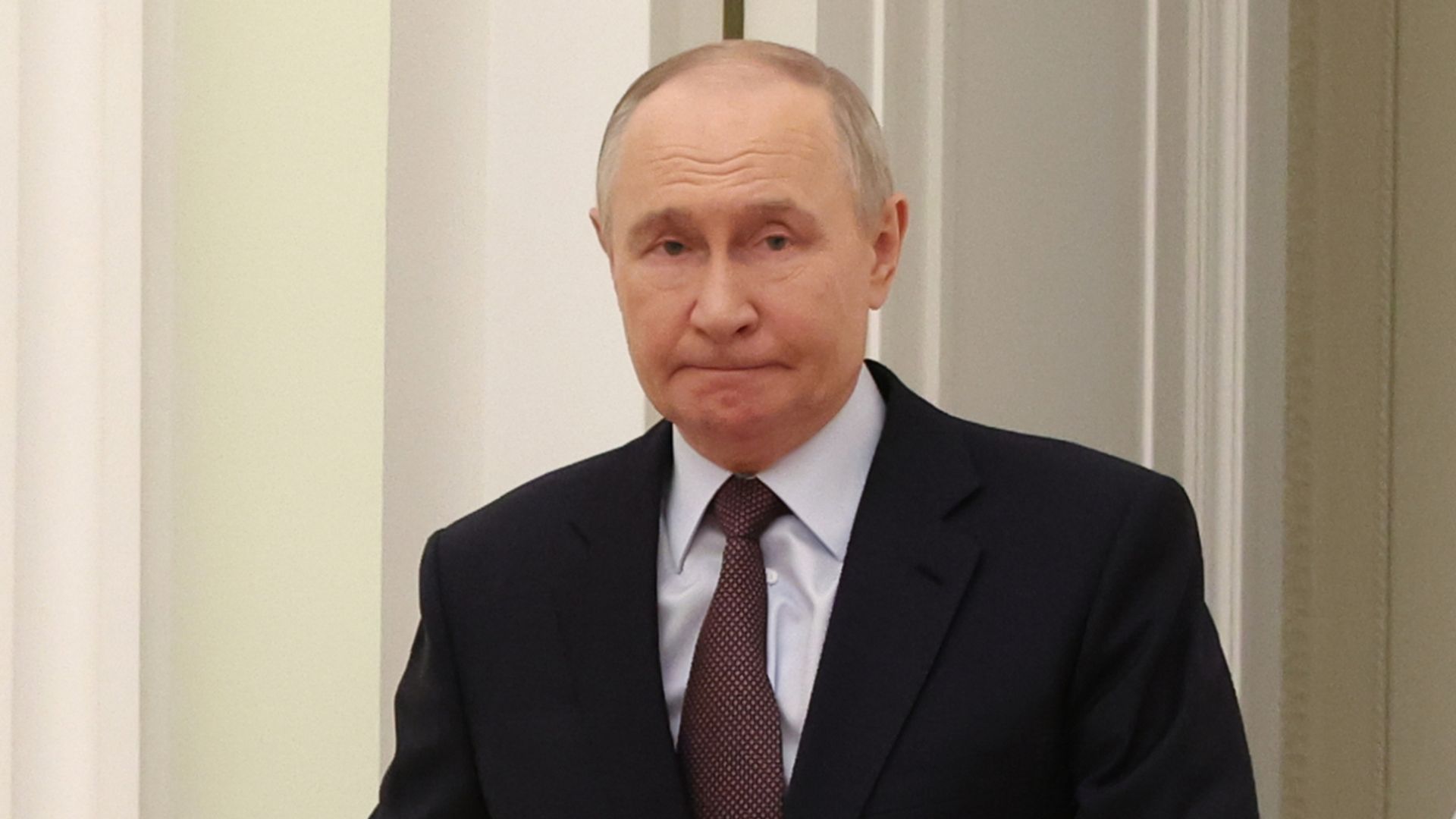
The mainstream media is addicted to the narrative of Russian panic. Every tactical pivot, every localized Ukrainian success, and every shift in Moscow's rhetoric is packaged as evidence that the Kremlin is "rattled." It is a comforting bed-time story for Western audiences. It suggests that the end is just around the corner if we just hold the line. But this consensus is built on a fundamental misunderstanding of how the Russian state actually functions under pressure.
To say the Kremlin is rattled by the current state of the conflict is to ignore the historical resilience of Russian wartime economics and the cold, cynical logic of Vladimir Putin's inner circle. We are mistaking noise for instability. We are treating a marathon like a sprint and wondering why the runner in the lead isn't sweating the same way we are.
The Myth of the Panicked Autocrat
The competitor's analysis hinges on the idea that internal Russian security measures—like the detention of teenagers allegedly hired for sabotage—are a sign of systemic fragility. This is a classic Western projection. In a liberal democracy, domestic unrest signals a loss of mandate. In a hardline autocracy, domestic "threats" are the fuel that powers the state machinery.
The Kremlin isn't hiding these incidents because they fear a PR disaster; they are highlighting them to justify a permanent state of mobilization. When you see reports of "terror cells" or "saboteurs" being rounded up, you aren't seeing a regime on the brink. You are seeing a regime refining its control. I have spent years watching how these power structures react to friction. They don't crack. They harden.
The assumption that Putin is "rattled" ignores the fact that he has spent two decades insulating his power base from exactly this kind of external pressure. The "rattled" narrative assumes that the Kremlin cares about the same metrics we do: public opinion, international standing, and short-term economic efficiency. They don't. They care about survival, attrition, and the long game.
The EU Loan Trap
Brussels recently approved a massive loan for Ukraine, fueled by frozen Russian assets. The headlines call it a "blow to Moscow." In reality, it is a legal and economic experiment with massive downsides that the West is too afraid to discuss.
By weaponizing the Euroclear system and seizing the interest on sovereign assets, the EU is effectively signaling to the rest of the world—the Global South, China, India—that their money is only safe in Western vaults as long as they follow Western foreign policy. This isn't "rattling" the Kremlin; it's handing them a geopolitical megaphone.
Moscow's counter-strategy isn't to beg for the money back. It is to accelerate the creation of an alternative financial architecture. Every time we "punish" Russia with these financial maneuvers, we weaken the very dollar-and-euro-based hegemony that gives us power in the first place. We are trading long-term systemic dominance for a short-term tactical victory. If anyone should be rattled, it’s the central bankers in Frankfurt and D.C. who have to live with the consequences of this precedent.
Sabotage as a Stress Test
The reports of Russia hiring teenagers for school terror attacks or infrastructure sabotage in Ukraine and Europe are framed as desperate measures. This is a naive reading of modern hybrid warfare.
These aren't desperate acts; they are low-cost, high-yield stress tests.
- They force Western security services to redirect massive resources toward "low-level" threats.
- They sow distrust within local populations.
- They provide the Kremlin with "deniability" while maintaining a constant atmospheric pressure of fear.
Calling this a sign of being "rattled" is like calling a cyberattack a sign of a weak computer. It’s an offensive capability, not a defensive reflex. Moscow is exploring the boundaries of what it can get away with without triggering a direct NATO article 5 response. They are the ones setting the tempo of this shadow war, while we congratulate ourselves on catching the "teenagers" they sent to do the dirty work.
The Attrition Reality Check
Let’s talk about the math that no one wants to look at. War is, at its core, an industrial and demographic equation. While the West celebrates "rattling" the Kremlin, Russia has successfully shifted to a full-scale war economy. Their factories are running 24/7. Their supply chains for critical components, though hampered by sanctions, have found new routes through the "grey markets" of Central Asia and the Caucasus.
The Western consensus is that Russia is running out of steam. The data suggests otherwise. Russia has consistently outproduced the combined efforts of the European defense industry in terms of basic munitions. We are sending high-tech, expensive systems that require months of training and complex maintenance. They are sending waves of "good enough" equipment and personnel. In a war of attrition, "good enough" usually beats "technically superior but scarce."
The Hubris of "Victory"
The most dangerous thing about the "rattled Kremlin" narrative is that it breeds complacency. It leads policymakers to believe that "one more push" or "one more loan" will cause the Russian front to collapse.
I’ve seen this before in corporate turnarounds and geopolitical shifts. When you underestimate your opponent’s pain tolerance, you lose. Russia’s pain tolerance is historically, culturally, and politically higher than the West’s. They are prepared to burn through generations to achieve their objectives. We are worried about the next election cycle and the price of heating oil.
The Kremlin isn't rattled by the EU loan. They aren't rattled by tactical setbacks in the Donbas. They are waiting. They are waiting for the West to get bored. They are waiting for the "Ukraine fatigue" to set in. They are waiting for a change in leadership in Washington or Berlin.
The False Premise of International Isolation
We keep hearing that Russia is "isolated." Look at the map. Look at the BRICS+ expansion. Look at the energy deals being signed in New Delhi and Beijing.
Russia is not isolated from the world; it is isolated from the West. For the Kremlin, this is a feature, not a bug. It allows them to purge the "Western-aligned" elites from their own system and replace them with a new class of loyalists whose wealth is tied entirely to the domestic war economy. This doesn't sound like a regime that is "rattled." It sounds like a regime that is reinventing itself for a multi-decade confrontation.
Stop Reading the Headlines, Start Reading the Incentives
If you want to understand the state of the war, stop looking for signs of Russian fear in the mainstream news. Instead, look at the incentives.
- Putin has no incentive to stop; his legacy and survival depend on a "victory" he can define on his own terms.
- The Russian military-industrial complex has no incentive to stop; they are seeing record profits and influence.
- The Global South has no incentive to join our sanctions; they are getting discounted energy and a front-row seat to the decline of Western unilateralism.
The "rattled" narrative is a psychological security blanket. It keeps us from having to ask the hard questions: What if sanctions don't work? What if the Russian economy doesn't collapse? What if "holding the line" isn't enough?
The reality is that we are facing a highly adaptable, deeply cynical, and fully mobilized adversary that has factored our "outrage" and our "loans" into their long-term calculations. They aren't shaking. They’re digging in.
The West needs to stop celebrating imaginary cracks in the Kremlin's facade and start building the industrial and political capacity for a conflict that will last long after the current news cycle has moved on. If we don't, the only ones who will be "rattled" in five years will be us.
Dismiss the comfort of the "collapsing regime" theory. Start planning for a Russia that refuses to play by your rules or die by your schedule.