Iran has formally escalated its maritime feud with Washington by filing a protest with UN Secretary-General Antonio Guterres, branding the recent seizure of Iranian crude oil shipments as acts of international piracy. This diplomatic maneuver attempts to flip the script on a decade-long shadow war where the United States uses domestic judicial warrants to intercept tankers in international waters. While Tehran frames this as a violation of sovereign rights, the move underscores a desperate need to protect its primary economic artery against an American legal strategy that has become increasingly aggressive and effective.
The letter to the UN is more than a grievance. It is a calculated piece of lawfare designed to challenge the validity of U.S. sanctions enforcement outside of American jurisdiction.
The Mechanics of Maritime Seizure
When the U.S. Justice Department moves against a tanker, it doesn't just send the Coast Guard into the blue. The process begins in a D.C. courtroom. Prosecutors file a forfeiture complaint alleging that the cargo belongs to a sanctioned entity, such as the Islamic Revolutionary Guard Corps (IRGC). Once a judge signs the warrant, the U.S. pressures the flag state of the vessel—often small nations like Panama or the Marshall Islands—to de-flag the ship or order it to a specific port.
This is where the friction turns into fire. Iran views the high seas as a neutral zone where American domestic law should hold no weight. By labeling these actions as "piracy," Tehran is reaching for a specific legal definition under the United Nations Convention on the Law of the Sea (UNCLOS). They argue that the U.S. is using the threat of force to interfere with commercial navigation without a mandate from the UN Security Council.
The reality on the water is a messy game of cat and mouse. Iranian tankers frequently turn off their Automatic Identification System (AIS) transponders to "go dark." They engage in ship-to-ship transfers in the middle of the night, swapping oil between hulls to disguise the origin of the crude. This isn't just about hiding; it's about survival. For Tehran, every barrel seized represents a direct hit to a national budget already crippled by inflation and a devalued rial.
The Sanctions Trap and Domestic Pressure
Washington’s strategy relies on a specific interpretation of the International Emergency Economic Powers Act (IEEPA). By linking oil sales to the financing of "foreign terrorist organizations," the U.S. gives itself the authority to pursue Iranian assets globally. It is a brute-force approach to diplomacy.
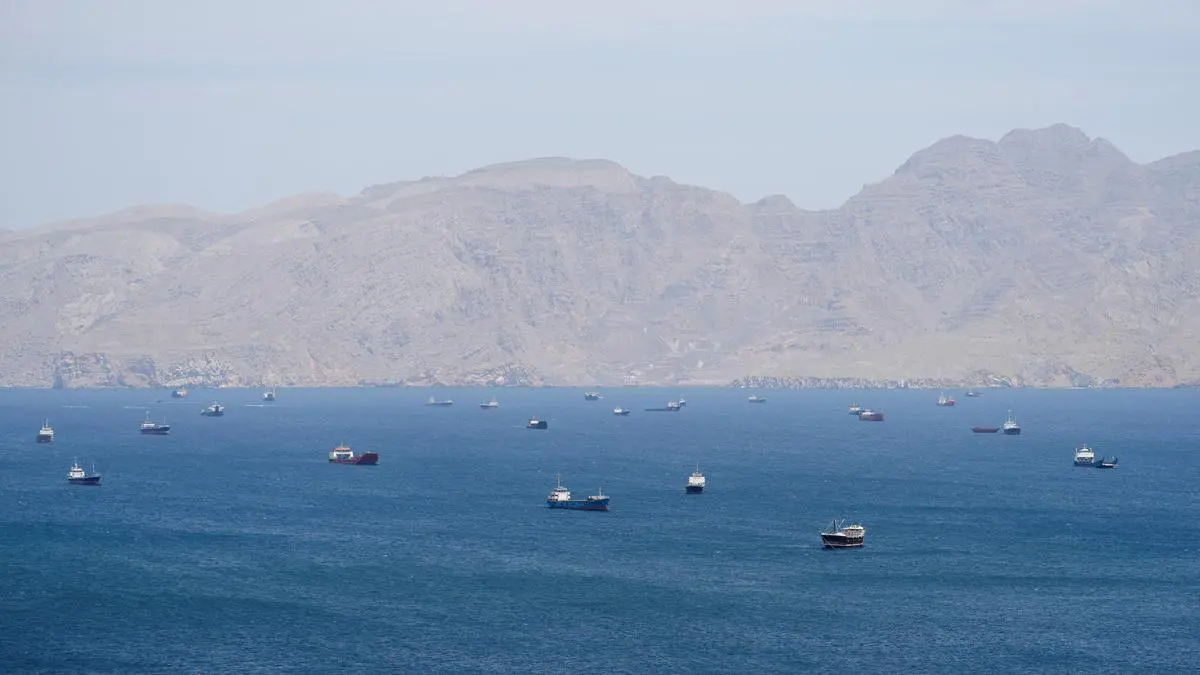
However, this strategy has unintended consequences. When the U.S. seizes an Iranian ship, Iran often retaliates by seizing a Western-linked vessel in the Persian Gulf. These "tit-for-tat" encounters create a volatile environment for global shipping. Insurance premiums for tankers transiting the Strait of Hormuz spike every time a new seizure is announced. This adds a "war risk" premium to global energy prices, meaning a driver in Ohio might unknowingly pay for a legal battle happening off the coast of Fujairah.
The protest to Guterres highlights a fundamental disagreement over who owns the rules of the ocean. Iran argues that if the U.S. can seize any ship it deems "illegal" based on its own laws, then the concept of international waters is dead. The U.S. counters that Iran’s use of shell companies and forged documents to move oil makes the vessels fair game under anti-money laundering and counter-terrorism statutes.
The Financial Toll of Legal Warfare
The numbers are staggering. A single Suezmax tanker can carry roughly one million barrels of oil. At current market rates, that represents a $70 million to $80 million asset. When the U.S. successfully offloads this oil and sells it, the proceeds often go to the U.S. Victims of State Sponsored Terrorism Fund.
- Asset Loss: Iran loses the immediate revenue from the sale.
- Operational Risk: Shipping companies become terrified of chartering vessels to any entity with even a tangential link to Tehran.
- Reputational Damage: Legitimate buyers in Asia and Europe are scared off, forcing Iran to sell its oil at steep discounts to "independent" refineries in China.
This economic strangulation is the goal. By making the transport of Iranian oil high-risk and low-reward, the U.S. hopes to force Tehran back to the negotiating table regarding its nuclear program and regional influence.
Sovereignty Versus Enforcement
The core of the "piracy" label lies in the definition of state authority. Under international law, a state has exclusive jurisdiction over ships flying its flag on the high seas. Iran claims that by intercepting these ships, the U.S. is behaving like a non-state actor—a pirate—rather than a sovereign nation.
But the U.S. legal team is clever. They rarely board a ship by force in a cinematic raid. Instead, they use financial leverage. They threaten the ship’s owners with "secondary sanctions," which would bar them from using the U.S. dollar or docking at any American port. Faced with the choice between losing one cargo or losing their entire business, most Greek or Singaporean ship owners fold immediately. They order their captains to cooperate with U.S. authorities.
Tehran’s frustration stems from this invisible grip. They cannot fight a boarding party that never arrives; they are fighting a web of bank transfers and maritime registries. This is why the protest was sent to the UN. It is an attempt to rally the "Global South" against what Iran describes as American "economic terrorism."
The Role of the UN Secretary-General
Antonio Guterres finds himself in a familiar, albeit uncomfortable, position. The UN has little power to stop the U.S. from enforcing its own sanctions, nor can it force Iran to stop its maritime maneuvers. The Secretary-General’s role is primarily to act as a mediator, but in a world of "great power" competition, mediation is often ignored.
What the protest does achieve is a documented record of dissent. It builds a case for future international court proceedings. If Iran decides to take this to the International Court of Justice (ICJ), this letter serves as the formal notice of a dispute. We have seen this before. Iran previously won a preliminary ruling at the ICJ regarding the freezing of its central bank assets, though the U.S. simply ignored the verdict.
The maritime corridor remains the most dangerous theater of this conflict. Unlike a land border, the sea is fluid, and the rules are subject to the might of those who patrol it. Every time a tanker is diverted to a port in Texas or the Bahamas, the risk of a kinetic military clash in the Gulf increases.
The U.S. Navy’s 5th Fleet, based in Bahrain, maintains a constant presence. They aren't there to seize oil—that’s a job for the DOJ and private contractors—but they are there to ensure that when a seizure happens, Iran’s Revolutionary Guard doesn't sink a commercial vessel in retaliation. It is a high-stakes standoff where one miscalculation by a drone operator or a ship captain could ignite a regional war.
Beyond the Oil
This isn't just about petroleum. It is about the precedent of global policing. If the U.S. can successfully brand Iranian oil as "contraband" based on domestic policy, what stops other nations from doing the same? China has already watched these developments with keen interest, wary that their own shipping lanes could one day be subject to similar "legal" interceptions.
Iran’s use of the word "piracy" is a deliberate choice to invoke the history of the 18th and 19th centuries, a time when the high seas were a lawless frontier. They are painting the U.S. as the new Blackbeard, an entity that takes what it wants because it has the biggest guns. It is a powerful narrative, even if it ignores the fact that Iran’s own maritime record includes the detention of foreign crews and the mining of commercial lanes.
The battle for the Strait of Hormuz is no longer fought with just cannons and boarding pikes. It is fought with PDF files, sovereign protests, and the freezing of bank accounts. As long as the U.S. maintains its policy of "maximum pressure," the Atlantic and the Indian Oceans will remain courtrooms where the verdict is delivered by a tugboat and a seizure notice.
The diplomatic protest to Guterres will not change the immediate behavior of the U.S. Department of Justice. It will not return the millions of barrels of oil already sold at auction. But it signals that the legal conflict has reached its boiling point. Tehran is no longer willing to let these seizures pass as "regulatory issues." They are calling them what they believe them to be: an existential threat to their sovereignty.
If the UN fails to address the grey area between domestic sanctions and international maritime law, the high seas will continue to devolve into a space where power is the only true law. This isn't just an Iranian problem or an American problem. It is a fundamental crack in the foundation of global trade that remains unaddressed while the world looks the other way.
The next time a tanker disappears from the tracking maps, know that the struggle isn't just over the cargo. It is a fight to decide who truly owns the water.