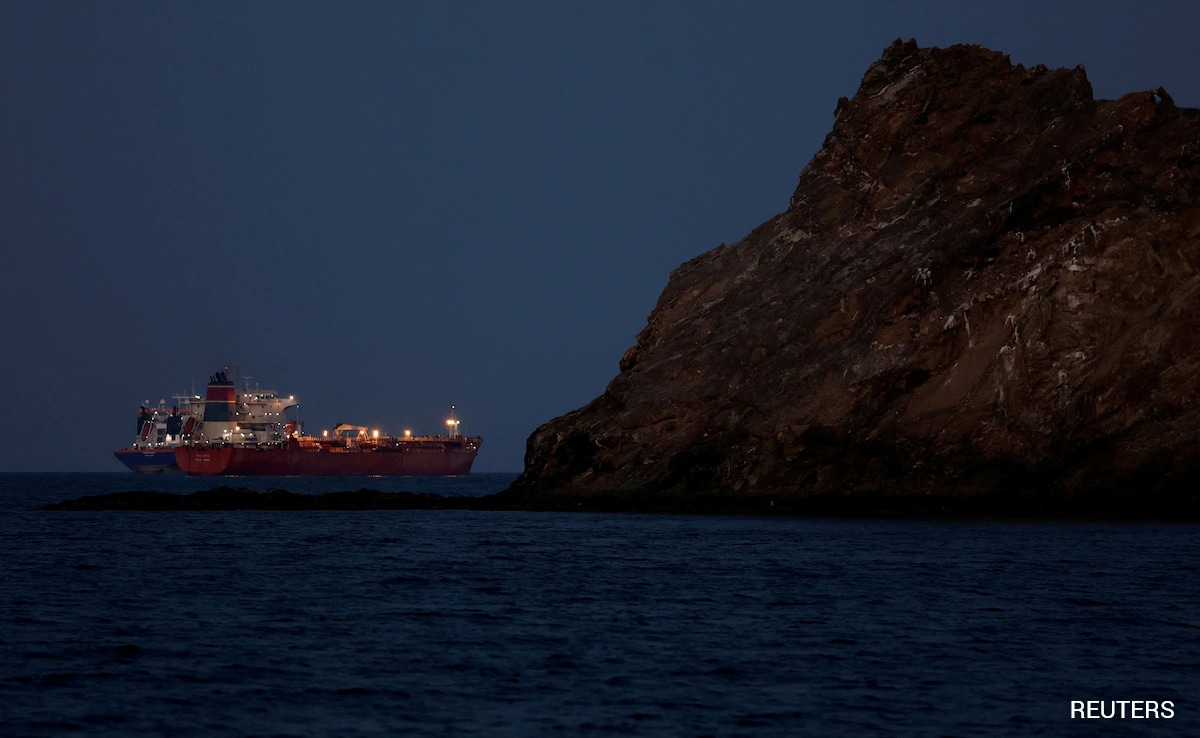
Western dinner tables are tethered to a narrow strip of water most people couldn't find on a map. While political analysts focus on the price of crude oil when tensions rise in the Middle East, a far more visceral threat is brewing. A blockade of the Strait of Hormuz would not just spike gas prices; it would effectively sever the global food supply chain, triggering a scarcity event that most modern logistics systems are entirely unprepared to handle. This isn't about a slight increase in the cost of a gallon of milk. It is about the physical absence of essential goods on retail shelves within weeks of a total maritime shutdown.
The math of modern survival is deceptively fragile. We operate on a "just-in-time" delivery model that prioritizes efficiency over resilience. When a primary artery like Hormuz—which sees roughly 20% of the world’s liquid natural gas and oil—constricts, the ripple effect moves faster than a government can react.
The Fertilizer Connection
Most discussions about Hormuz start and end with oil. That is a fundamental misunderstanding of how the world eats. To understand food security, you have to look at what makes the food grow in the first place.
The Middle East is a titan in the production of urea and phosphate-based fertilizers. Natural gas is the primary feedstock for nitrogen-based fertilizers. When the gas stops flowing through the Strait, global fertilizer plants elsewhere in the world don't just pick up the slack. They can't. The global market is so tightly integrated that a supply shock in the Persian Gulf sends prices soaring in Iowa, Brazil, and China simultaneously.
Farmers are the first to feel the squeeze. If the cost of inputs doubles overnight, the planting season is compromised. We aren't just talking about expensive bread. We are talking about lower crop yields for the following harvest. This creates a multi-year lag in food availability that persists long after the military or diplomatic crisis in the Strait has been resolved.
Fuel as a Food Ingredient
Every calorie on your plate is essentially a repackaged unit of energy. Agriculture is one of the most fuel-intensive industries on the planet. Tractors need diesel. Processing plants need electricity. Refrigerated trucks need a constant power source to keep perishables from rotting during a 1,000-mile transit.
If Hormuz is closed, the global shipping industry enters a state of controlled panic. Fuel surcharges aren't just line items on a corporate invoice; they are passed directly to the consumer at the checkout counter. However, the more dangerous scenario isn't the price—it's the allocation. In a true energy crunch, governments face the impossible choice of prioritizing fuel for heating homes, running hospitals, or moving food. History suggests that food logistics often lose out to more immediate, localized political pressures.
The Limits of Strategic Reserves
Many nations point to their strategic reserves as a safety net. This is a mirage. Most strategic reserves are focused on crude oil, not refined diesel or finished food products. You cannot pour crude oil into a delivery van, and you cannot eat a barrel of Brent North Sea.
Even countries with significant grain silos find that those stores are useless if the processing and distribution networks are paralyzed by an energy vacuum. A mountain of wheat in a central silo does nothing for a city three hundred miles away if the trucks aren't moving. The infrastructure of the modern world assumes a baseline of stability that a Hormuz blockade would shatter instantly.
The Insurance Death Spiral
You don't need a naval mine to stop a ship. You only need to make it uninsurable. The moment a kinetic conflict begins in the Strait, Lloyd’s of London and other major underwriters skyrocket their premiums or "redline" the entire region.
Commercial shipping is a low-margin business. When insurance costs for a single transit jump from $20,000 to $200,000, the ships stop moving. They drop anchor in safe harbors and wait. This creates a phantom blockade. No one has to fire a shot to stop the flow of goods; the accountants do it for them.
During the "Tanker War" of the 1980s, we saw a version of this, but the world was less globalized then. Today, a container ship delayed by two weeks in the Indian Ocean causes a factory shutdown in Germany and a food shortage in a grocery chain in suburban America. We have traded our safety margins for a few cents of profit per unit, and the Strait of Hormuz is where that bill will eventually come due.
Why Pipelines Aren't the Answer
There is a common argument that land-based pipelines across Saudi Arabia or the UAE mitigate the risk of a Hormuz shutdown. This is technically true for a small percentage of total capacity, but it fails the test of scale.
- Capacity Constraints: The existing pipelines can only handle a fraction of the daily volume that moves by sea.
- Target Vulnerability: Fixed infrastructure like pumping stations and pipeline hubs are significantly easier to sabotage or strike than a moving fleet of tankers spread across open water.
- Refining Bottlenecks: Even if you get the oil to a Red Sea port, you still have to contend with the Suez Canal and the Bab el-Mandeb strait. You aren't eliminating the chokepoint; you are simply moving it.
Reliance on these "bypass" routes ignores the sheer volume of global trade. We are trying to push an ocean of necessity through a garden hose of contingency.
The Geopolitics of Hunger
When food prices spike, governments fall. We saw this during the Arab Spring, which was triggered as much by the price of bread as it was by a desire for democracy. A Hormuz-led food crisis would likely hit the developing world first and hardest.
Countries like Egypt, Lebanon, and Indonesia rely heavily on imported staples. When the global price of grain and cooking oil rises because of shipping disruptions in the Middle East, these nations face immediate civil unrest. This creates a secondary wave of instability. A blockade in the Gulf leads to a migration crisis in Europe, which leads to political upheaval in the West, further degrading the ability of the international community to respond to the original blockade.
It is a feedback loop of chaos. The "Food Security Time Bomb" isn't a future possibility; it is a live wire that is currently being stepped on.
The Myth of Self Sufficiency
In the wake of supply chain scares, many politicians call for "food sovereignty" or a return to local farming. While noble in theory, this is a decades-long transition that cannot be executed during a crisis. Modern soil is dependent on synthetic fertilizers produced thousands of miles away. Modern seeds are patented and shipped globally. The "local" farm is often just the final assembly point for a globalized industrial process.
Breaking that dependency requires a complete overhaul of how we view land use, labor, and technology. You cannot "pivot" to local agriculture when the shelves are already empty. You have to build that resilience when things are calm, and currently, we are doing the opposite. We are doubling down on high-tech, high-input farming that is entirely dependent on the very trade routes that are now most at risk.
The Role of Speculation
Wall Street and global commodity traders play a massive role in how quickly a Hormuz crisis reaches your kitchen. Markets don't wait for the physical supply to disappear; they trade on the anticipation of disappearance.
The moment a headline hits about an incident in the Strait, high-frequency trading algorithms buy up futures in wheat, soy, and corn. This creates an immediate price spike at the wholesale level. By the time a family goes to buy groceries on a Saturday morning, the price has already been inflated by traders who are betting on a shortage that hasn't even physically manifested yet. This "fear premium" can be more damaging to the average consumer than the actual physical shortage, as it drains the purchasing power of the lower and middle classes instantly.
Realities of a Maritime Siege
A military conflict in the Strait of Hormuz would not be a clean, short-lived affair. It would be a messy, asymmetrical war involving fast-attack craft, drone swarms, and subsurface mines. Clearing a mined waterway is a slow, methodical process that can take months, not days.
Every day the Strait remains "contested" is a day the global economy bleeds. The shipping industry operates on such a tight schedule that even a three-day closure creates a three-week backlog. A month-long closure would be a civilizational event.
The primary weakness of the West is not its military capability, but its lack of psychological and logistical "fat." We have no reserves. We have no patience. We have a population that expects strawberries in January and bread that never runs out.
Diversification Is the Only Defense
If we are to survive a disruption of this magnitude, the focus must shift from "efficiency" to "redundancy." This means diversifying where we get our fertilizers and moving away from a total reliance on Middle Eastern natural gas for agricultural inputs. It means building out massive, regionalized storage for refined fuels and finished food products.
It also requires a hard look at maritime security. We cannot continue to assume that the world’s most important chokepoints will remain open simply because it is in everyone’s best interest. Rational actors are not the only ones who can close a strait. Miscalculation, desperation, or a belief that one has nothing to lose can lead to a blockade that no one actually wants but everyone must endure.
The fragility of our food system is an engineering problem with a political fuse. We have built a world where a few miles of water in a volatile region dictates the survival of families on the other side of the planet.
Check your pantry. Not to hoard, but to understand. Every item in there likely crossed an ocean or was grown using chemicals that did. The "time bomb" is ticking because we chose to ignore the cost of our own convenience. The only way to defuse it is to rebuild the margins of error we spent the last forty years erasing.