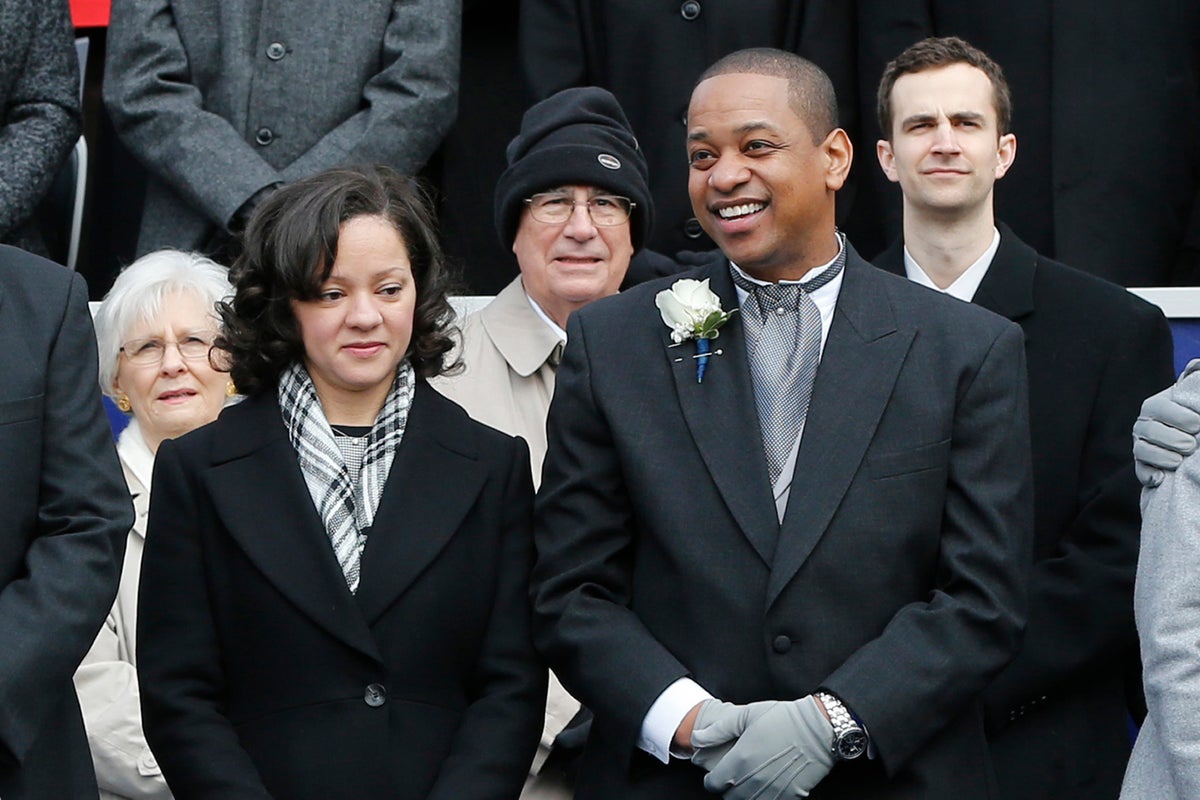
The headlines are predictable. They are soft. They are designed to make you feel a comfortable, distant sadness. "Mourned by patients and friends," they say. "A community in shock." It is the standard script for when a high-profile marriage turns into a crime scene. We focus on the professional accolades of the deceased, the social standing of the perpetrator, and the "tragedy" of it all.
Stop. Also making waves recently: The Night Watchman and the Blue Plastic Death.
By framing these events as sudden, inexplicable tragedies, we are participating in a massive social lie. This isn’t just a sad story about a doctor and an ex-lieutenant governor. It is a case study in how we weaponize "respectability" to ignore the red flags of domestic terror. We are so obsessed with the veneer of a successful life that we refuse to see the mechanics of control that lead to the grave.
The Fallacy of the "Perfect Couple"
Every time a murder-suicide rocks an affluent zip code, the neighborhood response is identical: "They seemed so happy." This is the first lie we need to dismantle. More details regarding the matter are detailed by Vogue.
Happiness is a performative metric. In high-stakes political and medical circles, performance is everything. We aren't mourning a person; we are mourning a PR campaign. When we prioritize the "shock" of the community over the reality of the victim’s lived experience, we suggest that domestic violence is something that only happens in "certain" (read: lower-income) neighborhoods.
I have spent years analyzing how power dynamics shift when the spotlight fades. I’ve seen the way "powerful" men crumble when they lose their titles, and how they often turn that instability toward the only thing they still feel they "own": their spouse.
The competitor’s narrative focuses on her patients’ loss. That is a distraction. Her value did not lie in her productivity or her medical degree. By centering the loss on her professional contributions, we subtly imply that her death is more tragic because she was "useful." It is a cold, utilitarian way to view a human being.
Domestic Terror Doesn’t Need a Picket Fence
We need to talk about the "suicide" part of the murder-suicide. Society often views the perpetrator’s self-inflicted death as a final act of remorse or a "tragic end" to a dual spiral.
It isn't. It is the ultimate act of cowardice and control.
When a man kills his wife and then himself, he isn't "taking his own life in grief." He is ensuring he never has to face the consequences. He is stealing the victim's right to justice. He is making sure he has the last word in the narrative. By calling it a "murder-suicide," we give it a hyphenated weight that suggests two equal tragedies.
There is only one tragedy: the murder. The suicide is just the closing of a case file.
The Data of Control
Statistically, these events are rarely "snaps." They are the culmination of what experts like Evan Stark call coercive control.
- Isolation: Did the high-profile nature of their lives keep her from seeking help?
- Monitoring: Was the "perfect" marriage actually a digital and physical cage?
- The Exit Threat: Most murders happen when the victim tries to leave or when the perpetrator loses their external source of power (like a political office).
Imagine a scenario where we treated these "shocking" events as predictable outcomes of unchecked male entitlement. If we stopped looking at the lieutenant governor's "service" and started looking at the household’s "safety," the headlines would look very different.
The Professionalism Trap
The medical community is currently mourning a "dedicated doctor." But why didn't the medical community—or the political community—see the signs?
The "Professionalism Trap" is the belief that if you are high-functioning, you are safe. We assume that because someone can perform surgery or pass legislation, they cannot possibly be a victim or a monster. This creates a lethal silence.
I’ve sat in rooms with high-net-worth individuals who would rather die than admit their "decorated" husband hits them. Why? Because the "community" would be "shocked." Because it would "tarnish the legacy."
We are literally killing people with our desire to keep things "classy."
Why Your Sympathy is Part of the Problem
Mourning is easy. Analysis is hard.
When you read that she was "loved by her patients," you feel a flicker of warmth. It makes the story digestible. It turns a brutal execution into a Lifetime movie. This "softening" of the narrative is exactly why these patterns repeat. We allow the perpetrator's former titles—"Lieutenant Governor," "Veteran," "Leader"—to act as a shield, even after they've committed the ultimate crime.
Stop honoring the "legacy" of men who kill. There is no legacy left after a murder. There is only the blood on the floor and the void where a human being used to be.
The Problem with "Why?"
People always ask "why" after these events.
"Why did he do it?"
"Why didn't she leave?"
These are the wrong questions. They assume there is a rational logic to be found. They shift the burden of explanation onto the dead.
The real question is: "What did we ignore so we could keep believing in the myth of the Great Man?"
We ignored the temper. We ignored the "private" nature of their relationship. We ignored the way he spoke over her at dinners. We ignored the power imbalance that exists when one person’s identity is swallowed by another’s career.
The Actionable Truth
If you want to actually honor a victim of domestic homicide, stop reading the glowing obituaries.
- Acknowledge the Murder: Stop using the "suicide" to soften the "murder." It was a slaughter. Use the word.
- Strip the Titles: He isn't the "Ex-Lieutenant Governor" anymore. He is a murderer. His political career is irrelevant.
- Audit Your Circles: Look at the "perfect" couples you know. If you see signs of control, don't stay silent because they are "respectable." Respectability is the best hiding place for a killer.
We don't need more "community vigils." We need a community that is willing to be uncomfortable. We need a community that values a woman's life more than it values the reputation of a powerful man.
The competitor's article wants you to cry for a lost doctor. I want you to be livid that her "friends and patients" didn't know her well enough to save her, or worse, knew exactly who he was and chose to look at his voting record instead of his character.
The "shock" is the lie. The violence was the reality.
Choose which one you want to support.