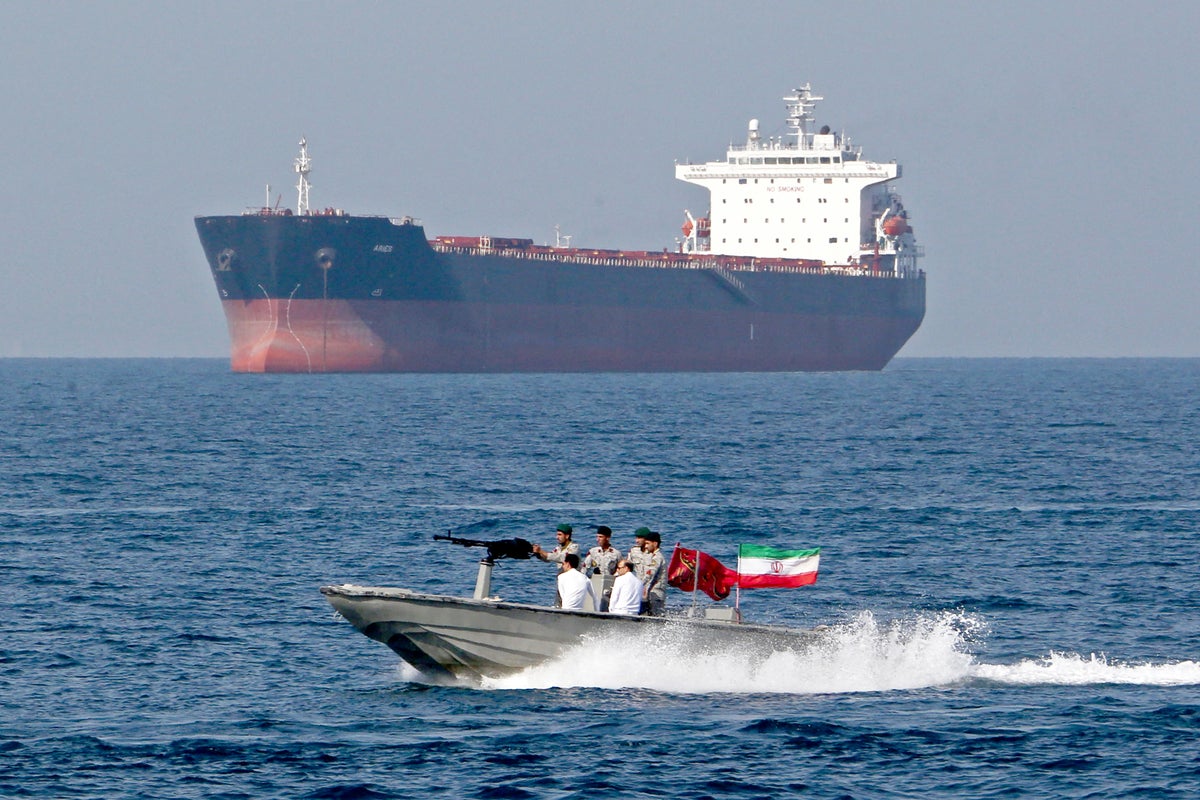
Iran’s latest flex in the Strait of Hormuz didn't land the way they wanted. Tehran claimed they put two missiles into a US warship, but the Pentagon didn't even blink before calling it total fiction. This isn't just a disagreement over facts. It’s a high-stakes game of psychological warfare where the "truth" depends entirely on who’s holding the microphone.
The US Navy’s 5th Fleet, which keeps a constant watch over those volatile waters, was quick to set the record straight. They confirmed that no American vessels were hit, no sailors were injured, and honestly, no missiles were even detected in the flight paths Iran described. It’s a bold move to claim you’ve struck a massive destroyer when the ship is still floating, fully functional, and reporting zero damage.
The anatomy of a fabricated strike
Propaganda in the Middle East often moves faster than actual projectiles. When Iranian state media blasted reports that their naval forces successfully engaged a US asset, they weren't just talking to the Americans. They were talking to their own people and their regional proxies.
Military analysts know the drill. To claim a successful strike on a modern US warship like an Arleigh Burke-class destroyer, you’d need more than a press release. You’d need visible smoke, a distress signal, or at the very least, a shift in the ship’s radar signature. None of that happened. The US military doesn't hide casualties or ship damage in the age of satellite imagery and instant digital leaks. If a missile hits a billion-dollar ship, the world knows within minutes.
The Strait of Hormuz is the world's most important oil chokepoint. About a fifth of the world’s daily oil consumption passes through this narrow stretch. When Iran makes these claims, they’re trying to signal that they control the valve. They want the markets to jitter. They want the US to look vulnerable.
Why Iran keeps swinging and missing with the truth
You have to look at the internal pressure facing the Islamic Revolutionary Guard Corps (IRGC). They’re under constant scrutiny to prove they can stand up to "The Great Satan." Sometimes, that means "creating" a victory when a real one isn't available.
- Internal PR: Boosting domestic morale after economic sanctions or internal unrest.
- Deterrence: Trying to make the US think twice about patrolling near Iranian territorial waters.
- Distraction: Shifting the global conversation away from other regional activities.
US officials have seen this playbook before. In previous years, Iran has released doctored footage or used old clips of target practice to simulate real-world combat. The Pentagon’s response is usually a flat, dry denial because giving the claim too much energy actually helps Iran’s PR machine.
Technical reality versus political theater
Modern naval defense systems make hitting a US warship incredibly difficult. We’re talking about the Aegis Combat System. It’s designed to track hundreds of targets simultaneously and intercept incoming threats before they get anywhere near the hull.
If Iran had actually fired two missiles, the US response wouldn't just be a press release. It would be a kinetic counter-strike. The fact that the 5th Fleet stayed calm and stayed on station tells you everything you need to know about the validity of the Iranian report. There was no fire. There was no hole in the ship. There was only a story.
Military experts point out that the IRGC often confuses "tracking" a ship with "striking" a ship. It's common for Iranian fast boats to buzz American vessels or for land-based radar to lock onto them. That’s standard posturing. Claiming a hit is a massive escalation that Iran doesn't actually seem prepared to back up with real-world action.
Keeping an eye on the water
What should you actually watch for? Don't track the headlines from state-run agencies in Tehran. Watch the ship movements. If a US ship is actually damaged, it heads to port in Bahrain or Dubai. If the patrols continue as scheduled, the "missile strike" was nothing more than digital noise.
The US military maintains that its presence in the Strait of Hormuz is about "freedom of navigation." Iran views that same presence as an occupation. This friction is baked into the geography of the region. Until there’s a massive shift in diplomacy, expect more of these ghost strikes.
Check the maritime tracking data if you’re ever in doubt. Commercial AIS (Automatic Identification System) data often provides a clear picture of ship locations, though military vessels sometimes go dark for operational security. Still, the lack of emergency response vessels in the area during the "strike" is the ultimate giveaway.
Stay skeptical of any report that lacks visual evidence in a region where everyone has a camera in their pocket. The US military is staying put, and for now, the Strait remains open, despite the verbal fireworks.


