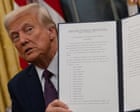
Donald Trump doesn't just use the pardon power. He wields it like a blunt instrument. If you've been following the recent leaks from the Wall Street Journal, the President isn't exactly being subtle about his plans as his second term winds down in 2026. He reportedly told aides he’d pardon "everyone who has come within 200 feet of the Oval Office." While Press Secretary Karoline Leavitt says it’s a joke, nobody in Washington is actually laughing. They know how he operates.
The reality is that mass pardons aren't a theoretical threat. They’re a strategy. By the time 2026 ends, we’re looking at a sweeping use of executive clemency that could fundamentally rewrite how federal law applies to the executive branch. This isn't just about mercy. It's about protection, loyalty, and a final middle finger to the justice system that’s been chasing his administration since day one.
The 200 Foot Radius Strategy
The report that Trump wants to pardon anyone within a 200-foot radius of his desk sounds like a punchline, but it points to a very real legal maneuver. He’s essentially talking about "blanket pardons." We haven't seen anything like this since Jimmy Carter pardoned the Vietnam War draft dodgers or Gerald Ford protected Richard Nixon.
But those were about national healing. This is about personal shielding. If you’re a staffer, an advisor, or even a low-level aide who sat in on a meeting that might later be deemed "obstruction," a blanket pardon makes you untouchable by federal prosecutors. It eliminates the risk of someone "flipping" on the boss because there’s no longer any jail time to fear.
The sheer scale is what's different this time. Trump has already granted clemency to over 1,800 people in his second term. For context, his first day back in office saw 1,500 unconditional pardons for January 6 defendants. He’s already set the precedent. A final "mass pardon" news conference would just be the logical conclusion of his "absolute power" doctrine.
The Billion Dollar Pardon Loophole
Most people think a pardon just keeps you out of a cell. It’s actually much more lucrative than that. A recent analysis from the Governor of California’s office highlights a massive, under-reported detail: these pardons are wiping away nearly $2 billion in court-ordered restitution and fines.
Take the case of Devon Archer or Changpeng Zhao. When Trump issues a full and unconditional pardon, it often includes a remit of all financial penalties.
- Convicted fraudsters keep their private jets.
- Taxpayers lose out on billions in recovery.
- Victims are left with zero chance of getting their money back.
This isn't just a "get out of jail free" card. It’s a "keep the stolen money" card. By pardoning major financial figures like Zhao—whose company Binance conveniently helped legitimize the Trump family’s crypto enterprise, World Liberty Financial—the President is merging his official powers with his family’s business interests. It's a level of vertical integration that would make a CEO blush.
Why The Courts Can't Stop Him
You’ll hear legal scholars on cable news arguing that a president can't issue a "preemptive" pardon for unnamed crimes. They're probably wrong. The Supreme Court's 2024 ruling in Trump v. United States gave presidents broad immunity for "official acts." Combine that with the Article II pardon power, which the Constitution says is absolute (except in cases of impeachment), and you have a legal fortress.
The Department of Justice under Trump isn't going to challenge these pardons. The only real check would be the Supreme Court, and they've already shown they aren't interested in micro-managing the Oval Office. Even the most aggressive state prosecutors, like those in Colorado or New York, are finding it nearly impossible to pierce the "Supremacy Clause" armor that a federal pardon provides for federal crimes.
The People Who Get Left Behind
There’s a weird irony in who gets these pardons. While Trump talks about the "forgotten man," his clemency list is a VIP directory. We see names like George Santos—who Trump admitted "lied like hell" but stayed "100% for Trump"—getting their sentences commuted after only three months.
Meanwhile, thousands of people with non-violent drug offenses or systemic legal hurdles are still waiting for their files to be read. The pardon power has become a loyalty reward program. If you’re a "crony" or a high-dollar donor, you’re in. If you’re just a regular person caught in the federal gears, you’re probably out of luck.
What Happens When The Term Ends
As we approach the end of 2026, expect a "Pardon Palooza." This won't be a quiet series of late-night filings. It’ll be a televised event. Trump has already floated the idea of a news conference to announce the mass grants. He wants the spectacle. He wants the world to know that he has the final word on who is a criminal and who isn't.
If you’re trying to figure out what this means for the future, here’s the reality:
- Federal investigations into the administration will die. You can't prosecute someone for a crime that’s been pardoned.
- The "revolving door" will spin faster. Aides will be more willing to push legal boundaries if they know a pardon is waiting at the exit.
- The precedent is permanent. Once these pardons are issued, they can't be "undone" by the next president.
Basically, the rule of law is being replaced by the rule of the pen. If you're in the 200-foot circle, you're safe. If you're outside of it, you're just a spectator. Don't expect the "joke" to stay a joke for much longer. He's already shown us the list; now he just has to sign it.