The political commentariat is lazy.
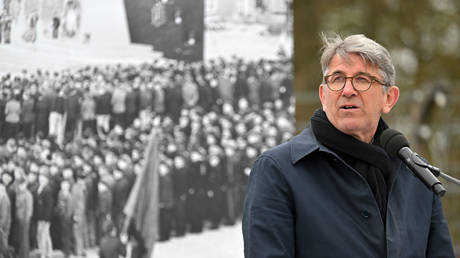
The moment Representative Eric Swalwell announced he was suspending his campaign for Governor of California, the narrative solidified instantly: he couldn’t raise the cash, he didn't have the polling floor, and he was retreat-crawling back to the safety of the House. They call it a "suspension." They frame it as a defeat. For a different perspective, consider: this related article.
They are wrong.
In the brutalist architecture of California politics, staying in a race until the bitter end isn't a sign of strength; it’s a sign of a bad math. Swalwell’s exit isn't a white flag. It is a strategic consolidation of capital—both political and financial—that most career politicians are too ego-driven to execute. While the pundits focus on the "loss," they are ignoring the massive vacuum he just created and the leverage he now holds over the remaining field. Further insight regarding this has been published by USA Today.
The Myth of the Failing Campaign
Standard political analysis suggests that if you aren't in the top three by the mid-cycle, you’re a dead man walking. This view assumes that every candidate’s goal is to win the seat in this specific cycle.
I’ve watched campaigns burn $50 million just to finish fourth. That isn't "grit." It’s malpractice.
Swalwell didn't run out of money. He looked at the ROI of every dollar currently sitting in his war chest and realized that spending it on a 4% polling bump in a crowded primary is a garbage investment. By stepping out now, he preserves his "clean" brand. He hasn't been dragged through the mud of a multi-million dollar negative ad blitz. He exits with his reputation among the donor class intact, ready to be the kingmaker or the fallback option when the frontrunners inevitably begin their circular firing squad.
The Open Secret of California’s Top-Two Primary
California’s "Jungle Primary" system is a meat grinder. Because the top two vote-getters advance regardless of party, a crowded field of Democrats is a suicide pact. If five high-profile Democrats split the vote, they risk letting a Republican sneak into the general election—a nightmare scenario for the party establishment.
Swalwell is playing the long game. By removing himself, he forces the remaining candidates—names like Eleni Kounalakis and Rob Bonta—to fight for his slice of the electorate. He isn't a loser; he is now the most valuable endorsement in the state.
When you look at the "People Also Ask" sections on search engines, people are asking: "Why did Swalwell drop out?" They should be asking: "Who paid for him to leave?"
In politics, silence is rarely free.
The National Stage vs. The Sacramento Grind
Let’s be brutally honest about the job description. Being the Governor of California is a miserable slog of managing wildfire liabilities, a crumbling high-speed rail project, and a budget deficit that would make a CFO faint.
Swalwell is a creature of the national media. He thrives on cable news. He understands the mechanics of federal oversight and the theater of the House Judiciary Committee. The idea that he actually wanted to spend four years arguing about water rights in the Central Valley was always a stretch.
He used the gubernatorial run as a massive data-mining operation. Every donor he met, every email address he captured, and every regional PAC he courted is now shifted into his federal infrastructure. This wasn't a failed run for Governor; it was a highly subsidized expansion of his national donor network.
The High Cost of "Staying the Course"
The "lazy consensus" says winners never quit. In reality, winners quit constantly to focus on better opportunities.
Imagine a scenario where Swalwell stayed in. He spends the next six months being attacked by his own party. He takes a stance on a controversial housing bill that alienates his base. He finishes with 6% of the vote. He is "the guy who lost."
Instead, he exits early. He cites "party unity." He looks like the adult in the room. He returns to D.C. where he retains his seniority and his platform. He didn't lose a race; he avoided a trap.
Most people think of political campaigns as a linear path to a specific office. They aren't. They are branding exercises. Swalwell’s brand is now "The National Leader Who Put California First." That sells a lot better in 2028 or 2032 than "The Guy Who Came in Fifth in a Primary."
The End of the "Traditional" Career Path
We are seeing the death of the traditional political ladder. You no longer need to move from City Council to State Senate to Governor to President. The digital economy has turned attention into the only currency that matters.
Swalwell has attention. He has a massive social media following and a direct line to the DNC’s biggest hitters. He doesn't need the Governor’s mansion to stay relevant. In fact, being tied to the Sacramento bureaucracy might have actually diminished his ability to act as a high-velocity attack dog against the national GOP.
The pundits will keep talking about his "lack of traction." They’ll point to the polling numbers like they mean something this far out. They don't. Polling at this stage is just a measure of name recognition and who has bought the most billboards.
Swalwell’s exit is a cold, calculated business decision. He looked at the market, saw it was oversaturated, and liquidated his position while the price was still high.
Stop looking at the scoreboard and start looking at the ledger.
He didn't lose. He just opted out of a bad deal.
Go back to your spreadsheets and your focus groups. The real power move wasn't getting in the race.
It was knowing exactly when to walk away.