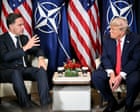
The survival of the North Atlantic Treaty Organization (NATO) is not a product of sentimental adherence to post-WWII idealism, but a calculation of sunk costs, integrated supply chains, and the prohibitive price of strategic autonomy. While political rhetoric often frames the alliance as a discretionary expense, a cold-eyed analysis of the North Atlantic Treaty’s architecture reveals that the mechanisms preventing its dissolution are far more robust than the personalities attempting to dismantle it. The alliance persists because the alternative—a fragmented European security architecture—imposes a "sovereignty tax" that no member state is currently prepared to pay.
The Tripartite Anchor of Alliance Stability
To understand why NATO remains resilient, we must move beyond the 2% GDP spending target and examine the three structural pillars that make withdrawal a net-loss proposition for any member, including the United States.
1. Interoperability as a Technical Lock-in
NATO functions as a global standardization body for military hardware and software. Through Standardization Agreements (STANAGs), the alliance has spent seven decades synchronizing everything from fuel nozzles and ammunition calibers to encrypted communication protocols and Link-16 data networks.
A nation departing NATO does not merely lose a seat at the table; it loses the technical ability to operate within a collective sensor-to-shooter matrix. For a European power to "go it alone," they would face an immediate depreciation of their existing military assets, which are designed to function as nodes in a NATO-centric network. The capital expenditure required to rebuild a domestic, end-to-end sovereign defense ecosystem is economically unfeasible for most individual member states.
2. The Intelligence Multiplier Effect
The value of NATO is frequently mismeasured by counting tanks and aircraft. The true currency of the alliance is the shared intelligence infrastructure. The BICES (Battlefield Information Collection and Exploitation System) and the Federated Mission Networking (FMN) allow for real-time data fusion that no single European nation can replicate.
The United States benefits from this arrangement by gaining access to geographical sensor placement and human intelligence networks that would be inaccessible under bilateral-only agreements. The transaction cost of renegotiating 31 separate bilateral intelligence-sharing treaties would create a blind spot in global surveillance that would persist for decades.
3. The Industrial-Defense Complex Integration
The defense industries of the US and Europe are no longer distinct entities. They are a singular, intertwined supply chain. The F-35 Lightning II program is the ultimate expression of this. With components manufactured across multiple NATO states, the program creates a "mutual hostage" situation. A US withdrawal that destabilizes the alliance would jeopardize the supply chains and foreign military sales (FMS) that sustain the American defense industrial base.
Deconstructing the 2% Narrative: The Misalignment of Metrics
The public debate focuses heavily on the 2% of GDP spending guideline, yet this is a flawed metric for assessing alliance health. It measures inputs rather than outputs. A more rigorous analysis looks at the Capability-to-Contribution Ratio.
The friction within NATO arises from the fact that while European spending is increasing, the investment is fragmented. Europe spends roughly three times as much as Russia on defense in aggregate, yet achieves a fraction of the force projection because of redundant bureaucracies and a lack of consolidated procurement.
The Cost of Duplication
Europe currently operates over 30 different types of main battle tanks, whereas the US operates one primary platform. This lack of consolidation creates a "fragmentation tax." When political figures threaten to leave NATO, they ignore the fact that the US serves as the "Systems Integrator" for European security. Without this central coordinator, the efficiency of European defense spending would collapse further, requiring not 2%, but likely 5% to 7% of GDP to maintain current security levels.
The US Rational Actor Model: Why Leaving is a Strategic Deficit
A common misconception is that NATO is a form of American charity. From a data-driven perspective, NATO is a high-yield investment in American power projection.
- Forward Basing Economics: It is significantly cheaper to maintain a presence in Germany or Poland than to surge forces from the continental United States during a crisis. The host nation support (HNS) provided by European allies offsets the operational costs of the US European Command (EUCOM).
- The Dollar as a Security Currency: The security guarantee provided by the US is the hidden floor beneath the Euro-Atlantic economic zone. This stability ensures that the US remains the primary destination for European capital, and that the US dollar maintains its status as the global reserve currency.
- Market Access and Regulatory Influence: NATO provides the geopolitical leverage that allows the US to influence European regulatory standards in emerging tech, space, and cybersecurity.
The withdrawal of the US from NATO would not result in a "savings" of the defense budget. Instead, those funds would have to be reallocated to a massive expansion of the US Navy and Air Force to secure global trade routes that are currently policed through the cooperative framework of the alliance. The "Free Rider" problem is real, but the "Sole Proprietor" problem is infinitely more expensive.
The Geopolitical Vacuum and the Multi-Polar Pivot
The argument for NATO dissolution assumes a return to a 19th-century balance of power. This ignores the reality of modern threat vectors that do not respect borders, such as cyber warfare and sub-threshold "gray zone" tactics.
If NATO were to dissolve, the immediate result would be the "Finlandization" of Eastern Europe—not by choice, but by necessity. Small states would be forced to seek security guarantees from whoever can provide them locally. This would lead to a fractured Europe where individual states make side-deals with Beijing or Moscow, effectively ending the concept of a unified "West" as a coherent economic and political bloc.
The Article 5 Psychological Floor
The deterrence value of Article 5 is binary. It either exists or it does not. The moment a US President casts doubt on the "automaticity" of Article 5, the deterrence decays. However, the legislative hurdles in the US—specifically the recently passed National Defense Authorization Act (NDAA) provisions that require Senate approval or an Act of Congress to withdraw from NATO—act as a formal brake on executive volatility. The legal friction of leaving is designed to outlast a single four-year term.
The Strategic Play: Evolutionary Reform Over Dissolution
The trajectory of the alliance is not toward collapse, but toward a "European Pillar" within the NATO framework. This is the only logical path that satisfies both the American demand for burden-sharing and the European desire for strategic autonomy.
- Consolidated Procurement: European members must move toward a "Joint Capability Area" model, where groups of nations specialize in specific niches (e.g., strategic airlift, drone swarms, or missile defense) rather than each trying to maintain a full-spectrum military.
- The Shift to the Indo-Pacific: NATO is already expanding its scope through "AP4" partnerships (Australia, Japan, New Zealand, and South Korea). The alliance is evolving from a regional defense pact into a global standards-setting body for democratic security.
- Hard-Coding the US Presence: The permanent stationing of US troops in Poland and the Baltic states creates a "tripwire" mechanism that bypasses the political volatility of Washington. Once these bases are established, the political cost of closing them—and the resulting signal of retreat—is higher than the cost of maintaining them.
The alliance is secured not by the warmth of the relationship between heads of state, but by the cold reality that the infrastructure of modern warfare and the global economy is now built into the NATO blueprint. To tear up the blueprint is to invite a systemic collapse that no rational actor, regardless of their populist rhetoric, can afford to manage.
The strategic imperative for observers is to ignore the "exit" rhetoric and track the "integration" metrics: the volume of cross-border defense acquisitions, the expansion of the NATO Response Force, and the deepening of the tactical data links. These are the true indicators of alliance health. As long as these technical and economic ties continue to tighten, the alliance remains functionally indissoluble.