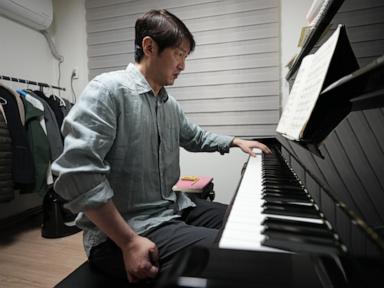
The transition from bimanual piano performance to a specialized one-handed repertoire after a stroke represents more than a personal triumph; it is a complex optimization problem involving neuroplasticity, biomechanical redistribution, and the strategic curation of musical literature. When a pianist like South Korea's Choi Hye-yeon suffers a paralyzing stroke, the immediate loss is not just motor control, but the collapse of a highly coordinated system of bilateral synchronization. The path to "recreating" oneself as a performer requires a systematic deconstruction of the traditional performance model and the implementation of a compensatory framework that maximizes the utility of the remaining functional limb.
The Biomechanical Constraints of Hemiparetic Adaptation
A stroke, specifically one resulting in hemiplegia, creates a permanent deficit in the neural pathways between the primary motor cortex and the contralateral side of the body. In the context of a pianist, this eliminates the possibility of standard 10-finger counterpoint and harmony. The adaptation process must address three specific physiological bottlenecks:
- Lateral Dominance Shift: Most performers must pivot to the left hand, as the "Left Hand Alone" repertoire is historically more developed. This requires the brain to reorganize spatial mapping and fine motor control in a limb that may not have been the primary lead for melodic lines.
- Range and Reach Expansion: A single hand must now cover a keyboard range previously shared by two. This necessitates an increase in lateral arm speed and a higher precision in "leaps"—moving the hand rapidly across octaves to hit isolated bass notes before returning to mid-range chords.
- Fatigue and Overuse Risk: The functional hand must perform roughly double the work of a standard performance. Without bilateral distribution of physical stress, the performer faces a heightened risk of repetitive strain injuries, focal dystonia, or carpal tunnel syndrome.
The Architecture of the Left Hand Alone Repertoire
The "recreation" of a performer is dependent on the availability and selection of specialized musical scores. The "Piano Left Hand Alone" genre is not a modern accommodation but a rigorous discipline with a distinct technical lineage. This repertoire serves as the structural foundation for a one-handed career, categorized by three primary compositional strategies:
The Illusion of Polyphony
Composers like Leopold Godowsky and Paul Wittgenstein developed techniques to make a single hand sound like two. This is achieved through sophisticated pedaling and the "arpeggiation" of chords. By striking the bass note slightly before the melody and sustaining it with the damper pedal, the performer creates a vertical harmonic stack that the ear perceives as simultaneous.
The Thumb as a Cantabile Tool
In one-handed performance, the thumb takes on a dual role. It must often provide the rhythmic "anchor" while simultaneously carrying the melody. This requires "voicing"—the ability to apply different weights of pressure to different fingers within the same hand position. A pianist must exert more downward force with the thumb (the melody) while keeping the other fingers (the accompaniment) light and subordinate.
Physical Choreography and Momentum
Standard piano playing relies on a relatively stable torso. One-handed playing requires a dynamic shift in the center of gravity. To reach the upper registers of the piano with the left hand, the performer must utilize the entire upper body to pivot, using momentum rather than isolated finger strength to achieve volume (dynamics).
Neuroplasticity and the Cost Function of Relearning
The process of returning to the stage after a stroke is a race against the "learned non-use" phenomenon. If a patient does not attempt to use or adapt their motor skills shortly after the neurological event, the brain's cortical representation of those movements begins to shrink.
The success of a South Korean pianist in this context is often a result of High-Intensity Repetitive Task Practice (RTP). This is not merely "practice" in the musical sense, but a clinical intervention. The brain must forge new synaptic connections to handle the increased cognitive load of managing melody, harmony, and rhythm with a single input source.
The "cost" of this adaptation is high. It requires:
- Cognitive Resequencing: The mental map of a piece must be rewritten. Where a pianist once saw a "G-major chord" split between two hands, they must now see a sequence of rapid-fire movements that assemble that chord over time.
- Proprioceptive Recalibration: The performer must develop an intuitive sense of where the keys are without looking, as the eyes are often busy tracking the wider leaps required by the single hand.
Economic and Cultural Viability of the One-Handed Performer
The transition from a standard performer to a one-handed specialist changes the "market positioning" of the artist. In the South Korean classical music market—known for its extreme competition and technical perfectionism—a disabled performer faces a dual-track challenge: maintaining artistic integrity while navigating the "inspiration" narrative that the media often imposes.
To achieve long-term viability, the performer must move beyond the novelty of their condition and establish Artistic Differentiation. This involves:
- Curation of Rare Works: Performing pieces by Brahms, Scriabin, or Prokofiev specifically written for the left hand.
- Commissioning New Literature: Engaging contemporary composers to write works that exploit the specific strengths of the individual's remaining dexterity.
- Educational Integration: Leveraging their unique understanding of biomechanics to teach injury prevention or adaptive techniques to other musicians.
The bottleneck here is the "limit of repertoire." There are only a finite number of high-level works for one hand. Without a strategy for expansion—such as arranging standard works or utilizing electronic augmentations (like MIDI-controlled sustain systems)—the performer risks professional stagnation.
The Mechanics of the Performance Environment
Adaptation is not limited to the body; it extends to the instrument. For a one-handed pianist, the physical setup of the piano can be a variable for optimization.
- Pedal Extension and Modification: The damper pedal is the "third hand" for a one-handed pianist. It sustains the notes that the hand must leave behind to play the next phrase. If the stroke affected leg coordination as well, the pedal mechanism must be modified—sometimes using a "mouth-actuated" switch or a electronic pressure sensor—to ensure the performer retains control over the sound's decay.
- Action Weight Adjustment: Some performers opt for a "lighter action" (less resistance in the keys) to decrease the force required for rapid passages, thereby mitigating the risk of fatigue during a full-length recital.
Strategic Trajectory for Adaptive Artists
The long-term success of an artist like Choi Hye-yeon is not guaranteed by the initial return to the stage. It is sustained by a transition from recovery-based performance to expertise-based performance.
The final strategic move for a performer in this position is the institutionalization of their experience. By documenting the specific biomechanical "shortcuts" and neural adaptation strategies used during their recovery, they create a blueprint for others. This shifts the value proposition from a single individual's survival to a scalable methodology for neurological rehabilitation through art.
Performance must be viewed as a data-gathering exercise. Each concert provides feedback on which movements cause tension and which sequences are most "readable" for a single hand. By analyzing these data points, the performer can iteratively refine their technique, moving closer to a level of fluency that rivals—and in terms of voicing complexity, sometimes exceeds—traditional bimanual performance. The goal is the complete removal of the "disability" qualifier from the audience's perception, leaving only the "specialist" in its place.