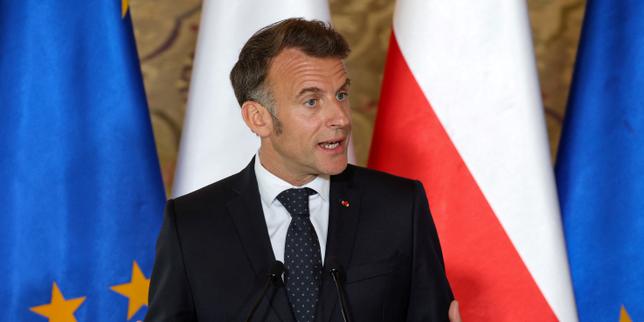
The departure of Viktor Orban from the negotiating theater regarding the European Union's multi-billion euro loan to Ukraine signals more than a mere diplomatic shift; it marks the transition from a political bottleneck to a logistical execution phase. While Emmanuel Macron’s "reasonable optimism" serves as a public-facing sentiment, the underlying mechanics of this financial package depend on a three-pronged structural framework: the normalization of G7-backed collateralization, the mitigation of internal EU veto-points, and the synchronization of disbursement timelines with Ukraine’s fiscal deficit trajectory.
The Mechanics of the G7-Linked Loan Structure
The €35 billion loan proposed by the European Commission functions as the EU's primary contribution to a broader $50 billion G7 package. The fundamental innovation here—and the primary source of previous friction—is the use of immobilized Russian sovereign assets as the primary revenue stream for repayment. This is not a traditional loan serviced by the Ukrainian taxpayer or the EU budget; rather, it is a non-recourse financing vehicle backed by the windfall profits of approximately €210 billion in Russian assets held within the Euroclear system.
The "Orban Variable" disrupted this mechanism by threatening the six-month renewal cycle of EU sanctions. Investors and G7 partners (specifically the United States and Japan) required a longer horizon of stability to ensure the collateral remained frozen. With Orban’s tactical exit or neutralization on this specific vote, the EU can now pivot toward a 36-month renewal period, effectively lowering the risk premium associated with the loan’s duration.
Fiscal Architecture and the Deficit Gap
Ukraine’s 2025 budget anticipates a financing gap exceeding $38 billion. The EU loan is designed to plug the "non-military" portion of this deficit, specifically targeting:
- Macro-Financial Stability: Maintaining the liquidity of the National Bank of Ukraine (NBU) to prevent hyperinflationary spirals.
- Critical Infrastructure Resiliency: Funding the decentralization of the energy grid, which has moved from a maintenance requirement to an existential survival necessity.
- Social Safety Net Continuity: Ensuring civil servant salaries and pension payments remain uninterrupted to prevent internal social fragmentation.
The logic of the loan follows a performance-based disbursement model. Unlike previous grants, these funds are tethered to the Ukraine Plan, a series of 69 reforms and 10 investment indicators covering anti-corruption measures, judicial independence, and public administration transparency. This creates a feedback loop where financial liquidity is the incentive for institutional modernization.
The Problem of Strategic Divergence
Macron’s optimism must be weighed against the persistent risk of "fatigue-driven fragmentation" within the European Council. While the Hungarian veto has been bypassed, the technical implementation faces two distinct bottlenecks:
The Legal Precedent Risk
Using the interest from frozen assets occupies a grey area of international law. The EU’s reliance on the "windfall profit" distinction—arguing that the interest does not belong to the Russian state but to the clearinghouses—is a sophisticated legal workaround. However, it exposes the Euro to potential retaliatory measures and complicates the long-term status of the Euroclear system as a neutral global repository.
The Burden-Sharing Disparity
The U.S. contribution to the $50 billion total remains contingent on the EU guaranteeing that Russian assets will stay frozen for the duration of the loan’s lifespan. Without a formal change to the EU's unanimous voting requirement on sanctions, a single member state can still theoretically collapse the repayment mechanism every six months. Macron’s current confidence implies that a "qualified majority" or a specialized fund structure outside the standard treaty framework is being prepared as a secondary fail-safe.
Operationalizing the Disbursement
The immediate roadmap requires the European Parliament and the Council to finalize the regulation by the end of the current fiscal quarter. The execution phase will follow a rigid sequence:
- Risk Evaluation: Assessing the current market value of the immobilized assets to determine the precise interest yield.
- Asset Segregation: The physical separation of "extraordinary revenues" from the principal assets to insulate the core funds from immediate legal challenges.
- Tranche Synchronization: Aligning the arrival of EU funds with the IMF’s Extended Fund Facility (EFF) reviews. This ensures that Ukraine does not face a "liquidity cliff" where available cash reserves drop below three months of import cover.
The Shift in Power Dynamics
The neutralization of the Hungarian veto on this specific file suggests a maturation of EU "Core Power." By utilizing Article 122 of the Treaty on the Functioning of the European Union (TFEU)—which allows for financial assistance in exceptional circumstances—the Commission has demonstrated a capacity to bypass traditional consensus requirements when systemic stability is at stake.
This move effectively shifts the burden of proof from the supporters of Ukraine to its detractors. Previously, the "pro-Ukraine" coalition had to lobby for support; now, the financial machinery is being hard-coded into the EU budget, meaning a dissenter would have to actively dismantle an existing regulation rather than simply blocking a new one.
Forecast and Strategic Recommendation
The move toward a consolidated loan facility marks the end of "emergency-only" financing and the beginning of "industrialized" support. For Ukraine, this provides a predictable three-year runway, allowing for long-term procurement and reconstruction planning. For the EU, it represents a hardening of its financial borders and a commitment to using the Euro as a geostrategic tool.
Investors and analysts must monitor the "Sanctions Renewal Frequency" as the primary indicator of risk. If the EU successfully moves to a 36-month cycle, the volatility of the loan’s collateral disappears. If it remains at six months, the package will remain under a permanent shadow of political ransom.
The strategic play for the European Commission is to front-load the first €10 billion tranche before the 2024-2025 winter cycle begins. This will force a "fait accompli" on the ground, making any future attempts at obstruction by member states a moot point in terms of immediate operational impact. The focus must now shift from winning the vote to managing the velocity of capital.


:strip_icc()/pic2513216.jpg)