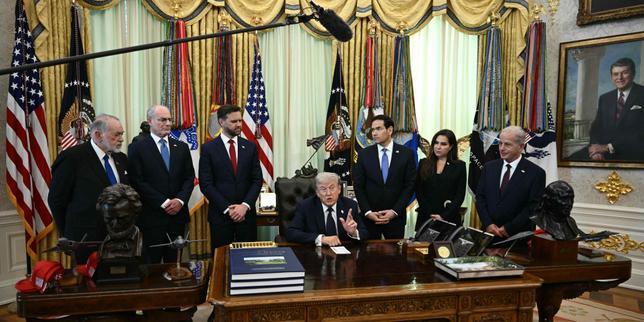
The three-week extension of the Israel-Lebanon ceasefire, brokered by the Trump administration, shifts the conflict from a kinetic attrition cycle to a high-stakes diplomatic bottleneck. This maneuver is not a resolution of the underlying territorial or ideological frictions but a calculated recalibration of the Regional Equilibrium Model. By freezing active hostilities for a fixed twenty-one-day window, the mediator forces both state and non-state actors to quantify their minimum viable security requirements against the threat of renewed, intensified escalation.
The Tripartite Architecture of the Extension
The decision to extend the truce rests on three structural pillars that define the current operational environment.
- Verification Latency: The initial ceasefire period revealed a significant gap between reported compliance and ground-level reality. Intelligence assets require a standardized buffer to verify the withdrawal of Hezbollah units south of the Litani River and the corresponding repositioning of the Israel Defense Forces (IDF). Three weeks represents the minimum duration required to process high-resolution satellite imagery and human intelligence reports into a verifiable compliance metric.
- Political Absorption Capacity: Both the Israeli government and the Lebanese state apparatus face internal pressures that prevent immediate long-term commitments. In Israel, the security cabinet must balance the return of displaced northern citizens with the risk of a "revolving door" insurgency. In Lebanon, the fragile political consensus requires time to integrate the Lebanese Armed Forces (LAF) into southern positions without triggering sectarian blowback.
- Escalation Parity: The extension serves as a "reset" for the cost-of-conflict calculus. For Israel, the economic drain of sustained mobilization and the depletion of interceptor stockpiles create a diminishing return on military investment. For Hezbollah, the degradation of its command-and-control hierarchy necessitates a pause to reorganize. The extension acknowledges that neither side currently possesses the tactical advantage required to achieve a total strategic victory through purely kinetic means.
The Litani Security Function
The core of the negotiation hinges on the enforcement of UN Resolution 1701, specifically the exclusion of armed groups from the zone between the Blue Line and the Litani River. The efficacy of the extension can be measured through a Security Presence Ratio: the density of LAF and UNIFIL personnel relative to the residual presence of non-state actors.
If the LAF fails to establish a dominant physical presence during these three weeks, the ceasefire becomes a strategic liability for Israel. The IDF operates under a doctrine of "Active Neutralization," where any perceived movement of Hezbollah assets back into the buffer zone triggers a preemptive response. This creates a feedback loop: a lack of enforcement leads to IDF strikes, which Hezbollah interprets as a violation, leading to retaliatory fire and the collapse of the truce. The extension aims to interrupt this loop by providing a clear, time-bound window for the "Clear-Hold-Build" transition.
Economic and Logistical Variables
The conflict has imposed a significant Sovereignty Tax on both nations.
- Israel's Northern Sector: The displacement of approximately 60,000 citizens has paralyzed the regional economy, specifically in the technology and agriculture sectors. The cost of maintaining these citizens in temporary housing, coupled with the loss of GDP from the northern "innovation hubs," creates an unsustainable fiscal deficit. The three-week extension is a test of the "Safety Threshold"—the psychological and physical point at which the civilian population feels secure enough to return.
- Lebanon's Infrastructure Deficit: The Lebanese economy, already in a state of hyperinflationary collapse, cannot withstand a full-scale ground invasion or the continued destruction of its civil infrastructure. The extension provides a vital window for humanitarian aid corridors to stabilize, though it does little to address the systemic debt crisis.
The mediator’s role here is to convert these economic pressures into diplomatic leverage. By tying the extension to specific "milestone markers"—such as the successful deployment of additional LAF brigades—the U.S. administration is effectively conditioning Lebanese sovereignty on its ability to police its own borders.
The Problem of Spoilers and Proxy Interference
A ceasefire in Lebanon does not exist in a vacuum. It is deeply integrated into the broader regional theater, specifically the ongoing volatility in Gaza and the IRGC (Islamic Revolutionary Guard Corps) logistical pipeline. The "Spoiler Risk" in this extension is high.
The IRGC views the Lebanon front as a critical "Pressure Valve" for its regional strategy. If the extension leads to a permanent stabilization of the northern border, Iran loses its primary lever of deterrence against direct strikes on its nuclear or energy infrastructure. Therefore, the probability of a "Third-Party Trigger"—an unattributed rocket attack or a staged provocation designed to force an Israeli response—increases as the twenty-one-day deadline approaches.
Cognitive Dissonance in War Termination
One of the most significant barriers to a durable peace is the mismatch in "Victory Definitions." For the IDF, success is defined by the permanent degradation of Hezbollah’s short-range missile capability. For Hezbollah, success is defined by mere survival and the ability to claim "Resistance" through continued presence.
The extension attempts to bypass this by shifting the focus from Outcome-Based Negotiation (who won?) to Process-Based Coordination (how do we manage the border?). This shift is precarious. It relies on the assumption that both parties are rational actors who value economic stability over ideological objectives. History in the Levant suggests this is a flawed premise, yet it remains the only viable diplomatic path when total military victory is off the table.
Operational Risks of the Twenty-One-Day Window
The brevity of the extension creates an Urgency Paradox. While it forces speed in negotiation, it also encourages both sides to maximize their tactical positioning before the clock runs out.
- Intelligence Gathering: Both sides will utilize the "quiet" to fly reconnaissance drones and reposition covert sensors. This "passive escalation" can be misidentified as preparation for an offensive.
- Resource Reallocation: Israel may use the pause to shift elite divisions toward the southern front or toward high-readiness drills for Iranian targets. Hezbollah will likely use the time to harden its underground bunkers further north.
- The "Last-Minute Strike" Phenomenon: Historically, the final 48 hours of a ceasefire window are the most dangerous. Parties often launch "exit salvos" to ensure the final narrative of the conflict is one of strength rather than submission.
Strategic Forecasting: The Post-Extension Scenarios
As the twenty-one-day period concludes, the regional architecture will likely fracture into one of three distinct states:
- Scenario A: The Rolling Extension: If the LAF shows credible progress in the south, the Trump administration will likely push for a secondary 60-day window. This would signal a transition from a "truce" to a "stabilization phase," involving international funding for Lebanese reconstruction.
- Scenario B: The Partial Breakdown: A return to "Low-Intensity Exchange." Israel maintains a policy of targeted assassinations and precision strikes against logistics hubs, while Hezbollah maintains sporadic rocket fire. This "managed conflict" prevents total war but ensures the northern displacement remains permanent.
- Scenario C: Total Re-Escalation: Failure of the LAF to deploy or a significant "spoiler" event leads to an IDF ground maneuver beyond the Litani. This would likely coincide with a broader U.S. "Maximum Pressure" campaign against Iranian proxies across the Middle East.
The Trump Doctrine of Transactional Security
The involvement of Donald Trump introduces a "Transactional Volatility" into the equation. Unlike previous administrations that prioritized multilateral consensus and long-term treaty frameworks, the current approach is strictly bilateral and results-oriented.
The messaging to Israel is clear: security guarantees are tied to the speed of conflict resolution. The messaging to Lebanon (and by extension, its backers) is equally stark: the absence of a controlled border will result in the removal of all diplomatic constraints on Israeli military action. This "Carrot and Stick" model relies heavily on the personal credibility of the mediator. If the three-week window expires without a tangible shift in the security landscape, the U.S. loses its primary tool of influence: the threat of "unleashing" the IDF.
Implementing the Buffer Zone
For the extension to be meaningful, the "Hold" phase must be militarized. The Lebanese Armed Forces are currently under-equipped and politically constrained. A strategic play would involve the immediate transfer of non-offensive military hardware (transport, communication, night vision) to the LAF units designated for the south. This "Capacity Injection" serves two purposes: it enables the LAF to actually perform the verification tasks and it provides a "Sovereignty Signal" to Hezbollah that the state is re-asserting control.
Failure to reinforce the LAF during this three-week window renders the extension a mere tactical pause for Hezbollah. The "Security Gap" between the Blue Line and the Litani must be filled by a professional military force, or it will inevitably be filled by the IDF.
The final strategic play is not found in the text of the ceasefire agreement, but in the enforcement of the "No-Go Zone." Israel must maintain a credible, public threat of immediate re-entry should Hezbollah assets be detected south of the Litani. Concurrently, the international community must provide the Lebanese state with the physical means to occupy its own territory. Without this dual-track enforcement, the three-week extension is simply a countdown to a more violent phase of the conflict. The window of opportunity is narrow, and the tolerance for failure is zero. Any deviation from the verification timeline must be met with immediate, pre-defined diplomatic or military consequences to maintain the integrity of the mediation.