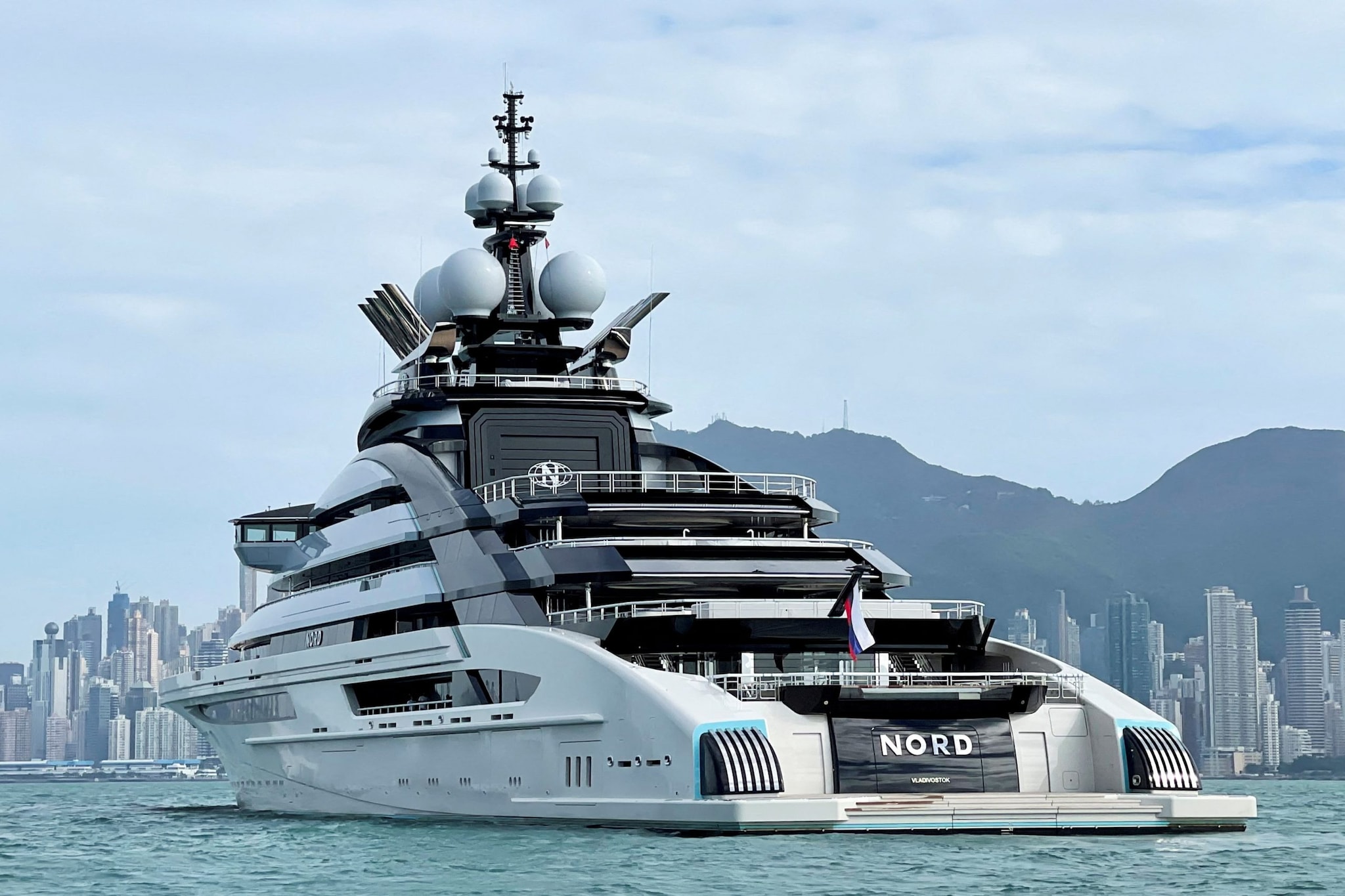
The mainstream media has a fetish for tracking $500 million hunks of floating steel as if they are pieces on a global chessboard. When a superyacht linked to a sanctioned Russian billionaire pokes its nose through the Strait of Hormuz, the headlines scream about "defiance" and "geopolitical tension." It is a convenient narrative. It is also completely hollow.
Tracking these vessels has become the ultimate voyeuristic distraction for the middle class. We watch AIS (Automatic Identification System) transponders like sports fans, pretending that seizing a hull full of Italian marble and gold-plated bidets somehow cripples the Russian war machine. It doesn't. In fact, the obsession with these maritime assets proves just how little the West understands about the fluid nature of modern capital.
The Superyacht as a Sunk Cost
The primary fallacy in the "seize the yacht" fever dream is the idea that these boats are liquid assets. They aren't. They are liabilities. A 300-foot vessel costs roughly 10% of its purchase price every single year just to keep from sinking or rusting into a biohazard.
When the US or EU "seizes" a yacht, they aren't winning. They are taking on a massive maintenance bill paid for by their own taxpayers. I have seen port authorities lose their minds over the docking fees and insurance premiums required to keep a confiscated vessel "frozen." Meanwhile, the billionaire owner? He has already written that asset off. To a man worth $15 billion, a $500 million yacht is a rounding error. It is a toy he can’t play with right now, not his lifeblood.
The boat crossing the Strait of Hormuz isn't a "victory" for the billionaire, nor is its potential seizure a "loss." It is a 15,000-ton metaphor for the inefficiency of maritime law.
The Hormuz Mirage
The Strait of Hormuz is the world's most over-analyzed choke point. Every time a high-profile vessel enters these waters, analysts start talking about "safe havens" in the UAE or hidden ports in the Gulf. This misses the mechanical reality of how these ships operate.
A superyacht in the Strait isn't necessarily "escaping." It is often just seeking a jurisdiction that values port fees over political posturing. The UAE and other Gulf states haven't "chosen a side" in the way Western pundits hope. They have simply remained open for business. Capital, like water, flows to the path of least resistance.
Why AIS Ghosting is a Fairy Tale
You’ll often hear reporters breathlessly claim a ship "went dark" by turning off its AIS. This is treated like a masterstroke of international espionage. In reality, it is about as effective as closing your eyes and hoping nobody sees you.
- Commercial Satellite Imagery: Every square inch of the Strait is photographed multiple times a day by private companies like Maxar and Planet Labs.
- SIGINT (Signals Intelligence): Navies in the region track the unique radar signatures and engine noise of these massive hulls.
- Port Logs: You cannot hide a vessel the size of a city block once it docks.
Turning off AIS isn't about hiding; it’s about reducing the noise from amateur ship-trackers on Twitter. It is a PR move, not a tactical one.
The Legal Fiction of Ownership
The biggest misconception the public holds is that "Billionaire X" owns "Yacht Y."
He doesn't. A shell company in the British Virgin Islands owns a holding company in Cyprus, which leases the vessel to a management firm in Malta, which hires a crew through a shell in the Isle of Man.
When a yacht crosses into "friendly" waters, it isn't just about the physical location. It’s about the legal jurisdiction of the flag it flies. The "sanctioned" status of an individual is a messy, porous net. If the yacht is flagged in a country that doesn't recognize US or EU sanctions—say, the Cook Islands or Sierra Leone—the legal basis for seizure becomes a decade-long nightmare of litigation.
I’ve watched legal teams spend three years arguing over the definition of "beneficial ownership" while the ship in question sits in a harbor, slowly accumulating barnacles and depreciating toward zero. The only people getting rich off these yachts are the maritime lawyers.
The High Cost of Moral Grandstanding
If the goal of sanctions is to change behavior, seizing yachts is the least effective tool in the shed. Does anyone honestly believe a billionaire is going to walk into the Kremlin and demand an end to a war because he can’t spend July in Saint-Tropez?
It’s the opposite. These seizures drive that capital—and those individuals—closer to the regimes the West is trying to isolate. It forces them to reinvest in domestic infrastructure or "neutral" economies like Dubai and Istanbul. We are literally subsidizing the development of alternative financial ecosystems by kicking these assets out of our own.
The Maintenance Trap
Consider the "Amadea." Seized in Fiji, sailed to San Diego. The US government is burning through millions of dollars a month to keep it from becoming an environmental disaster. If they win the legal battle to sell it, the market for "sanctioned" yachts is currently non-existent. Nobody wants to buy a boat that comes with a permanent target on its hull and a history of international litigation.
We are seizing assets that we cannot sell, to punish people who don't care, using laws that are easily circumvented.
The Reality of Maritime Sovereignty
The Strait of Hormuz is a reminder that the world is not a monolithic block of Western-aligned interests. The fact that a ship can sail through those waters despite being "blacklisted" isn't a failure of the system; it is a feature of global sovereignty.
We have spent thirty years globalizing the economy, ensuring that ships can be built in Korea, owned in the Caribbean, crewed by Filipinos, and docked in the Middle East. You cannot suddenly flip a switch and expect that tangled web to behave like a neat, disciplined army.
Stop Asking "How Did It Get Through?"
The question is flawed. It got through because the ocean is big, international law is a patchwork of contradictions, and most of the world cares more about fuel prices and trade stability than about which oligarch gets to use his helipad.
If you want to actually impact the flow of sanctioned wealth, stop looking at the boats. Look at the insurance markets. Look at the bunkering companies that provide the fuel. Look at the dry docks that provide the repairs. But that’s boring. It doesn't make for a good headline. It doesn't allow for a grainy satellite photo of a sleek white hull.
The Uncomfortable Truth
The superyacht in the Strait of Hormuz is not a sign of a "leak" in the sanctions. It is a sign that the sanctions, as currently designed, are a performance. They are intended to make the Western public feel like "something is being done" without requiring the actual economic sacrifice that a total trade embargo would demand.
We want the drama of the chase without the reality of the cost.
As long as we focus on the symbols of wealth rather than the mechanisms of power, these "ghost ships" will continue to sail. They aren't hiding from us. They are laughing at us. They know that by the time the legal paperwork is filed, the world will have moved on to the next shiny distraction, and they’ll still be afloat, somewhere just beyond the reach of a process server.
The sea doesn't care about your sanctions, and neither does the capital that built these ships.
Stop watching the horizon for yachts. Start watching the ledgers for the money that’s already moved to where you can't see it.