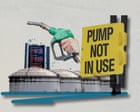
The Australian obsession with fuel price trackers is a national delusion. We treat the ACCC’s weekly charts and the colorful maps of PetrolSpy like a high-stakes stock market, as if saving three cents a liter on a Tuesday afternoon is the ultimate victory for the household budget. It isn't. It’s a distraction—a low-value mental tax we pay because we refuse to address the actual structural idiocy of our transport choices.
I have spent decades watching the Australian energy sector. I’ve seen the panic when the Singapore MOGAS95 benchmark ticks up and the collective sigh of relief when it drops. But here is the brutal truth: if your financial stability depends on whether you fill up in the "low" phase of a six-week cycle in Sydney or Melbourne, you aren’t a savvy consumer. You’re a victim of your own inefficiency.
The Myth of the "Smart" Fill-Up
The competitor guides tell you to "track shipments" and "watch the cycles." This is hobbyist behavior masquerading as financial advice. The average Australian passenger vehicle has a fuel tank capacity of roughly 50 to 60 liters. If you spend twenty minutes driving across three suburbs to save five cents per liter, you have "saved" $3.00.
You likely spent half of that in the fuel required to get to the cheaper station. You spent the other half in the opportunity cost of your time. If your time is worth less than $9.00 an hour, by all means, keep chasing the charts. If you value your life, delete the apps.
The "price cycle" is a uniquely Australian phenomenon—a retail artifact where prices spike overnight and drift down over weeks. It is not a law of nature; it is a game of chicken played by retailers like Ampol, BP, and 7-Eleven. By obsessing over these cycles, you are participating in the game. You are the liquidity they need to keep the volatility alive.
Why Your Car is the Real Problem
The real scandal isn't that petrol hit 240 cents per liter in Darwin this week. The scandal is that Australia remains the dumping ground for the world’s most inefficient internal combustion engines. While the rest of the developed world moved toward stringent efficiency standards, we spent years buying heavy, aerodynamic-nightmare SUVs and "dual-cab" utes that guzzle fuel like it’s 1995.
Imagine a scenario where the average Australian car achieved the fuel efficiency of a modern European hybrid—roughly 3.8L/100km. At that level of efficiency, global oil shocks become a background hum. A 20-cent jump in the price of diesel wouldn't be a headline; it would be a rounding error.
Instead, we drive vehicles that average 11L/100km and then scream at the Federal Government to cut the fuel excise. This is like buying a house with no insulation and then complaining about the price of electricity. You are focused on the price of the input because you are too scared to look at the wastefulness of the output.
The Geopolitical Theater
The current "supply crisis" narrative is another magnificent distraction. We are told to worry about Middle Eastern tensions and the blockade of oil routes. Yes, Australia imports over 90% of its fuel. Yes, our strategic reserves are often below the International Energy Agency’s 90-day benchmark.
But watching "shipment trackers" won't make the tankers move faster. It won't build refineries in Geelong or Lytton that have already been shuttered. The Australian Institute of Petroleum can provide all the charts in the world showing how Brent Crude correlates with the AUD/USD exchange rate, but knowing the data doesn't give you power. It only gives you anxiety.
The data shows that wholesale prices rise fairly evenly, but retail prices at the pump diverge wildly. This isn't just "market forces." It’s a reflection of how much a specific neighborhood is willing to be price-gouged before they revolt. In regional areas like the Barossa Valley or Mildura, where there is no competition, the "tracker" is just a scoreboard for how much you're losing.
The Cost of Convenience is the Only Price That Matters
If you want to actually beat the system, stop looking at the charts and start looking at your odometer.
- The Proximity Trap: Most people buy fuel within 5km of their home or workplace. Retailers know this. They price for the convenience of the commute, not the global price of oil.
- The "Discount" Scam: The 4-cent-off vouchers from Coles or Woolworths are designed to keep you inside their ecosystem. They are not a discount; they are a loyalty tax. If you have to buy $50 worth of overpriced groceries to "save" $2 on fuel, you’ve lost.
- The Diesel Delusion: We’ve seen diesel hit 300 cents per liter in some regional spots. The economy runs on diesel—freight, farming, and mining. When you buy a massive diesel ute for a suburban school run, you are competing for fuel with the trucks that bring your food to the supermarket. You are driving up your own cost of living.
Stop Praying for Lower Prices
The era of cheap, stable energy is dead. The transition to a post-carbon economy was never going to be a "seamless" evolution. It is a series of shocks. Every time you open a fuel watch app, you are admitting that you are still tethered to a volatile, 20th-century energy model that doesn't care about your bank account.
The most effective way to "watch" fuel prices is to make them irrelevant to your life. Buy a smaller car. Buy a hybrid. Use the bus. Or, if you must drive that four-tonne tank to the office, stop complaining when the bill comes due. You aren't "tracking" a market; you're monitoring the price of your own refusal to adapt.
The charts are clear. The shipments are coming. The prices will spike again. The only variable you actually control is how much of that poison you choose to swallow.