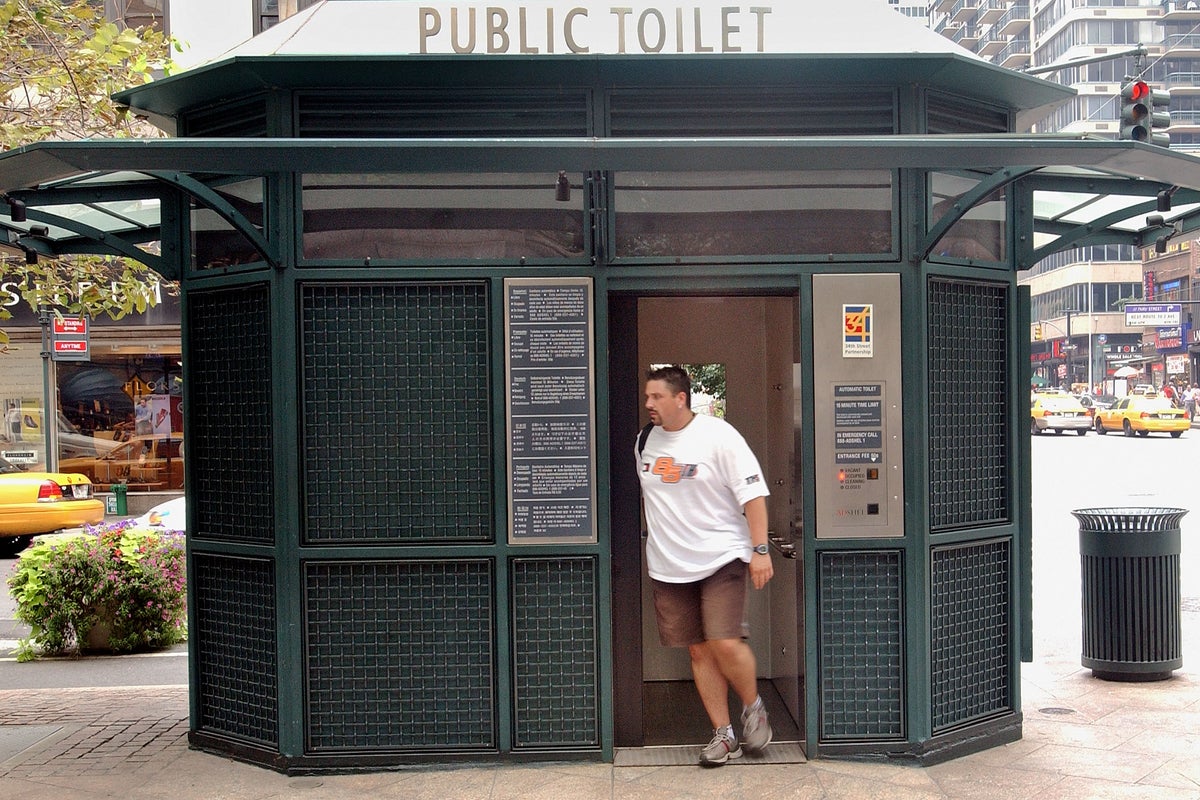
New York City doesn’t have a bathroom problem. It has a courage problem.
The standard narrative—pushed by every hand-wringing op-ed and frantic city planner—is that New York is "caught short" ahead of the 2026 World Cup. The logic is lazy: millions of fans are coming, they will need to pee, and since there aren't enough green-painted stalls in Central Park, the city is destined to become a literal sewer.
This panic assumes that the solution is a massive, taxpayer-funded construction spree of standalone public toilets. That is a loser’s game.
I have spent years analyzing urban infrastructure and private-public partnerships. I’ve seen cities pour millions into high-tech "self-cleaning" pods that become broken-down magnets for illicit activity within six months. The push for more municipal bathrooms is a 19th-century solution to a 21st-century logistics crisis.
If New York tries to build its way out of this "shortage" before the first whistle blows in East Rutherford, it won't just fail—it will waste a fortune on infrastructure that will be derelict by 2027.
The Myth of the Public Toilet
The premise of the "public bathroom crisis" is flawed because it treats the bathroom as a human right that must be provided by the state. In a dense, vertical city like Manhattan, that is a physical and financial impossibility.
Space in New York is the most valuable commodity on earth. Asking the Department of Parks and Recreation to manage a massive influx of transient waste is like asking a librarian to run a nuclear power plant. They aren't equipped for it, and the costs are staggering.
The average cost to build a single standalone public restroom in NYC can exceed $2 million. That’s not a typo. Between the plumbing hookups, the union labor, the ADA compliance, and the inevitable bureaucratic delays, you are looking at a price per square foot that would make a penthouse developer blush.
Why are we obsessed with building new ones when there are already thousands of bathrooms exactly where the crowds will be?
The Private Sector Hoarding Solution
The bathrooms exist. They are just locked behind a "Customers Only" sign.
Walk into any Starbucks, Target, or mid-tier hotel lobby. They have the infrastructure. They have the cleaning crews. They have the security. The problem isn't a lack of toilets; it's a lack of access.
The city shouldn't be building $2 million sheds. It should be subsidizing the "Open Door" policy.
Imagine a scenario where the city pays a monthly stipend to any ground-floor business that agrees to keep its restroom open to the public during World Cup hours.
- No new construction.
- No new plumbing.
- Immediate scalability.
For a fraction of the cost of one new park bathroom, the city could unlock 500 existing ones in high-traffic zones like Midtown and Downtown Brooklyn. This isn't a radical idea; London and several German cities have used "Community Toilet Schemes" for years.
But New York won't do it. Why? Because it requires admitting that the private sector is better at maintenance than the government.
The "Safety" Argument is a Cop-Out
Critics always scream about the same three things: hygiene, drugs, and homelessness. They argue that opening private bathrooms to the public will turn a local bakery into a sanctuary for the "wrong" kind of activity.
This is where the nuance gets ignored.
A bathroom is only "dangerous" or "dirty" when it is isolated and unmonitored. The "automated public toilets" (APTs) that the city loves so much are failure points because they are opaque boxes on street corners. They provide total privacy with zero oversight.
A bathroom inside a functioning business is naturally regulated by the presence of staff and other patrons. It is the "eyes on the street" principle, applied to plumbing. By forcing people into hidden, standalone stalls, the city actually creates the very safety issues it claims to be preventing.
The World Cup Crowds Aren't Who You Think They Are
The "World Cup Panic" assumes a disorganized mob of backpackers with weak bladders.
The reality? The 2026 World Cup is a high-net-worth event.
The people flying in for these matches are staying in $800-a-night hotels. They are eating at restaurants. They are shopping. They are already "customers." The strain on the system isn't coming from the fans; it’s coming from the city's inability to manage the transit flow around them.
When 80,000 people leave MetLife Stadium and funnel back into Port Authority, they don't need a public toilet in a park three miles away. They need the transit hubs to function as high-volume throughput centers.
The current "fix" involves adding a few extra stalls in Bryant Park. It’s the equivalent of trying to stop a flood with a sponge.
The Math of Maintenance
Let’s talk about the real killer: Opex vs. Capex.
Politicians love "Capex" (Capital Expenditure). They get to cut a ribbon on a new building. It looks great in a press release.
They hate "Opex" (Operating Expenditure). Maintenance is boring. Cleaning is expensive. Security is a headache.
New York’s existing public bathrooms are often disgusting not because they are old, but because the Opex budget is the first thing to get slashed during a fiscal crunch. Building 100 new bathrooms for the World Cup is a death sentence for the Parks budget. Who is going to clean them in 2028?
The city cannot afford the bathrooms it already has. Adding more is fiscal insanity.
The "Pay-to-Pee" Taboo
Here is the truth no one wants to hear: We need to bring back the pay toilet.
In the 1970s, a group called the Committee to End Pay Toilets in America (CEPTIA) successfully lobbied to ban coin-operated stalls, arguing they discriminated against women. It was a victory for "equity" that resulted in the total disappearance of functional toilets.
If you make something free, you guarantee a shortage. That is basic economics.
If we want clean, safe, available bathrooms for the World Cup, we should allow private operators to charge a nominal fee—say, $2.00—via contactless payment.
- It funds a dedicated cleaner on-site.
- It deters loitering.
- It ensures the facility stays operational.
People will happily pay $2.00 to avoid the indignity of a subway station floor. The "equity" argument fails when the alternative is "zero bathrooms for anyone."
Stop Asking "Where?" and Start Asking "How?"
The "People Also Ask" sections are filled with queries like "Where are the cleanest public bathrooms in NYC?" or "Are NYC public toilets safe?"
The very fact that these questions exist proves the current model is a failure. You don't ask these questions in Tokyo or Singapore. You don't even ask them in a well-run American airport.
The difference is that those entities view the bathroom as a high-stakes logistical component, not a nuisance to be tucked away.
New York needs to stop viewing the World Cup as a deadline to build stalls and start viewing it as a deadline to modernize access.
- Ditch the standalone builds. Cancel the contracts for the $2 million sheds.
- Tax breaks for toilets. Give every bodega and cafe a tax credit if they remove the "Customers Only" lock and maintain a 4-star "Pee Rating" on a city-monitored app.
- The "Pee Pass." Create a digital pass for tourists that gives them access to a network of high-end private bathrooms for a flat fee.
The Hard Truth for the 2026 Crowd
If you are coming to New York for the World Cup, do not look for a green sign with a stick figure on it. You will find it locked, broken, or occupied by someone who isn't there to use the sink.
The city’s "Game of Thrones" headline is right about one thing: the current system is medieval. But the solution isn't more castles; it's tearing down the walls of the private ones that already exist.
If the city doesn't pivot now, the World Cup won't be remembered for the goals. It will be remembered for the smell of a city that tried to solve a massive logistical surge with a handful of overpriced outhouses.
The toilets are already there. Open the doors or get out of the way.


:strip_icc()/pic2513216.jpg)