A heavy humidity hangs over the crowd in Chhatarpur. Thousands of bodies are pressed together, a sea of white and saffron swaying under the relentless Indian sun. You can smell the incense, the sweat, and that intangible, electric scent of desperate hope. Everyone here is waiting for a miracle, or at least a glimpse of the man who promises them.
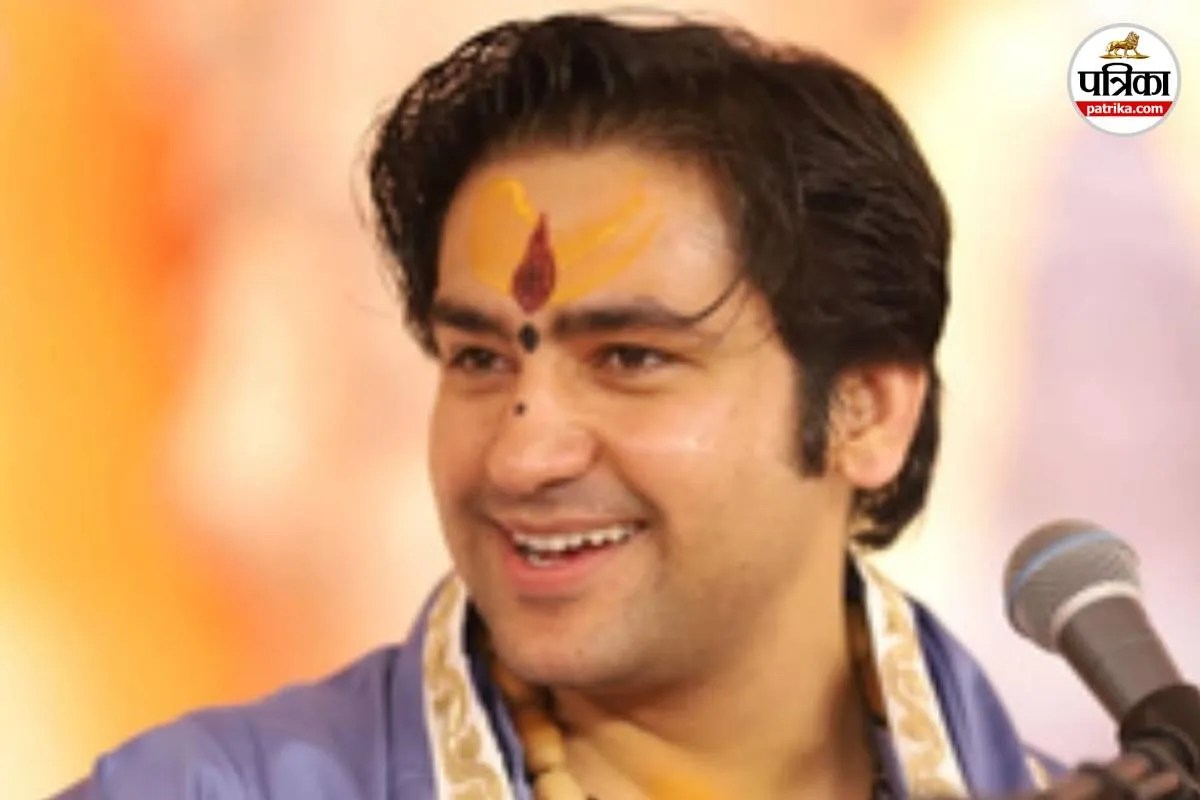
Then, he appears. Dhirendra Krishna Shastri, better known to the digital world as Bageshwar Dham Sarkar, walks onto the stage. He isn't just a preacher anymore. He is a phenomenon. If you found value in this piece, you might want to look at: this related article.
The video currently tearing through the social media landscape—the one your neighbors are whispering about and your WhatsApp groups are flooding with—is not just about what he says. It is about the way he says it. In this latest footage, the "Baba" isn't merely sitting on his throne. He is standing, his eyes wide, his voice a rhythmic thunder that seems to vibrate in the chests of the elderly women in the front row.
He calls out a name. A man from the back of the crowd stumbles forward, his face a mask of confusion and terror. Shastri hasn't met this man. He hasn't seen his ID. Yet, he begins to scribble on a small slip of paper. For another angle on this story, see the recent update from IGN.
The pen moves with a frantic energy. It is the sound of a verdict being written.
The Anatomy of a Viral Moment
Why does this specific clip have millions of views within hours? It isn't because of high-end cinematography or a polished script. It is raw. It feels like a leak from a world we aren't supposed to see.
When Shastri reveals the contents of the paper—the man’s father’s name, the exact amount of debt he owes, the specific illness of his youngest child—the crowd erupts. It is a roar that transcends religion. It is the sound of people seeing the impossible made manifest.
Consider the psychology at play here. We live in an era of data and algorithms. We are told that our lives are predictable, tracked by cookies and GPS. To see a man in a loincloth and a wrap-around shawl bypass the entire digital infrastructure to "know" a stranger’s soul feels like a rebellion. It is a glitch in the modern matrix.
Critics call it "cold reading." They suggest he has plants in the audience, or that his team gathers information from the long lines of devotees who wait for days. But for the person standing on that stage, looking into Shastri’s eyes, those explanations are thin. They want to believe. Belief is a powerful narcotic.
The Stakes of the Sacred
To understand the weight of this video, you have to look past the "Baba" and look at the faces in the background.
There is a woman in a torn cotton sari. She has traveled three hundred miles on a crowded train. She didn't come for a magic trick. She came because the local hospital told her there was nothing left to do. She represents the "invisible stakes." For her, this viral video isn't entertainment. It is a lifeline.
If the Baba is right about the stranger's debt, maybe he is right about her daughter’s recovery.
This is where the viral nature of the content becomes complex. The digital reach of Bageshwar Dham acts as a force multiplier for faith. Every share, every "Jai Ho" in the comments, adds a brick to the temple of his authority. In the video, Shastri’s charisma is his greatest weapon. He blends the ancient language of the Vedas with the aggressive posture of a modern influencer. He is loud. He is funny. He is occasionally frightening.
He understands that in the attention economy, silence is death.
The Mirror of Modern India
This video is a mirror. If you look into it and see a charlatan, you are looking at one version of India—the rational, the skeptical, the scientific. If you look into it and see a savior, you are looking at another—the devotional, the ancient, the desperate.
The tension between these two worlds is what fuels the fire of his fame.
Shastri knows his audience. He speaks in a dialect that feels like home. He makes jokes about modern life, mocking the very technology that is currently broadcasting his face to millions. There is a delicious irony in watching a man dismiss the material world while his video generates enough ad revenue to build cities.
But the "hoshes" (senses) of the people aren't being "blown" by the irony. They are being overwhelmed by the spectacle.
In the middle of the clip, there is a moment of silence. Shastri stops speaking. He looks directly into the camera. For a second, the performer vanishes, and you see a young man who has realized he holds the heartstrings of a nation in his hands. It is a heavy burden, or perhaps, a very lucrative one.
The Paper and the Pen
The "parcha" (the slip of paper) is the centerpiece of the Bageshwar Dham mythos. It is the physical evidence of the metaphysical.
Imagine you are that man on stage. You are surrounded by a sea of people. A man you have never met tells you your deepest secret. Whether it is a trick of the mind or a gift from the divine, the result is the same: your reality shifts.
The viral video captures this shift. It documents the exact moment a human being loses their skepticism. That is the "hook" that keeps you scrolling. We are all waiting for that moment in our own lives—the moment where the world proves it is more magical than it appears.
The video ends not with an answer, but with a question. Shastri turns back to his throne, the crowd chanting his name, and the screen fades to black.
The man with the debt is left standing there. The woman in the sari is still waiting. And we, the viewers, are left holding our phones, wondering if we just witnessed a miracle or the world's most successful marketing campaign.
The incense smoke clears, but the image of the pen moving across the paper remains, etched into the collective digital memory of a billion people.