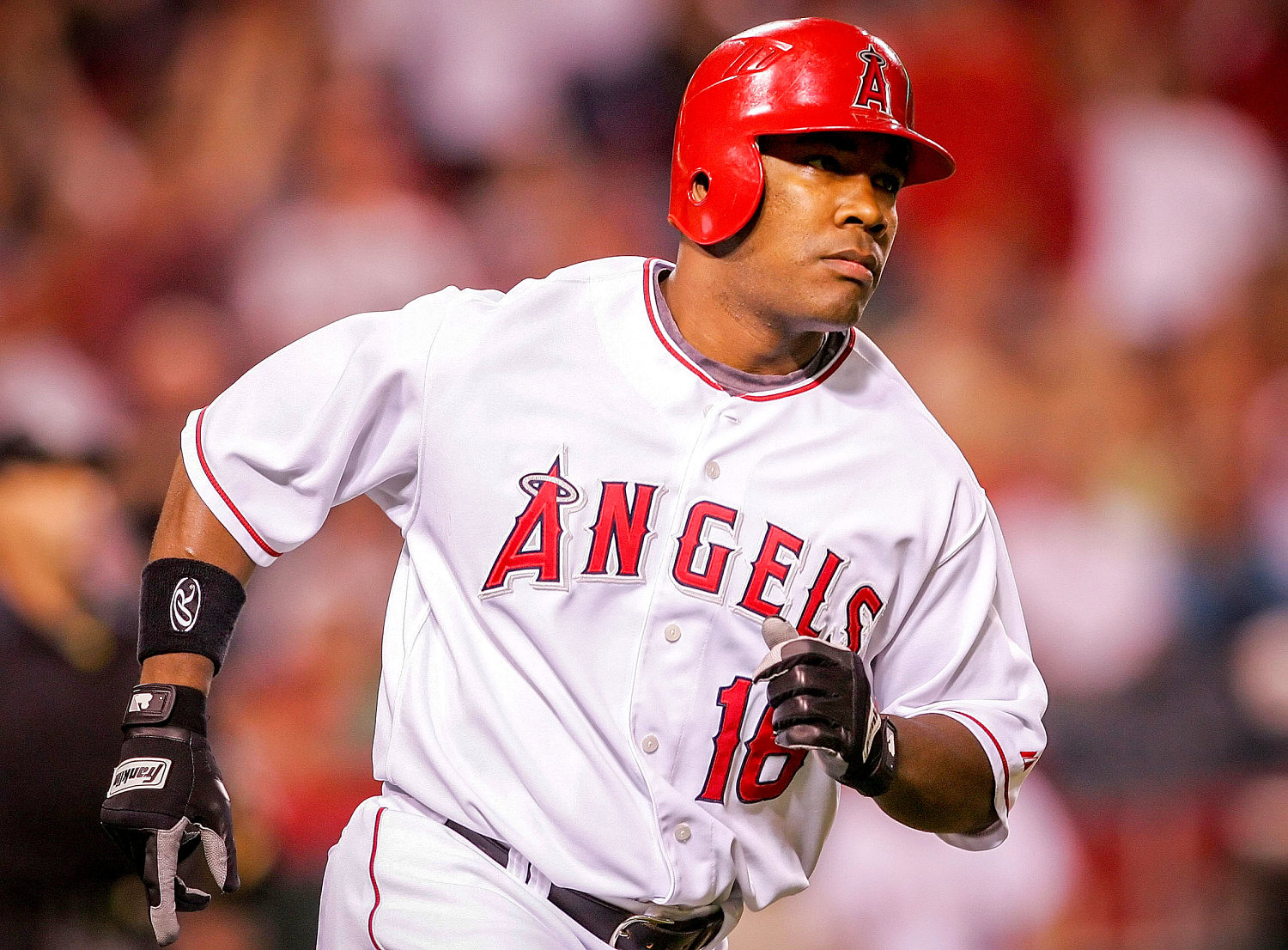
The dirt in Anaheim always seemed a little redder under the October lights of 2002. If you close your eyes, you can still hear the rhythmic, deafening thunder of those plastic ThunderStix—a sound that defined a generation of Orange County baseball. In the middle of that cacophony stood a man who seemed entirely immune to it. Garret Anderson didn’t flip his bat. He didn’t scream at the sky. He just hit.
He hit until the Angels were champions. He hit until his name was synonymous with a franchise. And then, at 53, he stopped.
The news of Garret Anderson’s passing isn’t just a line in a box score or a somber update on a ticker. It is a sudden, jarring fracture in the childhood memories of anyone who grew up watching the left-handed swing that looked more like silk than a weapon. To lose a World Series hero at 53 feels like a betrayal of the natural order. Athletes are supposed to be immortal, or at least, they are supposed to grow gray alongside us, telling stories at FanFests until their hair matches the white of their jerseys.
The Mechanics of Grace
Most people see a baseball player and see a collection of statistics. They see the .293 career batting average, the three All-Star appearances, and the 2,529 hits. But stats are cold. They don’t capture the way Anderson’s jersey rippled as he shifted his weight.
Think of a pendulum. If you push it, it moves with a predictable, inevitable gravity. That was Garret at the plate. While other hitters were gritting their teeth and tensing their forearms, Anderson looked like he was taking a stroll through a park. He was the "Silent Assassin." He didn’t need the bravado because he had the barrel of the bat.
In the 2002 World Series, the stakes were suffocating. The Angels were facing a Giants team led by the most feared hitter in the history of the game. The tension in the stadium was a physical weight. In Game 7, when Anderson stepped up with the bases loaded in the third inning, the world held its breath. He didn't try to hit the ball to the moon. He just stayed within himself. He lined a double into right field, clearing the bases. Three runs. The margin of victory. A city’s first title, delivered by the man who refused to be rattled.
The Human Cost of the Game
We forget that behind the highlight reels, these men are flesh and bone. At 53, the body should be entering a second act. It is the age of coaching Little League, of finally enjoying the fruits of a career spent in the grueling cycle of bus rides, red-eye flights, and the constant, nagging ache of a torn labrum or a strained hamstring.
To lose a figure like Anderson so young forces us to confront the fragility of the "iron man" persona. He played 15 seasons for the Angels. He was the bridge between the old California Angels and the modern era of the Los Angeles Angels of Anaheim. He was the constant. Managers changed. Owners changed. The stadium was renovated. But Garret was always there, patrolling left field with a nonchalance that masked an elite competitive fire.
Consider the life of a professional athlete after the lights go out. You spend twenty years being told where to be, what to eat, and how to swing. Then, it stops. The silence can be louder than the 45,000 fans. Anderson handled his post-playing years with the same quiet dignity he brought to the clubhouse. He wasn't a man who craved the spotlight. He didn't need the validation of a camera lens. He was a family man, a teammate, and a quiet pillar of the community.
The Invisible Stakes of a Legacy
What is a legacy? Is it a plaque in a Hall of Fame? Is it a retired number hanging in the rafters?
For the fans in Anaheim, Anderson’s legacy is a feeling. It’s the memory of a warm Tuesday night in July when the world felt simple. It’s the way a father explained to his son how to keep his head still during a swing, using Garret as the only example that mattered.
The tragedy of a life cut short at 53 is the loss of the "what if." What if he had another thirty years to mentor the next generation of hitters? What if he could have seen his grandchildren play on the same fields where he became a legend? The "invisible stakes" of sports aren't about the wins and losses; they are about the way these players become the background music to our lives. When that music stops unexpectedly, the silence is deafening.
Beyond the Box Score
To understand why this hurts, you have to understand the culture of the Angels clubhouse during the early 2000s. It wasn't a team of superstars; it was a team of grinders. They were the "Rally Monkey" team. They were the "Cowboy" Gene Autry’s dream finally realized. And Anderson was the heartbeat.
He was the guy who stayed late in the cages. He was the one who didn't complain when the media ignored him in favor of flashier players. He was the professional's professional.
The shock of his passing ripples through his former teammates—men like Darin Erstad, Tim Salmon, and Troy Percival. These men shared a foxhole. They saw the sweat and the blood that the television cameras never caught. To them, he wasn't a "World Series Champion." He was "G." He was the guy you wanted at the plate when the season was on the line.
The Final Out
There is no way to make sense of a 53-year-old passing away. It is a reminder that the clock is always ticking, even for those who seemed to move in slow motion.
We look at the 2002 trophy and it shines a little less today. The highlights of that Game 7 double feel a bit more poignant. But maybe that’s the point of storytelling—to ensure that even when the man is gone, the swing remains.
The next time you see a kid in a dirt-stained jersey, standing in a suburban park, trying to mimic a smooth, effortless left-handed stroke, know that Garret Anderson is still there. He isn't in the obituaries. He isn't just a name on a jersey. He is the quiet ghost in every perfectly timed line drive that screams into the gap.
He showed us that you don’t have to be the loudest person in the room to be the most important. You just have to show up, do your job, and swing through the ball.
The stadium is quiet now. The ThunderStix have long since been deflated and tossed away. But if you listen closely to the wind whistling through the Big A, you can almost hear the crack of the bat—one last time—echoing into the California night.