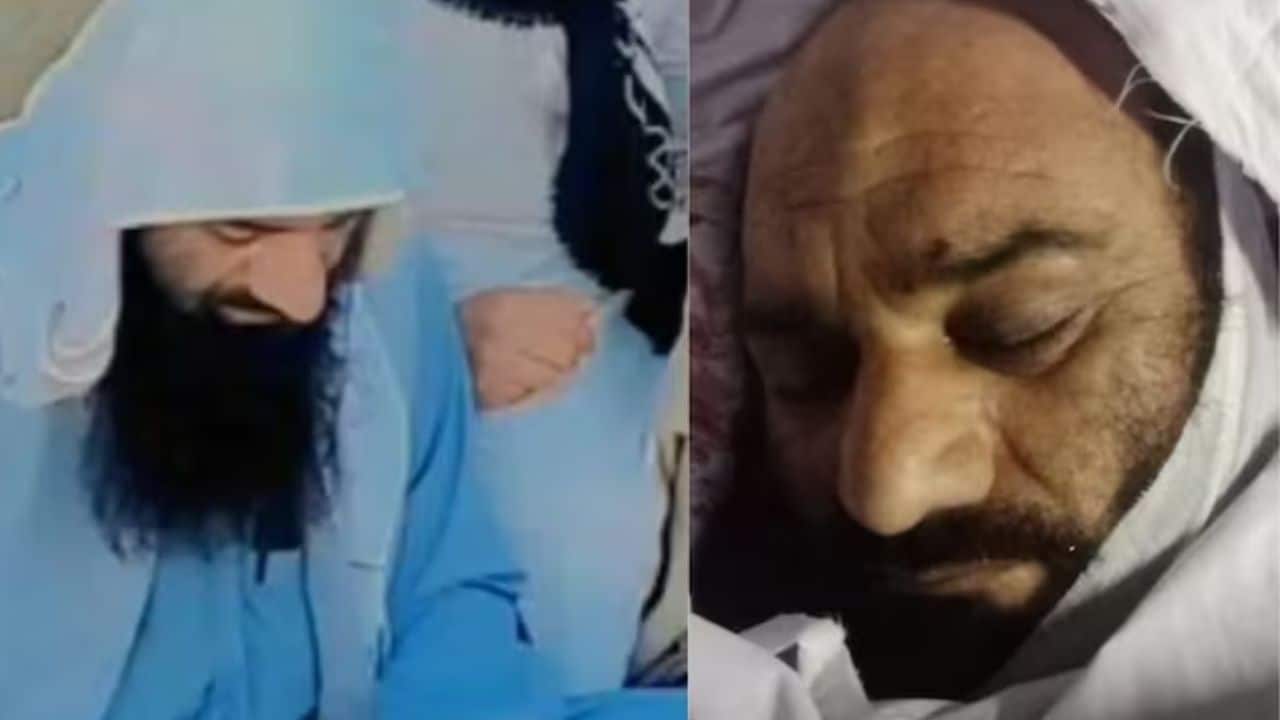
The evening air in Peshawar usually carries the scent of roasted meat and diesel exhaust, a thick, humming blanket that settles over the city as the sun dips behind the Hindu Kush. But on a Tuesday that started like any other, the rhythm broke. The sharp, rhythmic crack of gunfire sliced through the urban din. When the smoke cleared near the Ring Road, the silence that followed was heavier than the noise.
Sheikh Yousuf Afridi was dead.
He wasn't just a name on a leaked intelligence report or a face on a grainy surveillance still. To the security apparatus of South Asia, he was a ghost made flesh, a top commander for Lashkar-e-Taiba (LeT) whose influence snaked across borders and through the dark corridors of regional insurgency. His end did not come through a high-tech drone strike or a coordinated military raid. It came from the shadows he once commanded. Two men on a motorcycle. A flurry of bullets. A quick disappearance into the labyrinthine alleys of Pakistan’s frontier.
To understand why this matters, you have to look past the blood on the pavement. You have to look at the vacuum left behind.
The Architect of the Invisible
Afridi operated in a world where survival is the only currency. For years, he was a bridge. He connected the ideological fervor of the camps with the cold, hard logistics of modern urban warfare. While the world watched high-profile diplomatic summits, men like Afridi were busy in the background, managing supply lines, vetting recruits, and ensuring the machinery of Lashkar remained greased and functional.
He was a master of the mundane. War is rarely about the grand gestures; it is about who can get a truck through a checkpoint at three in the morning without being searched. It is about knowing which local officials can be bought and which must be bypassed. Afridi knew. He was a veteran of the long game, a man who survived decades in a profession where the life expectancy is often measured in months.
Then, the motorcycle.
There is a specific kind of irony in a man who spent his life orchestrating clandestine movements being undone by the simplest of tactics. The drive-by shooting is the low-cost, high-impact signature of the region’s shifting allegiances. It requires no satellite guidance. It requires only a target, a shooter, and a path of escape.
The Shifting Sands of Peshawar
Peshawar has always been a city of whispers. It is the gateway to the tribal lands, a place where the lines between law and lawlessness are blurred by centuries of conflict. In recent months, the city has become a pressure cooker. The return of the Taliban to power in neighboring Afghanistan changed the chemistry of the entire border region. It emboldened some, threatened others, and left a lot of powerful people wondering where they stood in the new order.
Consider the hypothetical perspective of a local shopkeeper near the site of the shooting. For him, Afridi’s death isn't a victory for global counter-terrorism or a blow to an insurgency. It is a terrifying signal that the old rules are gone. If a man as protected and feared as a Lashkar commander can be erased in broad daylight on a busy road, who is actually in charge?
This wasn't an isolated incident. It is part of a pattern that has been emerging over the last year. Unknown gunmen—the "namaloom afraad"—have been systematically picking off high-value targets across Pakistan. From cleric leaders to tactical commanders, the list of the fallen is growing.
The mystery of who pulled the trigger is the most potent weapon in play. Is it internal friction within the militant groups? Is it a state-sponsored cleanup of "assets" that have become liabilities? Or is it a rival faction settling old scores in a bid for dominance? The ambiguity is intentional. It creates a climate of paranoia where every shadow looks like an assassin.
The Human Cost of High-Stakes Shadows
We often talk about these events in the language of "neutralization" or "attrition." These are cold, sterile words that hide the visceral reality of what is happening. When a commander like Afridi falls, the ripples are felt far beyond the immediate blast radius.
There is the immediate tactical fallout. Organizations like Lashkar-e-Taiba are hierarchical, but they are also deeply personal. Loyalty is often tied to the man, not just the cause. With Afridi gone, his subordinates are left adrift. Some will scramble for power. Others will flee, fearing they are next on the hit list. This instability often leads to "splintering," where smaller, more radicalized cells break off from the main body. These cells are harder to track and more unpredictable.
Then there is the geopolitical chess match. For India, the death of a Lashkar commander is a moment of grim validation. For Pakistan, it is a diplomatic and internal security headache. The world watches to see if this is a sign of a genuine policy shift or merely the chaotic byproduct of a region in flux.
But for the people living in the crosshairs, it is simply more of the same. More checkpoints. More sirens. More mornings spent wondering if the market will be safe today.
The Weight of the Unspoken
There is a weight to this kind of news that facts alone cannot convey. To read a headline about a "killed commander" is to see a single dot on a map. To live through it is to see the entire map catch fire.
Afridi was a man who lived by the gun, and the old adage about how such lives end proved true once again. But his death solves nothing. It only resets the board. The ideologies that fueled his rise are still there. The poverty and lack of opportunity that drive young men into his orbit are still there. The long-standing grievances between nations that make such organizations useful tools of statecraft are still there.
The gunmen on the motorcycle didn't just kill a man; they sent a message to everyone still standing. That message is simple: nobody is untouchable. Not the commanders in their fortified villas, not the foot soldiers in the mountains, and certainly not the civilians caught in the middle.
As the sun sets on another day in Peshawar, the city returns to its usual hum. The stalls remain open. The tea flows. But the air feels different. There is a new ghost in the labyrinth, and the whispers in the tea shops have a sharper edge.
The story of Sheikh Yousuf Afridi ended on a dusty road, but the narrative of the region is shifting into a darker, more volatile chapter. The hunt continues, the shadows lengthen, and somewhere in the distance, the sound of a motorcycle engine fades into the night.