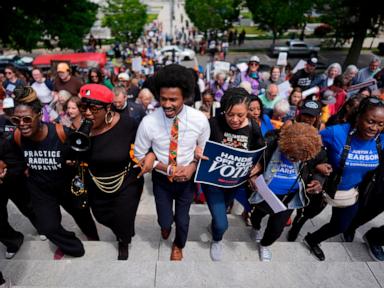
The national media loves a simple narrative. In South Carolina, that narrative is a recycled script from the 1960s: partisan villains vs. disenfranchised heroes, all fighting over lines drawn on a map. When the U.S. Supreme Court ruled in Alexander v. South Carolina State Conference of the NAACP that the state’s congressional map was a product of "partisan gerrymandering" rather than "racial gerrymandering," the punditry went into a predictable tailspin.
They missed the point.
The obsession with redistricting as the primary engine of political inequality is a convenient lie. It’s a lie told by consultants who get paid millions to litigate these cases and by party hacks who want to blame a map for their own inability to build a winning coalition. While the court argues over whether a district is "too white" or "too Republican," they are ignoring the fact that the very structure of single-member districts is a relic designed to produce the exact stagnation everyone claims to hate.
The Myth of the "Neutral" Map
Let’s kill the biggest myth first: there is no such thing as a neutral map. Every line drawn on a piece of paper is a political act. Whether you use an "independent commission" or a state legislature, you are choosing which communities to prioritize and which to dilute.
The critics of the South Carolina map argue that moving 30,000 Black voters out of the 1st Congressional District and into the 6th was a surgical strike to protect a GOP incumbent. They’re right. It was. But the counter-argument—that those voters belong in the 1st District to make it "competitive"—is equally partisan. It’s just a different brand of engineering.
We’ve seen this play out in dozens of states. In 2022, the 1st District saw Republican Nancy Mace win by roughly 14%. The assumption that a slight shift in racial demographics would have flipped the seat ignores the reality of modern political sorting. People aren't just being moved by mapmakers; they are moving themselves. We are living in an era of "The Big Sort," where geographic polarization is happening faster than any legislature can draw a line.
Race as a Proxy for Partisanship
The legal battle in South Carolina hinges on a distinction that is practically invisible in the real world: the difference between race and party. In the American South, the correlation between being a Black voter and voting for the Democratic party is frequently above 90%.
When the Supreme Court says you can gerrymander for party but not for race, they are asking mapmakers to perform a logical lobotomy. If a mapmaker wants to exclude Democrats, they will inevitably exclude Black voters. To pretend these are two distinct motivations is a legal fiction that keeps the lights on at law firms but does nothing for the voter.
Justice Samuel Alito’s majority opinion essentially told challengers they need a "smoking gun" to prove racial intent. But in a world where data is king, there are no smoking guns—only algorithms. Mapmakers now use census blocks and voting history to create "efficiency gaps" that maximize their power while staying just within the lines of legality.
If you think a new map is going to solve the problem of political alienation in Charleston or North Charleston, you haven't been paying attention to the last thirty years of electoral history.
The Efficiency Gap and the Death of Competition
Let's talk about the math that the "lazy consensus" ignores. In the current South Carolina map, the "efficiency gap"—a metric used to measure how many votes are "wasted" in districts—favors the majority party significantly. But this isn't unique to the Palmetto State.
The real tragedy isn't that one party wins; it’s that the seats aren't contested in any meaningful way. Across the U.S., only about 10% to 15% of congressional districts are truly competitive. In South Carolina, the number is effectively zero.
By packing Black voters into the 6th District—represented by Jim Clyburn for decades—Republicans secured their hold on the rest of the state, while the Democratic establishment secured a safe, permanent seat for one of its most powerful members. This is the "incumbency protection racket." Both parties are complicit. They would rather have one safe seat than two risky ones.
The litigation isn't about "fairness." It’s about the margin of the racket.
Why Redistricting Reform is a Dead End
The "good government" crowd insists that independent commissions are the answer. Look at California or Arizona. Have those states solved polarization? Hardly. Commissions often lead to "bipartisan gerrymanders," where both parties agree to protect their incumbents, leaving the voters with no real choices in November.
The problem isn't who draws the lines; it's the lines themselves.
If we actually cared about representation, we’d be talking about:
- Multi-member districts: Where three or five representatives are elected from a larger area via proportional representation.
- Ranked-choice voting: To break the duopoly that these maps are designed to protect.
- Increasing the size of the House: The "Wyoming Rule" would expand the House of Representatives to make districts smaller and more responsive, making it harder to "pack and crack" massive populations.
But the activists in South Carolina won't talk about that. It’s too hard. It requires changing the law, not just winning a lawsuit. It’s much easier to fundraise off the idea that the Supreme Court is "stealing" democracy than to admit that our 18th-century voting system is fundamentally broken for a 21st-century population.
The Professional Activist Trap
I’ve seen organizations spend $5 million on a redistricting lawsuit only to see a 2% change in voter turnout. That same money spent on local organizing, candidate recruitment, and year-round engagement would have a 10x higher ROI.
The focus on the map is a "top-down" obsession that neglects the "bottom-up" reality. In the 2022 midterms, South Carolina's voter turnout was roughly 50%. Think about that. Half the population didn't show up. You can draw the most "perfect" map in the world, but if half the people feel that neither party speaks to their material interests, the map is just a colorful piece of paper.
The obsession with "district lines" is a psychological defense mechanism for a political class that has lost the ability to persuade. If you can't win an argument, you try to change the boundaries of the room.
The Harsh Truth About "Communities of Interest"
The legal standard often cites the need to protect "communities of interest." This is a sociological ghost. Is a "community of interest" defined by race? By income? By whether they live near a coast or a mountain?
In South Carolina, the "Gullah Geechee" corridor is often cited as a community of interest. But the political interests of a Gullah business owner in Hilton Head may be diametrically opposed to a Gullah renter in North Charleston. When we use maps to force people into boxes based on a single demographic trait, we aren't "representing" them—we are flattening them.
The redistricting fight reinforces the idea that your geography is your destiny. It tells the voter, "You only matter if you are part of a concentrated bloc that we can use as a pawn in a federal court case."
Stop Fixing the Map, Start Fixing the System
The ruling in Alexander isn't a setback for democracy because democracy wasn't happening in those map-drawing rooms anyway. The real setback is the belief that the "right" map will somehow usher in a golden age of accountability.
We are arguing over the seating chart on the Titanic. The 1st District will remain Republican. The 6th District will remain Democratic. The residents of those districts will continue to see their healthcare costs rise, their infrastructure crumble, and their schools struggle, regardless of whether the line runs down this street or that one.
If you want to disrupt the status quo in South Carolina, stop looking at the Supreme Court. Start looking at the primary system. Start looking at the lack of term limits. Start looking at why 95% of incumbents win reelection regardless of how "fair" the map is.
The map is a scapegoat. The lines are a diversion. The real power isn't in how we draw the districts, but in our refusal to demand a system that doesn't require them in the first place.
Put down the highlighter. Stop staring at the census blocks. The revolution won't be televised, and it certainly won't be litigated. It will happen when we stop letting a map define our political imagination.
The current fight over South Carolina's districts is a theatrical performance for the donor class. If you're still waiting for a judge to save your vote, you've already lost.