The air in an ice rink has a specific weight. It is cold, damp, and smells faintly of ozone and rubber. For Sean Simpson, that air had been the oxygen of his existence for decades. But in the winter of 2022, as the world turned its eyes toward the sterile, high-stakes "bubble" of the Beijing Winter Olympics, the air began to thin.
Simpson, a veteran coach with a resume that commanded respect across Europe and North America, found himself staring at a digital barrier. It wasn’t a lack of talent or a flawed defensive strategy that threatened to keep him from the bench of the Hungarian national team. It was a QR code. Or rather, the lack of a valid one. Don't miss our recent article on this related article.
The Beijing Games were defined by a "zero-COVID" policy so rigid it felt less like a public health initiative and more like a fortress wall. To cross that wall, you needed a certificate of vaccination. Simpson didn't have it.
Instead of turning back, he made a choice that would eventually dismantle his reputation. He fabricated the document. If you want more about the background here, CBS Sports offers an excellent summary.
The Weight of the Bench
Imagine the pressure of a career built on the ice. In the world of professional hockey, you are only as good as your last season. The Olympics represent the pinnacle, a rare window where the niche world of pucks and pads moves into the global spotlight. For a coach, it is the ultimate validation.
Simpson wasn't just some casual observer. He had led Switzerland to a historic silver medal at the World Championships years prior. He was a man defined by the high-pressure environment of the locker room. But the pressure of the pandemic was different. It was invisible. It was bureaucratic.
He sat in Switzerland, facing a requirement he had not met. We can only speculate on the internal monologue—the justification that many people made during those fractured years. The team needs me. The rules are overblown. I can't let four years of work vanish over a piece of paper.
He obtained a forged COVID-19 vaccination certificate. He uploaded it. He flew to China.
For a few weeks, the gamble worked. He stood on the ice. He shouted instructions. He felt the familiar bite of the cold air. But the thing about lies told to governments is that they have a long shelf life. They sit in databases, waiting for a single discrepancy to pull the thread.
The House of Cards Collapses
The fallout wasn't immediate, but it was absolute. When the Hungarian Ice Hockey Federation eventually learned of the deception, the reaction was swift. This wasn't just a personal medical choice; it was a violation of international protocol that could have sparked a diplomatic incident.
Consider the logistics of the 2022 Games. Athletes and staff were tested daily. Movement was restricted to "closed-loop" transport. The Chinese authorities had made it clear that any breach of protocol would be met with severe consequences. By entering under false pretenses, Simpson hadn't just risked his own health or career; he had placed the entire Hungarian delegation under a shadow of potential expulsion.
But the real damage happened in the courtroom of public opinion and the rigid halls of sports ethics.
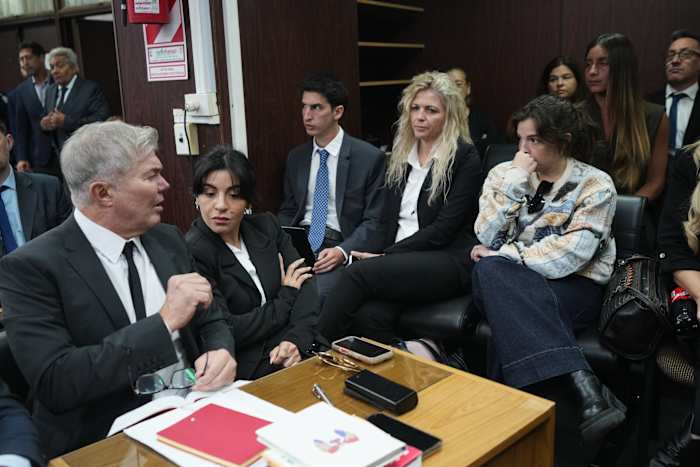
The Swiss prosecutor's office took up the case. The charges were clear: forgery of documents. In the end, Simpson didn't try to hide behind a lawyer’s clever wordplay. He admitted it. He confessed to the act, perhaps realizing that the weight of the secret was heavier than any professional suspension could ever be.
He was ordered to pay a fine—substantial, but manageable for a man of his stature. The fine, however, was the least of his problems. The real cost was the "black mark" that now sits next to a storied career.
A Fracture in the Code of Honor
Hockey is a sport built on a specific, gritty brand of integrity. You take the hit to make the play. You play through the pain. You follow the system. When a coach breaks the system—not the game system, but the legal one—it creates a cognitive dissonance that is hard to resolve for players and fans alike.
We often talk about "integrity in sports" in the context of doping or point-shaving. We rarely talk about it in the context of administrative survival.
Simpson’s choice highlights a desperate human impulse: the desire to be present at the cost of the truth. It was a gamble of ego against ethics. He chose the bench. He chose the lights. He chose the Olympic rings.
But those rings are unforgiving. They represent an ideal that, while often tarnished, demands a certain level of transparency from those who stand within them. By faking his status, Simpson didn't just bypass a vaccine; he bypassed the collective agreement that everyone else in that Olympic bubble had signed.
Every athlete who had spent months in isolation, every trainer who had followed every grueling minute of the protocol, was moved a little further into the background by his shortcut.
The Echo in the Empty Arena
Today, the headlines have moved on. The 2022 Olympics are a memory of masks and empty stands. But for Sean Simpson, the consequences linger in every job interview and every hall of fame discussion.
There is a specific kind of silence that follows a fall from grace. It isn’t the silence of an empty arena; it’s the silence of colleagues who don't know what to say. It’s the look in a young player's eyes when they realize their mentor didn't follow the rules they were taught to live by.
The ice is still there. The game continues. But the air in the rink feels different when you’ve been caught trying to breathe it on a forged lease.
He wanted to be part of the story so badly that he forgot the story is only worth telling if it’s true. Now, he is the story, but for all the wrong reasons. The golden ticket he forged didn't lead to a podium. It led to a courtroom, a confession, and a legacy that will forever be chilled by a single, calculated lie.
He stands as a reminder that in the high-stakes world of global competition, the most dangerous opponent isn't the one on the other side of the red line. It's the one looking back at you from the mirror when the lights go down and the paperwork is due.