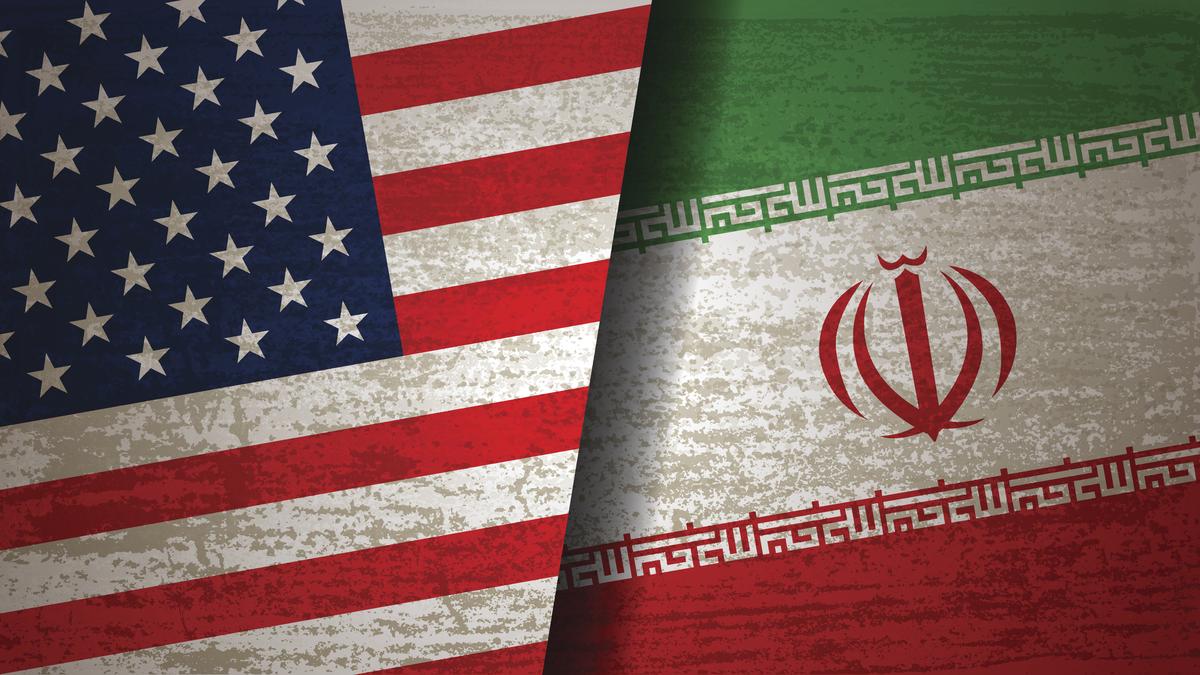
The air in a windowless briefing room in Washington D.C. doesn't circulate so much as it stagnates under the weight of secrets. On one side of the globe, a family sits in a cramped living room in Tehran, watching the flicker of a television screen for a sign that the cost of bread might stop its vertical climb. On the other, a weary State Department official stares at a breaking news alert on a smartphone, feeling the sudden, sharp headache that comes when a carefully managed silence is shattered by a loud, inconvenient rumor.
The rumor was simple, a lightning bolt in a dry field: Washington had agreed to unfreeze billions of dollars in Iranian assets.
It was the kind of headline that moves markets and breaks hearts. For a few hours, the world leaned in, holding its breath. Then came the denial. It was swift. It was clinical. It was a cold bucket of water thrown onto a glowing coal. But behind that denial lies a story not of bank accounts and ledgers, but of a high-stakes poker game played with the lives of millions, where every chip is a human soul and the "house" never seems to lose.
The Currency of Desperation
To understand why a simple denial from a U.S. official matters, we have to look past the jargon of "sanctions" and "frozen assets." Imagine a bank account. It has your name on it. It holds the money you earned. But you aren't allowed to touch the keypad. You can’t pay your rent. You can’t buy medicine for your child. Now, imagine that account doesn’t belong to one person, but to an entire nation.
We are talking about roughly $7 billion. That isn't just a number with nine zeros. In the reality of the Iranian streets, that is the difference between a hospital having modern imaging equipment and a doctor having to guess. It is the difference between a student being able to afford tuition and that same student selling their family’s heirlooms just to eat.
When reports surfaced that this money—long held in South Korean banks due to U.S. pressure—was finally going to be released, it wasn't just a financial update. It was a flare of hope. In the souks and the subway stations, people whispered. They wondered if the invisible wall around their country was finally beginning to crumble.
Then, the American official spoke.
The denial was absolute. No such agreement existed. The report was "completely false." In an instant, the flare went out. The wall remained.
The Ghost at the Table
Negotiating with Iran is like trying to catch smoke with your bare hands. It is a process defined by what isn't said, conducted in the shadows of "third-party intermediaries" and "informal channels." When the U.S. denies a report like this, they aren't just correcting a factual error. They are protecting the fragility of the status quo.
In the world of high diplomacy, the truth is often a secondary concern to timing.
Consider the "hostage" factor. There are names we know and names we don't—individuals with American passports sitting in cells in Evin Prison. For their families, every rumor of unfrozen assets is a heartbeat of terror and anticipation. Is this the ransom? Is this the price of a flight home? When the government denies the deal, they aren't just talking to the press. They are talking to the captors. They are saying: We will not be rushed. We will not be pressured by your leaks.
It is a brutal, agonizing rhythm.
There is a specific kind of exhaustion that settles into the bones of those who follow these cycles. It’s the fatigue of the "almost." We were almost back in the nuclear deal. We were almost seeing a de-escalation in the Persian Gulf. We were almost seeing the money move.
But the "almost" is where people live and die.
The Architecture of the No
Why would someone leak a false report in the first place? In this theater, a leak is a weapon.
If you are a hardliner in Tehran, you might leak a "deal" to force the Americans into a denial, thereby proving to your own people that Washington can never be trusted. If you are a regional player in the Middle East who fears any warming of relations between the West and Iran, you might leak a "deal" to trigger an immediate backlash in the U.S. Congress, effectively killing any real negotiation before it can start.
The denial from Washington wasn't just a "no." It was a defensive maneuver.
The U.S. official who stepped to the podium knew that every word would be dissected by intelligence agencies from Tel Aviv to Moscow. If they showed even a hint of hesitation, the political cost at home would be catastrophic. In the current American political climate, "unfreezing assets" is a phrase that carries the weight of a thousand attack ads. It is equated with "funding terror," regardless of the humanitarian safeguards that might be attached to such a release.
So, the denial has to be loud. It has to be firm. It has to be cold.
But the coldness of the official statement masks a burning reality. The money is still there. The need is still there. The prisoners are still there.
The Human Cost of Static
While the politicians argue over the veracity of reports, the human element remains trapped in the static.
Think of a small business owner in Isfahan. He doesn't care about the nuances of the JCPOA or the specific wording of a State Department press release. He cares that the price of the spare parts he needs for his machinery has tripled in six months. He cares that his daughter’s asthma medication is no longer on the shelves. For him, these headlines are a cruel see-saw. One day, he thinks he might be able to save his business. The next, he is told it was all a mistake.
This is the psychological warfare of the modern age. We don't drop bombs as often as we drop sanctions. We don't lay siege to cities; we lay siege to banking systems. And while the targets are nominally "the regime," the casualties are always the people.
The U.S. official’s denial was technically a clarification of policy. In reality, it was a reminder of the stalemate.
Stalemate sounds like a quiet word. It sounds like a game of chess where nobody moves. But in geopolitics, a stalemate is a grinding gear. It wears down the spirit of a population. It creates a vacuum where extremism thrives. When people lose hope in the "ghostly handshake" of diplomacy, they start looking for more violent ways to change their reality.
The Invisible Stakes
The story isn't about whether a specific report was true or false. The story is about the terrifying power of a single "no."
We live in a world where billions of dollars can be moved with a keystroke, yet they remain frozen for decades because of the shape of a signature on a piece of paper. We have perfected the art of the economic blockade, turning the global financial system into a series of interconnected traps.
The denial from Washington ensures that for now, the status quo remains. The money stays in the vault. The tension stays in the air. The families in Tehran continue to watch the news, looking for a sign that never comes.
It is easy to get lost in the "who said what" of the briefing room. It is harder to look at the faces of those who are waiting for the world to let them back in.
The U.S. official denied the report. The assets remain frozen. The clock continues to tick. And in the silence that follows the denial, you can almost hear the sound of a door being locked, once again, from the outside.
There is no victory in this kind of truth. There is only the grim realization that in the game of nations, the most powerful move is often the one that ensures nothing changes at all.
The ledger remains unbalanced, and the people remain the collateral.