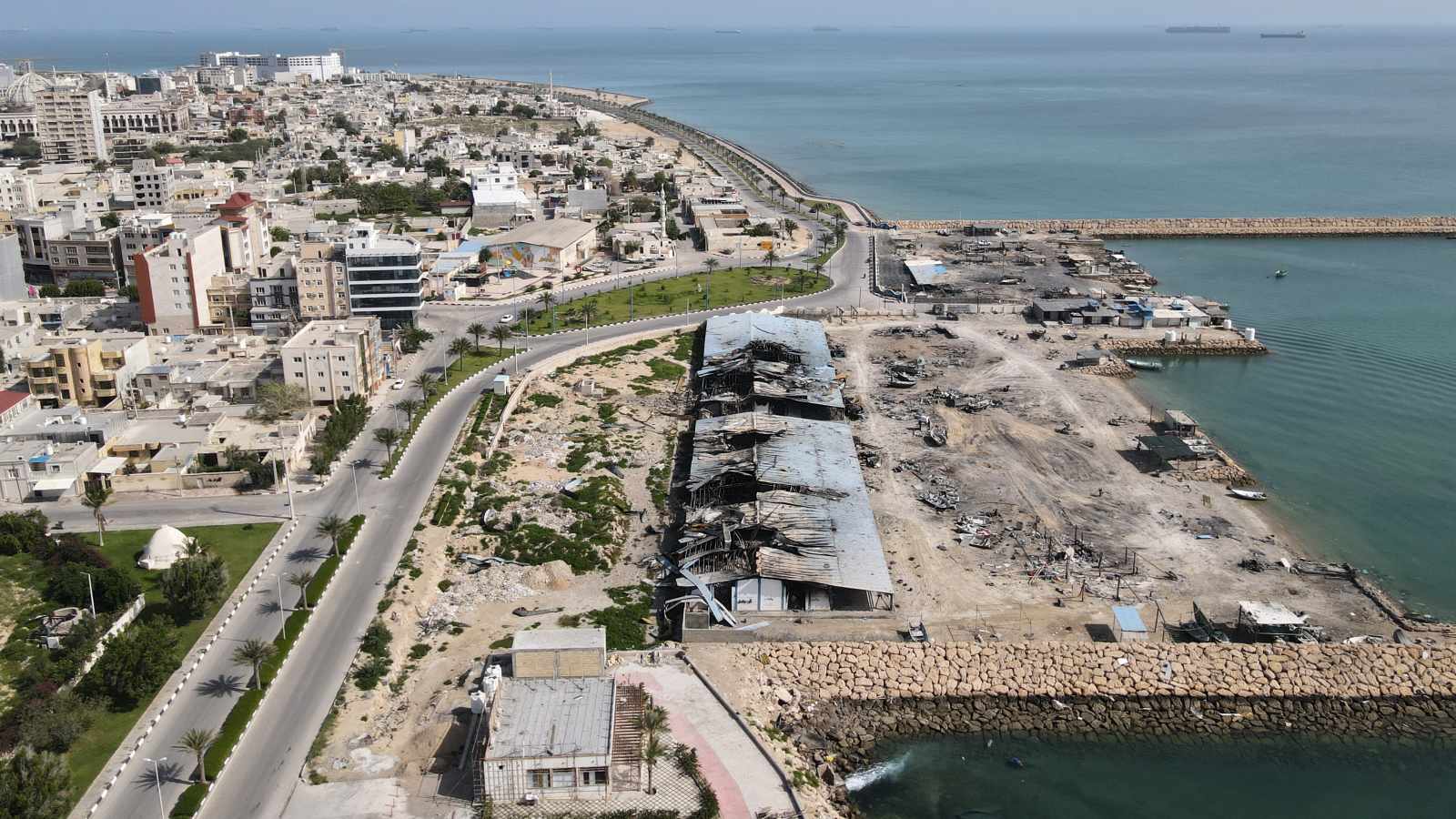
The enforcement of a maritime blockade against sovereign ports represents the most complex intersection of international law, kinetic naval power, and global supply chain disruption. While surface-level reporting focuses on the raw count of vessels intercepted, the true measure of operational success lies in the Area Access and Aerial Denial (A2/AD) friction and the subsequent collapse of maritime insurance viability. The interception of ten vessels within a 48-hour window indicates a high-intensity screening protocol that shifts the burden of risk from the enforcer to the commercial carrier.
The Triad of Interdiction Logic
A blockade is not a static wall of ships but a dynamic system of tiered identification and enforcement. To understand how ten vessels were "turned back," one must analyze the three mechanical pillars of the operation:
- Electronic Signature Correlation: Before a physical intercept occurs, the U.S. Navy utilizes a fusion of AIS (Automatic Identification System) data, synthetic aperture radar (SAR) satellite imagery, and ELINT (Electronic Intelligence). Any vessel with a "dark" transponder or a mismatched signature becomes a primary target for kinetic boarding or redirection.
- Psychological Deterrence via Escalation Ladders: The "turning back" of a ship is the result of a specific communication protocol. This begins with Bridge-to-Bridge radio hailing, escalates to the buzzing of the vessel by rotary-wing aircraft (MH-60R Seahawk), and culminates in the "Warning Shot" or "Non-Kinetic Disabling" phase. Most commercial captains, bound by strict corporate safety mandates, will comply once the insurance "war risk" threshold is crossed.
- The Choke Point Constraint: Iranian geography dictates that traffic must funnel through predictable littoral lanes. By positioning assets at the narrowest points of approach, the U.S. military reduces the search area (the "haystack") and increases the probability of detection to near-certainty.
The Cost Function of Maritime Non-Compliance
The primary weapon of a blockade is not the missile, but the Risk Premium. When the U.S. military successfully diverts ten ships, they are effectively resetting the global market’s perception of Iranian port accessibility.
Insurance Arson and Legal Liability
The moment a vessel is officially "warned" or diverted by a naval superpower, its P&I (Protection and Indemnity) insurance is voided for that specific voyage. This creates a massive financial liability for the ship owner, often exceeding the value of the cargo itself. The blockade operates by making the Expected Loss ($L$ multiplied by $P$) of the journey higher than the potential profit margin of the Iranian trade.
- $L$ (Loss): Total loss of vessel, cargo, and future chartering reputation.
- $P$ (Probability): The 10-for-10 success rate reported in the initial 48 hours.
When $P$ approaches 1.0, the "Shadow Fleet"—vessels used to bypass sanctions—faces a survival crisis. These ships often lack standard insurance, relying on state-backed Iranian guarantees. However, state guarantees cannot replace a hull lost to seizure or a crew detained for sanctions violations.
Tactical Friction and the OODA Loop
The first 48 hours of any maritime operation are critical for establishing "Dominance of the Commons." The U.S. military’s ability to process ten intercepts suggests a highly compressed OODA Loop (Observe, Orient, Decide, Act).
- Observation: Real-time overhead persistence identifies the vessel's point of origin.
- Orientation: Comparing the vessel's manifest against known "Bad Actor" databases.
- Decision: Commanders on the ground (likely at the Destroyer or Cruiser level) are pre-authorized to divert ships based on clear Rules of Engagement (ROE).
- Action: Deployment of high-speed interceptors or aerial assets to force a change in heading.
This speed of action prevents the "Swarm Effect," where a large number of smaller vessels attempt to overwhelm a blockade simultaneously. By maintaining a 100% interception rate in the opening phase, the military forces Iranian logistics planners to rethink their entire deployment strategy.
The Bottleneck of Secondary Port Capacity
A blockade does not simply stop goods; it redirects them to less efficient nodes. When ten ships are turned back, they must seek harbor in neighboring states like Oman or the UAE, or return to their point of origin. This creates a secondary logistical crisis: Port Congestion.
Regional ports are not configured to handle the sudden "dumping" of diverted Iranian-bound cargo. This leads to:
- Demurrage Charges: Massive daily fees for ships sitting idle.
- Cargo Degradation: Especially critical for perishable goods or sensitive chemicals.
- Transshipment Risk: The logistical nightmare of unloading cargo and attempting to sneak it into Iran via dhows or smaller, unmonitored craft.
The U.S. military’s strategy appears to be the forced creation of these bottlenecks. By denying the primary ports, they force the "clandestine" trade into smaller, more easily monitored channels.
Technical Limitations and Counter-Strategies
No blockade is absolute. The effectiveness of the first 48 hours does not guarantee long-term containment. There are three specific vectors that Iran may use to circumvent this pressure:
- Subsurface Infiltration: Commercial-grade semi-submersibles or "narco-sub" style vessels are nearly impossible to detect using standard surface radar. While they carry less volume, they can sustain high-value supply chains (e.g., drone components or specialized electronics).
- The "Human Shield" Tactic: Integrating sanctioned cargo onto civilian passenger ferries or humanitarian vessels. This forces the U.S. military into a "PR trap"—either allow the vessel through or risk a civilian casualty event that erodes international support for the blockade.
- Electronic Warfare (EW) Saturation: Iran possesses significant GPS jamming and spoofing capabilities. If they can successfully spoof the location of incoming ships, they might create "ghost trails" that distract naval assets while the real vessel slips through a different corridor.
Data Integration and the Future of Kinetic Denial
The reported ten ships are the "visible" part of the iceberg. The "invisible" success is the number of ships that cancelled their routes before even reaching the blockade zone. A data-driven analysis suggests that for every ship turned back, three more likely aborted their transit due to the perceived risk.
The U.S. Navy's use of Distributed Lethality—spreading sensors and weapons across a wider array of smaller ships—allows for this high-density interception. Unlike the blockades of the 20th century which relied on massive Carrier Strike Groups, the modern blockade is a network of drones, littoral combat ships, and satellite-guided intercepts.
The strategic play here is not the permanent closure of the Persian Gulf, but the systematic "de-risking" of the global economy's reliance on Iranian energy and trade. By demonstrating that Iranian ports can be sealed with surgical precision and zero casualties within 48 hours, the U.S. has effectively removed Iran's "Oil Weapon" from the geopolitical table.
Shipping companies must now re-evaluate their long-term chartering contracts. The "48-hour precedent" serves as a signal to the maritime industry: any vessel bound for a sanctioned Iranian port is now a stranded asset. The operational focus will now shift from surface intercepts to the "Dark Fleet" refueling stations and the financial clearinghouses that fund these voyages. The blockade is no longer just a naval maneuver; it is a live-fire audit of the global shipping industry’s compliance.