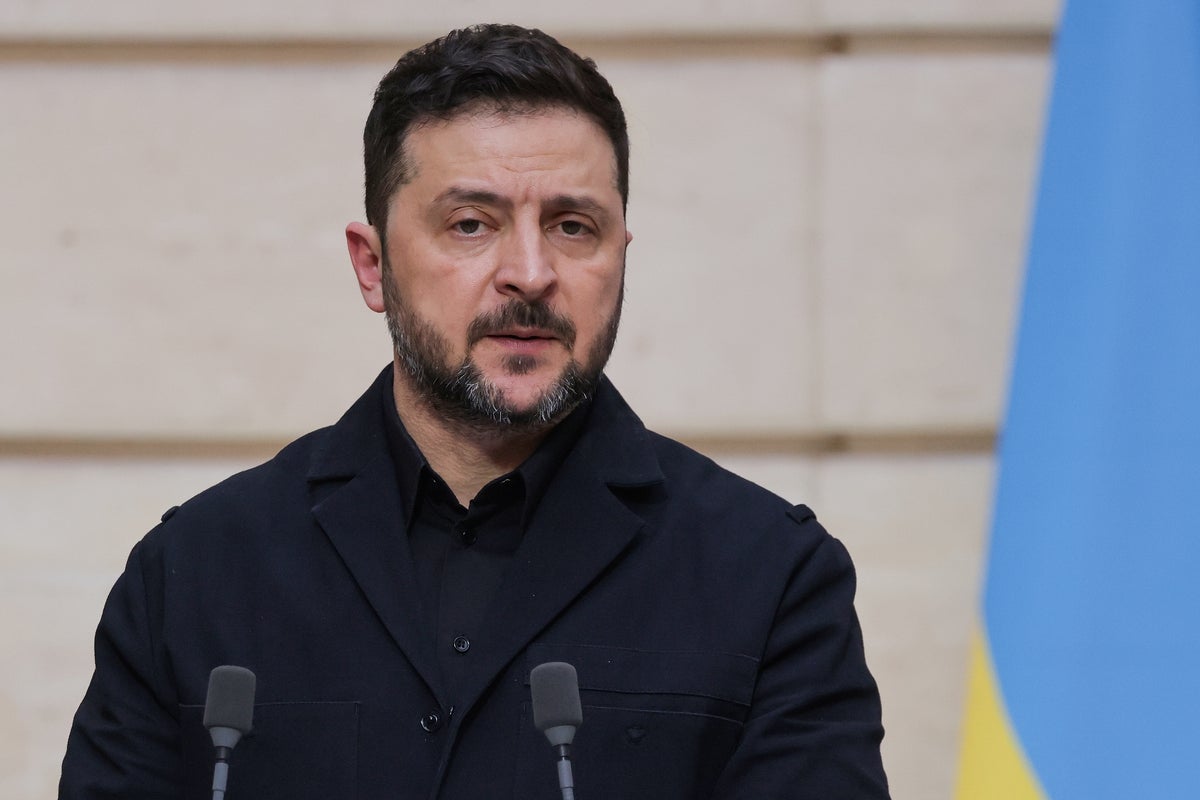
The convergence of the Russo-Ukrainian War and Middle Eastern regional conflicts has transitioned from a theoretical parallel to a functional, operational overlap. Ukrainian President Volodymyr Zelenskyy's assertion that Ukrainian forces have successfully neutralized Iranian-manufactured Shahed loitering munitions on behalf of Middle Eastern allies signals a fundamental shift in the global security architecture. This is not merely a diplomatic gesture; it represents the export of high-intensity, combat-validated electronic warfare (EW) and kinetic interception protocols developed through three years of continuous engagement with the Geran-2/Shahed-136 platform.
The Shahed Interception Cost-Efficiency Matrix
The primary challenge in counter-unmanned aerial vehicle (C-UAV) operations is the economic asymmetry between the interceptor and the target. A Shahed-136/131 loitering munition typically costs between $20,000 and $50,000 to produce. Traditional air defense systems, such as the MIM-104 Patriot or NASAMS, utilize interceptors costing between $1 million and $4 million per unit. Recently making waves lately: Why the Litani River is the real center of the Israel Hezbollah war.
Ukraine’s operational contribution to its Middle Eastern partners—specifically those facing threats from Iranian proxies in Yemen, Iraq, and Syria—centers on the Asymmetric Deflation Strategy. This strategy employs three distinct layers of defense to recalibrate the cost-benefit ratio of air defense:
- Acoustic and Visual Passive Detection: Ukraine has deployed a network of thousands of networked microphones (the "Sky Fortress" or "Zvuk" system) to triangulate the low-frequency signature of the Shahed’s MD550 engine. Sharing the software architecture for these sensors allows Middle Eastern allies to detect low-flying, carbon-fiber drones that often evade traditional radar cross-section (RCS) analysis.
- Mobile Fire Groups (MFGs): The use of heavy machine guns (DShK, M2 Browning) and anti-aircraft cannons (Gepard, ZU-23-2) equipped with thermal optics and laser rangefinders. Ukraine’s contribution here is the tactical data link that coordinates these groups, ensuring high probability of kill (Pk) at a cost of approximately $500 to $2,000 per engagement.
- Localized GNSS Spoofing: Shahed drones rely on civilian-grade GPS/GLONASS/BeiDou signals for mid-course navigation. Ukrainian EW units have perfected "spoofing" techniques that feed false coordinates to the drone’s receiver, causing it to crash or miss its target by kilometers without firing a single kinetic round.
Kinetic Diplomacy and the Intelligence Feedback Loop
The technical claims made by Zelenskyy imply a sophisticated intelligence-sharing mechanism that functions as a "live laboratory" for counter-proliferation. When Ukraine downs a Shahed, they perform a forensic "strip-down" of the wreckage. These findings are critical for Middle Eastern states like Israel, Saudi Arabia, and the UAE for several reasons. Further details regarding the matter are detailed by NPR.
The internal components of Iranian drones are frequently sourced from global markets, utilizing "dual-use" electronics. Ukraine’s ability to identify specific batches of microcontrollers and inertial measurement units (IMUs) allows for the mapping of Iranian procurement networks in real-time. This intelligence enables Middle Eastern allies to preemptively adjust their radar sensitivities or EW frequencies to match the specific "wave" of drones being manufactured in Iranian facilities like the Isfahan plant.
This creates a Feedback Loop of Defensive Adaptation:
- Step 1: Recovery: Ukraine recovers intact or semi-intact Shahed flight controllers.
- Step 2: Decomposition: Engineers extract the flight logic and electronic counter-countermeasure (ECCM) code.
- Step 3: Dissemination: Technical signatures are shared with allies using the same Western-integrated air defense systems.
- Step 4: Calibration: Middle Eastern batteries are updated with the latest electronic signatures before the drones even reach their borders.
Structural Bottlenecks in Drone Proliferation
While the tactical success of shooting down these drones is clear, a strategic bottleneck remains: the saturation limit of defense systems. Iran and its proxies employ "swarm" tactics designed to overwhelm the processing power of integrated air defense systems (IADS).
The Ukrainian experience suggests that no single system can solve the drone threat. Instead, the solution lies in Sensor Fusion and Decentralized Command. In the Middle East, where geographic distances are vast and terrain can be mountainous or flat desert, the Ukrainian model of decentralized "hunting teams" offers a more flexible alternative to fixed-site batteries. The limitation of this strategy is the requirement for massive amounts of low-altitude sensor data, which necessitates a high level of trust and data-integration between sovereign nations—a historically difficult feat in Middle Eastern geopolitics.
The Geopolitical Function of Ukrainian Military Aid
The assertion that Ukraine is protecting Middle Eastern allies serves a dual-purpose signaling function. First, it positions Ukraine as a security provider rather than just a security consumer. By providing high-value technical expertise to wealthy Middle Eastern states, Kyiv creates a transactional basis for reciprocal support, whether in the form of financial aid, energy supplies, or diplomatic pressure on Russia.
Second, it highlights the Russian-Iranian Strategic Axis. Russia’s reliance on Iranian drones has effectively turned the Ukrainian theater into a testing ground for Iranian weaponry intended for use against Western-aligned states in the Gulf. Ukraine is effectively performing the "interception" at the source of the problem. Every Shahed destroyed in Ukraine is one less unit available for export to the Houthis in Yemen or Hezbollah in Lebanon.
The technical reality is that the Shahed-136 is a "commodity" weapon. Its power lies in its simplicity and mass. To counter a commodity, one must have a commodity-scale defense. Ukraine's innovation is the industrialization of the shoot-down process—turning a complex military task into a repeatable, low-cost civil-military operation.
Strategic recommendation for regional stability
To capitalize on the Ukrainian expertise, Middle Eastern defense ministries must move beyond the acquisition of "prestige" systems like the Patriot and toward a Distributed Interception Grid.
- Establish a Permanent Joint Intelligence Cell: Specifically focused on "loitering munition forensics" to share real-time telemetry data from the Ukrainian front.
- Investment in "Hard-Kill" EW: Move from simple jamming to signal hijacking, leveraging the code vulnerabilities discovered by Ukrainian cyber-units.
- Civilian-Integrated Passive Sensing: Utilizing existing telecommunications infrastructure to host acoustic sensors, mimicking the Ukrainian model to create a persistent "acoustic net" over critical energy infrastructure.
The battlefield is no longer defined by geographic proximity but by technical commonality. The same silicon and the same flight code are being used to threaten both Kyiv and Riyadh. The defense, therefore, must be equally borderless.