The Norwegian Nobel Committee has a problem that no amount of Scandinavian stoicism can hide. On Thursday, the committee’s new secretary, Kristian Berg Harpviken, confirmed that 287 candidates have been nominated for the 2026 Nobel Peace Prize. While the official list remains locked in a vault for the next 50 years, the air in Oslo is already thick with the inevitability of one name: Donald Trump.
The numbers—208 individuals and 79 organizations—represent a significant reshuffling of the global deck. But the statistical noise isn't what has the diplomatic core whispering. It is the reality that the Nobel Peace Prize, once a symbol of high-minded idealism, has been effectively dragged into the world of transactional realpolitik. Trump’s likely inclusion isn’t a secret or a rumor; it is a calculated geopolitical maneuver backed by a growing list of world leaders who have turned the nomination process into a new form of diplomatic currency.
The Nominators and the Negotiated Peace
Under the Nobel statutes, the barrier to entry for a nomination is remarkably low. Any university professor of history or social science, any member of a national parliament, and any head of state can submit a name. In years past, this led to a dignified list of dissidents and humanitarian icons. In 2026, it looks more like a guest list for a Mar-a-Lago summit.
The leaders of Cambodia, Israel, and Pakistan have all publicly declared they submitted Trump’s name. In the case of the Democratic Republic of Congo (DRC), President Félix Tshisekedi reportedly offered a nomination as a direct response to a June 2025 peace agreement brokered by the White House between the DRC and Rwanda.
This is where the "why" becomes more interesting than the "who." These nominations are no longer just about recognizing past achievement. They are being used as "security guarantees" and "tokens of goodwill" by nations navigating a more aggressive, America-first foreign policy. By nominating the U.S. President, these leaders aren't just praising him; they are buying insurance. They are ensuring that their specific regional interests remain on the radar of an administration that views global stability through the lens of the "deal."
The Arctic Gambit and the Greenland Shadow
While the world focuses on the Middle East and the Abraham Accords—the cornerstone of the Trump nomination narrative—a quieter, more bizarre nomination has entered the fray. Norwegian lawmaker Lars Haltbrekken has nominated U.S. Senator Lisa Murkowski and Danish MP Aaja Chemnitz.
The official reason? Their work on Arctic security. The subtext? Donald Trump’s persistent, renewed push to acquire Greenland from Denmark.
By nominating those who have worked to keep the Arctic a "zone of low tension," the committee is being handed a subtle counter-argument to the Trumpian brand of territorial expansionism. Greenland has become a flashpoint for NATO relations in 2026, and the Nobel Committee often uses its platform to signal disapproval of "great power" bullying. If the committee chooses the Arctic advocates over the man trying to buy the territory, it will be a deliberate, pointed message sent from Oslo to Washington.
The Credibility Gap of the Five-Person Jury
The Norwegian Nobel Committee consists of five people appointed by the Norwegian Parliament. They are currently sifting through reports from permanent advisers and international experts. By summer, this list of 287 will be whittled down to a "shortlist" of five to ten names.
The committee is currently facing a crisis of purpose. On one side, they have the traditional humanitarian candidates:
- Sudan’s Emergency Response Rooms: A volunteer aid network keeping people alive in a fractured state.
- Yulia Navalnaya: Carrying the torch of the late Alexei Navalny against the Kremlin.
- Mykola Kuleba: Working to recover abducted children in the ongoing Ukraine conflict.
On the other side is the "Peace through Strength" doctrine. Supporters like Congressman Darrell Issa argue that Trump’s second-term intervention in conflicts—ranging from Armenia-Azerbaijan to the India-Pakistan border—deserves the prize because it produces results, regardless of how messy the process is.
The tension is palpable. If the committee ignores the "Big Deals" brokered by the U.S. President, they risk being seen as an irrelevant club of European elites. If they award him, they risk endorsing a brand of diplomacy that many experts believe is performative and lacks long-term durability.
Why 2026 is Different
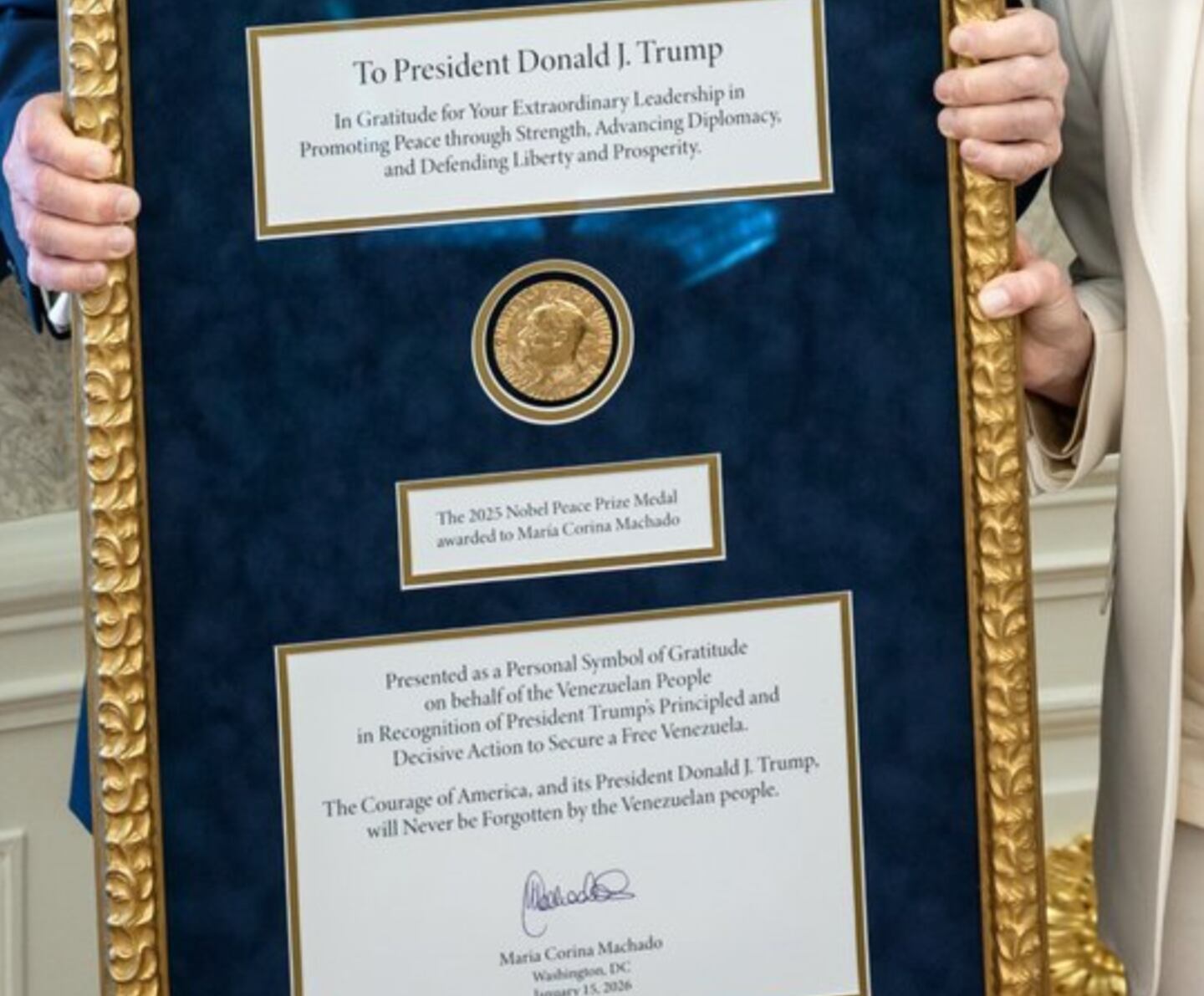
The 2025 prize was awarded to Venezuela’s Maria Corina Machado, a move that was seen as a safe, classic "human rights" choice. But 2026 is a different beast. The world is more volatile than it has been in decades, and the "good work" Harpviken mentioned in his Thursday briefing is increasingly being done by individuals who are operating outside of international institutions.
The Nobel Peace Prize has always been a political tool, but never has it been so openly commodified. When a head of state announces a nomination on social media immediately after a trade deal or a ceasefire is signed, the prize stops being an award and starts being a line item in a contract.
The committee must now decide if "peace" is the absence of war achieved through transactional leverage, or the presence of justice achieved through moral authority. They have 287 choices to make, but only one will define the legacy of the prize for the next generation. Oslo is silent for now, but the October 9 announcement is already casting a long, complicated shadow.
The deadline for submissions was January 31, and the vetting has begun. For the five members of the committee, the next few months will not be spent looking for the best person, but rather deciding which version of the world they want to validate.