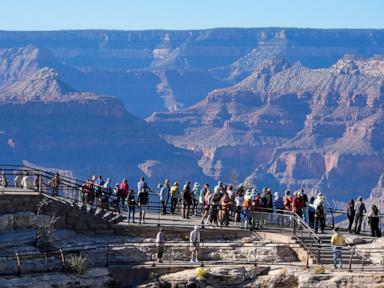
The White House recently pulled the nomination of a high-profile hospitality executive intended to lead the National Park Service (NPS), marking yet another stalled attempt to fill a seat that has remained vacant for years. While the official narrative often points to personal vetting issues or shifting political winds, the reality is far more complex. This withdrawal exposes a fundamental friction between the government's desire to modernize park revenue and the deep-seated mission of conservation. The failure to install a permanent director isn't just an administrative hiccup; it is a symptom of a department in an identity crisis.
For over a century, the NPS has operated under a dual mandate: to preserve natural and cultural resources and to provide for public enjoyment. These goals often clash. When the administration tapped an executive from the private hospitality sector, the move signaled a clear intent to prioritize the "enjoyment" side of the ledger—specifically, the commercialization and infrastructure of the parks. Critics and insiders saw this as a pivot toward a business-first model, one that prioritizes gift shops, lodges, and high-volume tourism over ecological integrity. Building on this idea, you can find more in: The Saudi Gambit and the Cost of American Hesitation.
The Concessionaire Conflict
At the heart of this leadership struggle lies the multi-billion-dollar world of park concessions. Private companies manage the hotels, restaurants, and tour services within the parks, paying a percentage of their revenue back to the federal government. This is big business. Bringing in a leader with deep ties to the hospitality industry was viewed by many as an invitation for these corporations to exert even more influence over public lands.
There is a persistent tension between the career rangers who view themselves as stewards and the political appointees who see the parks as underutilized assets. The hospitality nominee represented the latter. The withdrawal suggests that even in a polarized capital, the idea of turning the "Crown Jewels" of the American landscape into a more aggressive profit center still meets significant resistance. This resistance comes not just from environmental groups, but from within the agency itself, where the institutional memory of past commercial overreach remains vivid. Observers at TIME have provided expertise on this trend.
The Problem of Deferred Maintenance
The most pressing issue facing the next director—whoever that may eventually be—is the staggering backlog of deferred maintenance. We are talking about a $22 billion hole. Crumbling roads, failing wastewater systems, and dilapidated worker housing are the quiet killers of the visitor experience.
A hospitality executive might seem like the right person to tackle a facilities crisis. They understand CAPEX (capital expenditure) budgets and the mechanics of large-scale infrastructure. However, the NPS budget is not a private P&L statement. It is a political football subject to the whims of Congress. A director cannot simply "optimize" their way out of a multi-decade funding shortfall. They need to navigate the labyrinth of federal appropriations and the National Parks and Public Land Legacy Restoration Fund.
The Toll of Temporary Leadership
The National Park Service has spent the better part of the last decade without a Senate-confirmed director. This is unprecedented. When an agency is led by "acting" officials for years at a time, long-term strategic planning dies. Acting directors lack the political mandate to make difficult, controversial decisions, such as implementing strict visitor caps or overhauling the way concessions are bid.
Career employees are left in a state of suspended animation. Without a confirmed captain, the ship tends to drift toward the path of least resistance. This usually means catering to the loudest voices—be they local tourism boards or large-scale commercial operators—rather than sticking to a cohesive national strategy for preservation. The withdrawal of this latest nominee ensures that this drift will continue for the foreseeable future.
The Culture Clash of 1849
The Department of the Interior, which oversees the NPS, has always been a battleground for competing interests. It was established in 1849 to handle the "internal" affairs of the country, and that has always included a messy mix of land management and resource extraction. The NPS, however, has historically tried to remain above the fray of standard industrial politics.
When a nominee comes from a background where the customer is always right, they run headlong into a culture where the resource is always first. In a hotel, if a room is overbooked, you find another room. In a national park, if a trail is over-trampled or a meadow is destroyed by illegal camping, you cannot simply "book" another ecosystem. The skill sets do not translate as cleanly as some politicians would like to believe.
The High Cost of the Vetting Process
We must address why these nominations keep falling apart. The vetting process for a high-level federal position is a gauntlet of financial disclosures and past associations. For executives coming from the private sector, the transition is often jarring. Divesting from stocks or severing ties with former clients can be a financial hurdle that many are unwilling or unable to clear.
In this specific case, the withdrawal points to the difficulty of finding a candidate who is "industry-savvy" enough to satisfy the modernization crowd, yet "clean" enough to pass through a Senate committee that is increasingly skeptical of corporate influence. The administration is essentially looking for a unicorn: a person with the business acumen of a CEO and the soul of a park ranger.
Looking Beyond the Resume
The failure of this nomination should force a reevaluation of what the NPS actually needs. Is it a business leader to fix the toilets and the hotels? Or is it a scientist to navigate the threats of a changing climate? Perhaps it is a seasoned bureaucrat who knows how to squeeze every penny out of a reluctant Congress.
The current trend of looking toward the hospitality or tech sectors for government leadership assumes that the problem is one of "efficiency." It ignores the fact that the NPS is a social contract. It is a promise that certain places will remain unchanged, regardless of their potential for profit.
The Impact on the Ground
While the drama unfolds in Washington, the parks themselves are feeling the strain. Record-breaking visitor numbers are putting a physical toll on the land. At Zion or Yellowstone, the experience is increasingly defined by traffic jams and crowded shuttles rather than solitude.
Without a confirmed director, the agency struggles to implement bold solutions to these problems. Reservation systems are being tested on a park-by-park basis, but there is no unified national vision for how to manage the "overtourism" crisis. The vacancy at the top means that the NPS is fighting 21st-century problems with a 20th-century playbook.
The Morale Factor
We cannot overlook the human element. The NPS employs thousands of dedicated professionals who have spent their lives in the service. Seeing a "hospitality executive" nominated, only to have that nomination pulled, creates a sense of instability. It sends a message that the administration is either unsure of its own direction or is struggling to find competent people who share its vision.
The agency needs a leader who understands the dirt, the trees, and the history. They need someone who can stand before a Senate committee and defend the budget not as a "cost center," but as an investment in the national identity.
The Future of the National Mandate
The withdrawal of the hospitality nominee is more than a staffing error. It is a moment of clarity. It shows that the "corporate-lite" approach to public land management is facing a backlash. Whether that backlash is due to personal vetting issues or a broader philosophical disagreement, the result is the same: the National Park Service remains a ship without a captain.
The next move will be telling. If the administration returns with another industry titan, it will be a signal that they are doubling down on the commercialization path. If they pivot to a career professional or a conservationist, it may signal a return to the agency’s roots.
The vacancy is now a liability. Every day that passes without a confirmed director is a day that the deferred maintenance grows, the morale of the rangers dips, and the pressure on the ecosystems increases. The White House needs to stop looking for a business savior and start looking for a steward.
The National Park Service does not need to be "disrupted" by a hospitality guru; it needs to be protected by a leader who understands that some things are too valuable to be treated as a market opportunity. Until that person is found and confirmed, the "Crown Jewels" will continue to lose their luster, one unpaved road and one vacant office at a time.
Stop looking for a CEO and start looking for a Director.


