History isn't a bedtime story about a tired prince and a shady tree. If you’ve read the standard tourist brochures or the lazy historical "deep dives" claiming the Strait of Malacca owes its name to a weary Parameswara sitting under an Amla tree, you’ve been fed a sanitized, botanical fairy tale. This version of events—where a Sumatran prince sees a mouse deer kick a dog and decides to name a city after the Phyllanthus emblica he's leaning against—is cute. It’s also a complete misunderstanding of how global trade hubs actually form.
Naming a strategic choke point after a piece of fruit is the historical equivalent of naming New York City "The Big Apple" and then pretending the city didn't exist until someone found an orchard. We need to stop romanticizing "the moment of discovery" and start looking at the cold, hard mechanics of 14th-century maritime logistics.
The Botanical Fallacy
The "Melaka tree" narrative suggests that the name Malacca (or Melaka) is purely a local Malay derivative of the Sanskrit Amalaka. This is the first crack in the foundation.
While the Amla tree—the Indian Gooseberry—has deep roots in Ayurvedic medicine and Hindu-Buddhist symbolism, the naming of one of the world's most vital waterways didn't happen because a fugitive prince felt inspired by a tree's shade. To believe this is to ignore the linguistic and economic dominance of the Arab and Persian traders who were the actual venture capitalists of the era.
Long before Parameswara fled Palembang, the Arabs referred to the region using the term Malakat. In Arabic, this translates roughly to "The Market" or "The Place to Meet."
The Reality Check: - The Romantic View: A prince finds a tree.
- The Insider View: A geographic bottleneck becomes a natural tax-collection point and marketplace (Malakat), and the name was later back-fitted to local flora to give the new Sultanate a sense of "rooted" legitimacy.
I’ve seen this pattern in modern branding: companies invent a "garage origin story" to hide the fact that their success was actually built on ruthless market positioning and pre-existing trade infrastructure. Malacca wasn't a discovery; it was a strategic pivot.
The Mouse Deer Was Not A Sign From God
The second pillar of the Malacca myth is the Kancil (mouse deer) that kicked the hunting dogs. Every history textbook in the region uses this to explain why the site was "chosen." It’s a classic piece of state-building propaganda.
In the 14th century, you didn't build a city because a tiny deer was brave. You built a city because you needed a deep-water harbor that was protected from the shifting monsoons. Parameswara was a seasoned political actor, not a superstitious wanderer. He chose the site because it was the perfect "halfway house" for the trade winds.
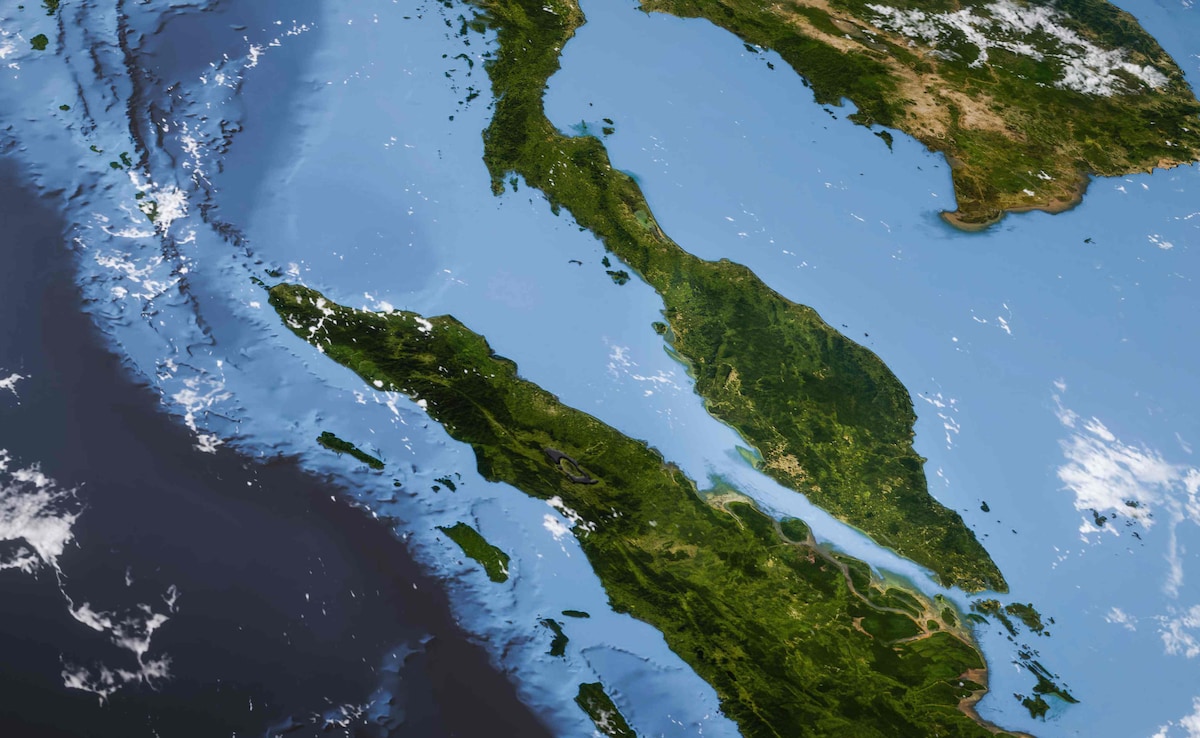
The Strait of Malacca is a 580-mile funnel. It is the literal throat of global trade. Parameswara didn't "find" it; he occupied the most valuable real estate on the planet and used the "brave mouse deer" story to recruit local Orang Laut (sea people) into his navy. He needed to convince a disparate group of pirates and nomads that this specific patch of dirt was divinely sanctioned.
If you want to understand history, stop looking at the trees and start looking at the tides.
The Sanskrit Appropriation
The argument that the name comes from the Amalaka (Amla) tree also ignores the shifting religious and political winds of the time. The transition from the Hindu-Buddhist Srivijayan influence to the Islamic Sultanate required a delicate linguistic dance.
The Amla tree holds a high place in Indian mythology. In the Puranas, it is said to have originated from drops of Amrit (the nectar of immortality). By linking the city’s name to the Amla tree, the early rulers could maintain a connection to the prestige of Indian civilization while simultaneously pivoting toward the growing influence of Muslim traders who knew the area as a Malakat.
It was a masterclass in double-entry branding.
To the locals and the Indian merchants, it was the Melaka tree (sacred, familiar). To the wealthy Middle Eastern financiers, it was the Market (profitable, essential).
Why This Misconception Persists
Why do we still teach the tree story? Because it’s easy. It’s "lifestyle" history. It avoids the messy, violent reality of 14th-century geopolitics.
The Strait of Malacca wasn't named in a vacuum. It was shaped by:
- The Yuan Dynasty’s collapse: Which disrupted land-based Silk Road routes and forced trade into the water.
- The Majapahit Empire’s aggression: Which forced Parameswara to find a defensible position far enough north to be safe but south enough to control the flow.
- Monsoon Logistics: Ships from India arrived with the Southwest monsoon (June to October) and stayed until the Northeast monsoon (December to March) could carry them back. They needed a place to wait. They needed a warehouse.
The "Melaka tree" provided the shade for the warehouse, but it didn't build the business.
Dismantling the "Discovery" Narrative
Travel writers love to frame Malacca as a sleepy fishing village that hit the jackpot. That’s an insult to the intelligence of the maritime world.
Imagine a scenario where a modern tech mogul claims he "discovered" a vacant lot in the middle of San Francisco and started a trillion-dollar industry because he saw a squirrel fight a cat. We would call that a PR stunt. Yet, we accept the mouse deer and the Amla tree as historical fact.
The Strait was already the most contested maritime space in the world. The Chola dynasty of India had launched massive naval raids on the region centuries earlier. The Chinese had been documenting the area for generations. Parameswara didn't discover Malacca; he monetized it.
The Cost of the Myth
When we focus on the Amla tree, we lose the technical brilliance of the Melaka Sultanate. They developed a sophisticated system of maritime law—the Undang-Undang Laut Melaka—that governed international shipping long before the Europeans arrived with their "rules-based order."
By clinging to the botanical origin story, we reduce a sophisticated, cosmopolitan trade hub to a fluke of nature. We treat the founders like lucky bystanders rather than the shrewd economists and naval strategists they actually were.
I’ve spent years analyzing how historical narratives are sanitized for modern consumption. The Melaka tree is the ultimate "filter." It softens the image of a city that was, in reality, a high-stakes, high-tension, multicultural pressure cooker where fortunes were made and lost on the turn of a tide.
The Brutal Truth of the Name
If we are being honest, the name "Malacca" is likely a linguistic collision. It’s what happens when five different languages try to pronounce the same strategic reality.
- Sanskrit: Amalaka (The fruit of the gods)
- Arabic: Malakat (The market/collection point)
- Malay: Melaka (The local tree)
- Portuguese: Malaca (The conquest)
None of these is the "true" origin because "truth" in the 1400s was whatever the guy with the biggest fleet said it was. Parameswara didn't name the city after a tree; he named it after an ambition. The tree was just the most convenient logo available.
Stop looking for the Amla tree when you visit the Strait. Look at the water. Look at the narrowness of the channel. Look at the way the wind hits the coast. That is why Malacca exists. That is why it has its name. The tree was just a witness to a hostile takeover.
History is written by the victors, but it’s edited by the tourism boards. If you want the real story, follow the money and the monsoons, not the fruit.
The Amla tree didn't give the Strait its name. The greed of empires and the physics of the ocean did. Everything else is just shade.