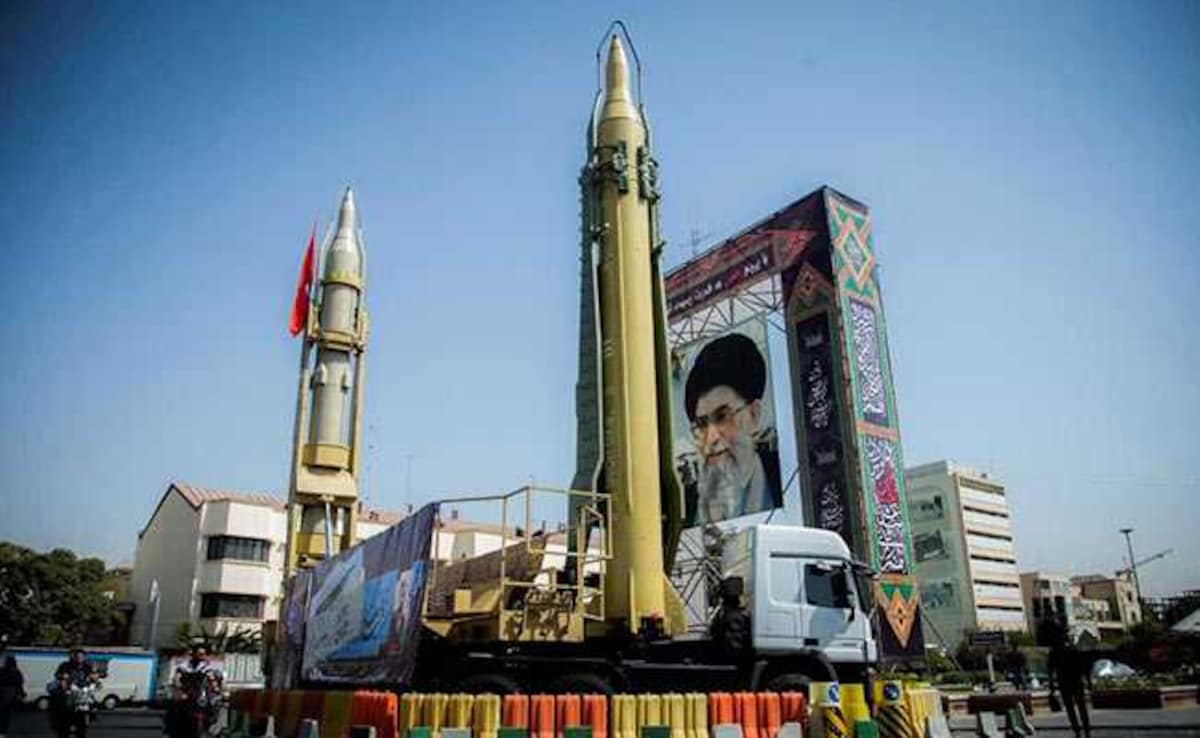
The display of ballistic hardware at a Tehran rally during active U.S.-led ceasefire negotiations is not a decorative act of nationalism; it is a calculated deployment of "latent escalation." By parading advanced missile systems precisely when diplomatic pressure for de-escalation peaks, Iran utilizes a strategy of decoupled signaling. This approach ensures that while diplomats discuss regional pauses, the underlying threat architecture remains visible, credible, and expanding. The objective is to decouple the "tactical ceasefire" (a temporary cessation of kinetic activity) from "strategic disarmament" (the long-term reduction of strike capabilities).
The Three Pillars of Iranian Missile Diplomacy
Iran’s missile program functions as a multi-tool in its foreign policy, serving three distinct operational functions that traditional diplomacy often fails to address simultaneously. Expanding on this topic, you can also read: Europe Faces a Brutal Choice Between Warm Homes and War Ready Armies.
- Extended Deterrence via Proximity: The presence of short and medium-range ballistic missiles (SRBMs and MRBMs) creates a permanent "threat floor." Even if a ceasefire is signed, the flight time of these systems—often measured in minutes—ensures that any breach of the agreement results in immediate, high-magnitude consequences for regional adversaries.
- Technological Sovereignty as Bargaining Chip: By showcasing domestic iterations of liquid and solid-fuel engines, Tehran signals that its industrial base is immune to standard sanctions regimes. This creates a "cost of failure" for Western negotiators; if the ceasefire does not provide economic relief, the rate of domestic missile iteration will likely accelerate.
- Internal Consolidation: Rallies serve as a feedback loop for the Islamic Revolutionary Guard Corps (IRGC). Publicly displaying hardware reinforces the internal narrative that the state’s security is non-negotiable, regardless of the concessions made by the Ministry of Foreign Affairs at the negotiating table.
The Cost Function of Regional Power Projection
Maintaining a ballistic arsenal involves a specific economic and technical trade-off. Unlike a traditional air force, which requires high maintenance cycles and pilot training, a missile-centric defense posture offers a lower long-term cost-per-threat-unit.
- Asymmetric Utility: A single ballistic missile can penetrate sophisticated integrated air defense systems (IADS) through sheer velocity and saturation. The cost for an adversary to intercept a missile (using systems like Patriot or Iron Dome) often exceeds the cost of the missile itself by a factor of ten.
- The Mobility Variable: The use of Transporter Erector Launchers (TELs) increases the survival probability of the arsenal. During a ceasefire, these units can be dispersed and hidden, making a "first strike" by an opponent mathematically risky due to the uncertainty of destroying the entire retaliatory capacity.
- The Fueling Bottleneck: The shift from liquid-fuel to solid-fuel engines is the most significant technical shift in this sector. Solid-fuel missiles can be stored ready-to-fire, removing the "fueling window" that previously gave intelligence agencies hours of warning before a launch.
Mapping the Conflict of Interests: Ceasefire vs. Capability
The tension between a U.S.-brokered ceasefire and a Tehran missile rally stems from a fundamental disagreement on the definition of stability. Washington views stability as the absence of hardware and the reduction of range. Tehran defines stability as a "balance of terror" where its capability is sufficient to prevent external intervention. Experts at The Guardian have shared their thoughts on this matter.
The ceasefire negotiations typically focus on immediate kinetic triggers:
- Stopping rocket fire from proxy groups.
- Halting drone incursions.
- Establishing "hotlines" to prevent accidental escalation.
However, these measures do not address the "over-the-horizon" threat of the ballistic program. By displaying these weapons now, Iran effectively removes them from the negotiation table. The message is clear: the ceasefire applies to the current skirmish, but the fundamental architecture of Iranian power is not up for debate. This creates a "security paradox" where the more successful a ceasefire is in the short term, the more time Iran has to refine the precision and range of its long-range assets without the distraction of active combat.
Tactical Divergence in Missile Engineering
An analysis of the specific hardware often seen at these rallies—such as the Kheibar Shekan or the Fattah series—reveals an emphasis on terminal maneuverability.
The first limitation of older ballistic systems was their predictable parabolic arc. Modern Iranian engineering focuses on Maneuverable Re-entry Vehicles (MaRVs). These payloads can change course during the final phase of flight, rendering standard interceptor calculations obsolete. This technical evolution changes the diplomatic calculus. If an adversary cannot guarantee a 90% interception rate, their willingness to engage in high-stakes brinkmanship during ceasefire negotiations drops significantly.
This creates a bottleneck for U.S. strategy. To push for broader missile restrictions, the U.S. would need to offer concessions that go far beyond a simple ceasefire, likely involving the total lifting of primary and secondary sanctions. Given the political climate in Washington, this is a non-starter, leading to the current state of "permanent friction."
The Logic of Visibility
Why show the missiles now? The timing suggests a play for "escalation dominance." In game theory, the player who can demonstrate the ability to move to the next level of violence with the least effort often dictates the terms of a stalemate.
If the U.S. pushes too hard on specific ceasefire terms that Tehran finds unfavorable, the "rally" serves as a reminder that the current level of conflict is not the ceiling. The missiles are a physical manifestation of the "or else" clause in every diplomatic document. They are not intended for use; they are intended to make the use of any other option—sanctions, cyber warfare, or localized strikes—appear too risky.
Strategic Forecast: The Shift Toward Hypersonic Rhetoric
The next phase of this signaling will likely involve the normalization of "hypersonic" claims. By moving the conversation from standard ballistic speeds to Mach 5+ capabilities, Iran aims to leapfrog the current generation of Western defense technology. Whether or not these systems meet the strict technical definition of hypersonic flight (sustained maneuverability at high Mach numbers within the atmosphere) is secondary to the psychological impact on the regional security architecture.
Adversaries must now invest in space-based tracking and next-generation interceptors, diverting resources from conventional naval and air power. This forced reallocation of defense spending is a primary victory for Tehran’s strategic planners, achieved without firing a single shot.
The operational reality remains: as long as the U.S. pursues a policy of containment through ceasefires, Iran will counter with a policy of "defiance through display." The missiles at the Tehran rally are the punctuation marks at the end of every diplomatic sentence.
Investors, analysts, and regional actors must treat these displays not as propaganda, but as a roadmap for the next decade of Middle Eastern volatility. The focus will remain on increasing the "circular error probable" (CEP) accuracy of these systems, turning them from blunt terror weapons into surgical tools of statecraft. The strategic play for Western powers is no longer to prevent the existence of these weapons—that ship has sailed—but to build a regional framework that can absorb the reality of their presence without collapsing into total war.