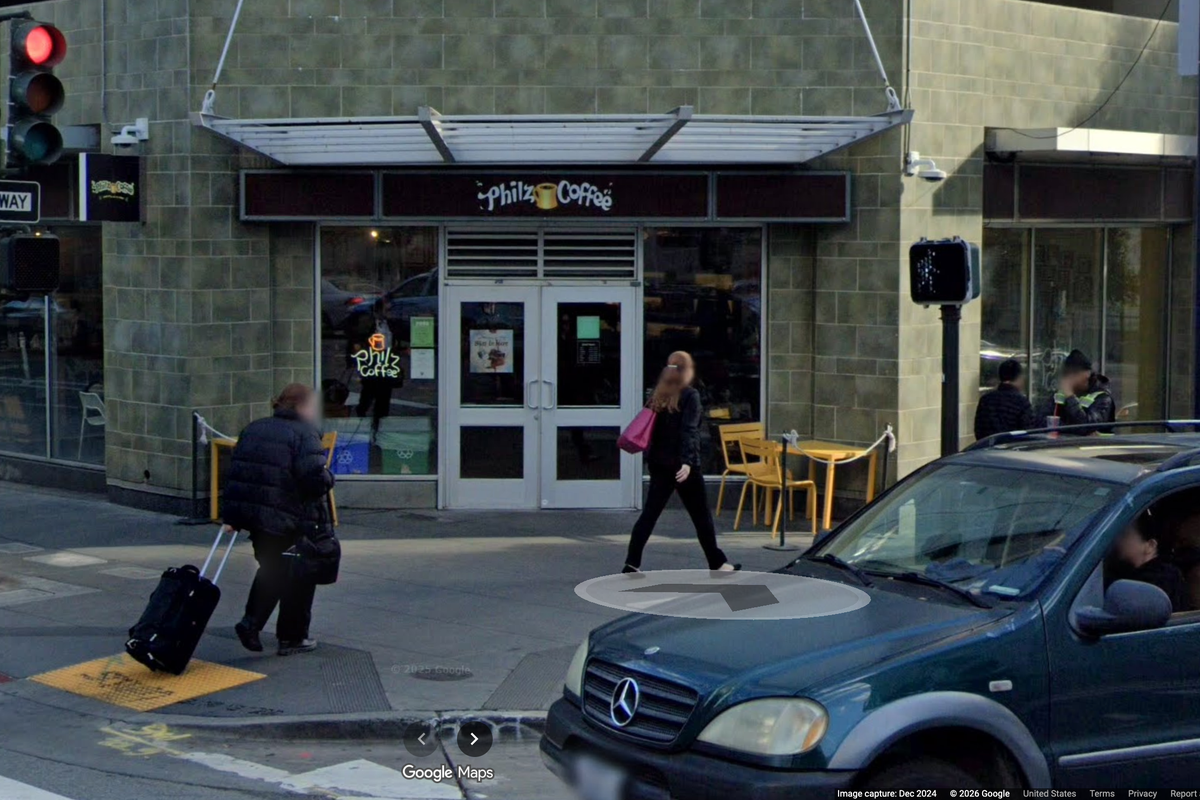
The recent policy reversal at Philz Coffee regarding the display of Pride flags reveals a fundamental failure in corporate risk assessment and stakeholder management. When a firm attempts to neutralize its brand environment by removing established symbols of social affiliation, it rarely achieves the intended "neutrality." Instead, it triggers a high-velocity feedback loop where the cost of reputational repair far exceeds the perceived benefit of risk mitigation. This specific case serves as a diagnostic tool for understanding the fragility of corporate identity in a bifurcated consumer market.
The Dual-Feedback Loop of Corporate Signaling
Corporate decisions regarding social symbolism operate within two distinct feedback loops: the internal cultural ecosystem and the external market perception. Philz Coffee’s initial move to standardize storefronts by removing Pride flags was framed as an operational shift toward aesthetic consistency. This rationale ignored the sociological reality that in a high-trust brand environment, symbols are not merely decor; they are proxies for the firm’s value proposition.
The failure occurred because the leadership treated the flag as an "optional asset" rather than a "core component" of the brand's social contract. In business terms, this created an immediate deficit in brand equity among a vocal, highly-engaged demographic. The subsequent reversal was not a shift in values, but a capitulation to a cost-benefit analysis that turned sharply negative within 48 hours.
The Friction Points of Operational Standardization
Standardization is a common strategy for scaling retail operations. It reduces overhead and ensures a predictable customer experience. However, applying a "clean store" policy to culturally significant markers introduces specific types of friction:
- The Identity Devaluation Tax: When a brand has historically leveraged inclusive messaging to build a customer base, removing those signals is perceived as a breach of contract. The "tax" is paid in the form of employee turnover and customer churn.
- The Vacuum Effect: In the absence of a clear, pro-active stance, stakeholders fill the silence with their own interpretations. For Philz, the removal was interpreted not as a design choice, but as a political retreat, inviting scrutiny from across the ideological spectrum.
- The Reversal Penalty: Reversing a controversial policy provides temporary relief but damages the perception of leadership's decisiveness. It signals that the organization lacks a stable internal compass and is governed by the volume of external criticism.
The Economics of Advocacy vs. Neutrality
The "Neutrality Paradox" suggests that for a consumer-facing brand in a metropolitan market, the middle ground is often the most expensive territory to occupy. By attempting to avoid the "friction" of social issues, the firm inadvertently creates a new, more volatile friction.
Market data indicates that consumers—particularly in the premium coffee segment—do not view their purchases as purely transactional. They are "bundled" goods: the physical product plus the social alignment of the provider. When Philz removed the flags, they unbundled the product. The market's reaction proved that the "social alignment" component carried a significant portion of the total value.
Strategic Miscalculation in Crisis Management
The initial internal memo at Philz prioritized "safety and consistency." This is a classic defensive posture. From a strategic consulting perspective, the error was failing to quantify the "outrage elasticity" of their core demographic.
- Fact: The San Francisco-founded chain operates in markets where LGBTQ+ visibility is integrated into the local economic fabric.
- Mechanism: The removal of flags functioned as a negative signal to a customer base that views these symbols as non-negotiable.
- Result: The firm faced a coordinated backlash that threatened foot traffic and digital brand sentiment simultaneously.
The reversal, while necessary for short-term stabilization, exposes a deeper structural weakness. If the organization truly valued "consistency," the reversal contradicts its own stated operational goals. This suggests that the initial policy was not a deeply held strategic conviction but a poorly vetted tactical experiment.
The Risk Management Framework for Cultural Assets
Organizations must categorize their brand elements into "Static Assets" and "Dynamic Symbols."
- Static Assets: Interior lighting, furniture styles, menu pricing. These can be standardized without social friction.
- Dynamic Symbols: Flags, community boards, local partnerships. These are high-variance assets that require localized management.
Philz Coffee’s mistake was misclassifying a Dynamic Symbol as a Static Asset. They applied a centralized, top-down solution to a decentralized, bottom-up cultural reality. In high-density urban markets, the storefront is a social site. Treating it strictly as a distribution point for caffeine ignores the competitive advantage that independent-feeling chains have over global behemoths.
Identifying the Break in the Chain of Command
The timeline of the Philz reversal indicates a breakdown between the executive strategy team and the frontline operations. When employees—the primary brand ambassadors—publicly dissent against a corporate directive, the organization has lost control of its internal culture. This dissent acts as a multiplier for external criticism.
The cost of this misalignment is measured in:
- Recruitment Costs: Difficulty in attracting talent that aligns with a perceived "shifting" corporate culture.
- Brand Dilution: A loss of the "authentic" premium that allows specialty coffee chains to charge a margin above commodity competitors.
- Executive Bandwidth: The diversion of senior leadership time from growth initiatives to damage control.
The Inevitability of the Proactive Stance
The era of "quiet" corporate operations has ended. Digital transparency ensures that every internal policy change is a potential public event. For a firm like Philz, the path forward requires a transition from reactive capitulation to proactive alignment.
The strategy for any retail entity facing similar pressures is to establish a "Values Floor." This is a set of non-negotiable cultural commitments that are immune to standardization efforts. By clearly defining what will never change, the firm gains the license to standardize other operational aspects without triggering a crisis.
The Philz case demonstrates that the modern CEO must be as much a sociologist as a strategist. The decision to remove and then reinstate Pride flags was a "zero-sum" move that resulted in no new customers gained, but significant brand equity spent. The organization now finds itself in a "trust deficit" where future policy changes will be viewed with heightened suspicion.
To mitigate this, the firm must immediately decentralize its approach to community symbols, allowing individual store managers—who possess the most accurate data on local sentiment—to curate the "Dynamic Symbols" of their specific locations. This shifts the risk away from the corporate center and restores the "local" feel that originally built the Philz brand. This is not just a social move; it is a move toward operational resilience.