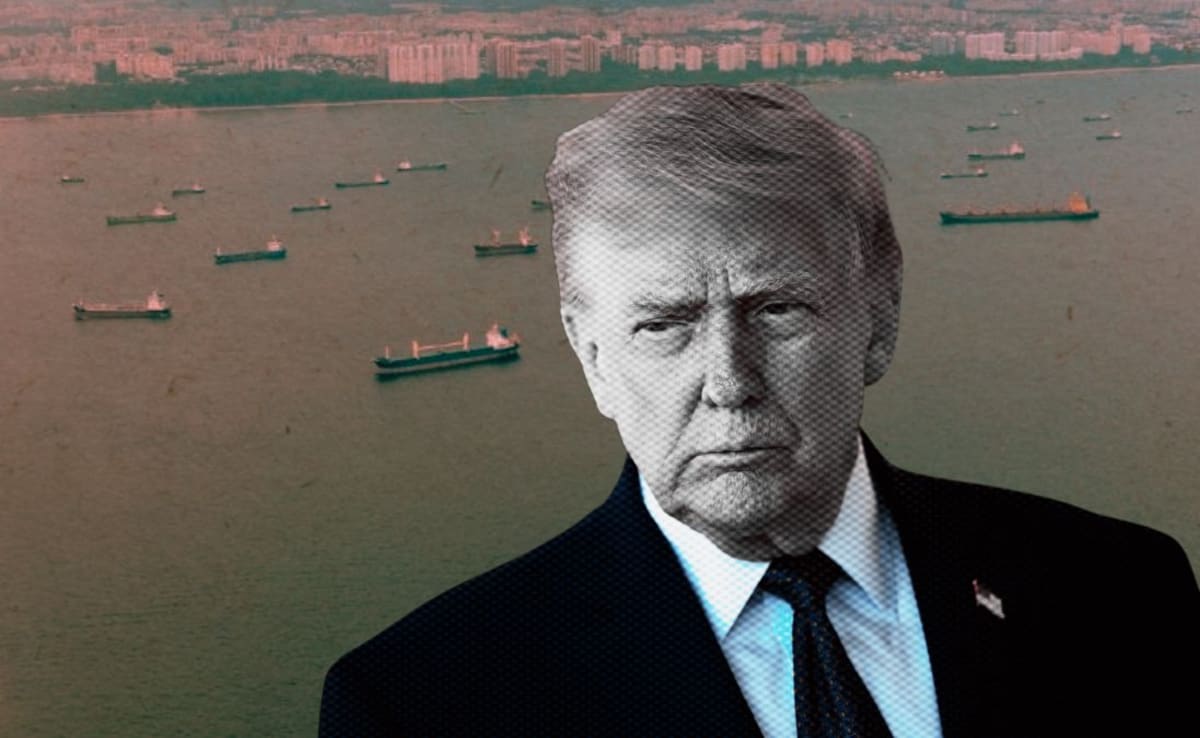
Geopolitics is currently obsessed with a ghost. Pundits are frantically typing about the "Malacca Dilemma" as if a few US destroyers parked in a 1.7-mile-wide neck of water could actually flip the global script. They argue that if the US moves from the Strait of Hormuz to the Strait of Malacca, India sits in the catbird seat.
They are wrong. Learn more on a related topic: this related article.
The standard narrative suggests that controlling this chokepoint is a magic wand for regional dominance. It assumes that because 60% of China's oil flows through this narrow gutter, blocking it would bring Beijing to its knees while turning New Delhi into the Indopacific’s indispensable toll collector. This isn't just wishful thinking; it’s a fundamental misunderstanding of modern logistics, energy resilience, and the brutal reality of naval theater.
The Chokepoint Delusion
Everyone loves a good map. You see a narrow sliver of blue, you imagine a chain across it, and you think "Game Over." But the Strait of Malacca isn't a kitchen sink you can just plug. It is a 580-mile stretch of water. Additional analysis by BBC News delves into related perspectives on this issue.
The "lazy consensus" assumes a blockade is a static event. It’s not. It’s an act of war that triggers immediate, violent, and creative workarounds. If the US Navy decides to bottleneck Malacca, they aren't just "securing" a trade route; they are blowing up the global insurance market and forcing a total reconfiguration of Eurasian trade that might actually leave the West—and India—more vulnerable than before.
Beijing isn't stupid. They’ve spent the last decade building the "Malacca Bypass" through the China-Pakistan Economic Corridor (CPEC) and pipelines through Myanmar. While the "experts" are worrying about tankers in the strait, China is moving molecules via land. A blockade in Malacca doesn't starve China; it just makes their overland infrastructure—which India cannot easily touch—the most valuable real estate on earth.
Why India is Playing the Wrong Game
The competitor's piece argues that India gains leverage here. How? By being a "net security provider"? That’s a fancy term for being the guy who pays the bill for someone else's party.
If India aligns its naval strategy solely around intercepting Chinese energy flows in the Andaman Sea, it falls into a reactive trap. You don't win by standing in the way of someone else's dinner; you win by owning the kitchen.
India’s real power isn't in blocking the strait; it’s in the fact that it doesn’t need to. Every dollar India spends on blue-water hulls to "monitor" Malacca is a dollar not spent on the asymmetric capabilities—like BrahMos batteries on the Andaman and Nicobar Islands—that actually deter aggression. The obsession with the strait is a hangover from British colonial maritime theory. It’s 19th-century thinking applied to a 21st-century problem.
The Logistics of a Failed Blockade
Let’s look at the math of a blockade. People ask: "Can the US stop Chinese trade?"
The honest answer is: Not without crashing the global economy into a mountain.
A blockade of Malacca doesn't just stop "Chinese" oil. It stops Japanese oil. It stops South Korean components. It stops the very flow of capital that keeps the US Treasury afloat. Ships don't carry "country-specific" flags in a way that makes sorting them easy. Cargo is a messy, multinational soup.
Imagine a scenario where a Liberian-flagged tanker, owned by a Greek syndicate, carrying Saudi oil destined for a refinery in Ningbo that produces chemicals for a factory in Vietnam that makes iPhones for the US market, enters the strait. Do you sink it? Do you seize it?
The moment the first shot is fired in Malacca, freight rates don't just go up; they disappear. No captain will sail into a combat zone without war-risk premiums that exceed the value of the cargo. A blockade doesn't "target" China. It nukes the world's supply chain.
The Strategic Pivot No One Wants to Admit
The real "Hormuz to Malacca" shift isn't about security. It's about the US admitting that the Middle East is a lost cause and trying to find a new place to look busy.
For India, this isn't an opportunity to be a deputy sheriff. It’s a threat. If the US shifts focus to Malacca, it brings the "Great Power Competition" directly into India’s backyard. It turns the Indian Ocean into a chessboard for two giants, and India is often treated like a pawn.
India should be praying for a Malacca crisis—not so it can participate, but so it can demonstrate the total irrelevance of the chokepoint.
True strategic autonomy for India comes from developing the Great Nicobar port to the point where it isn't just a "watchtower" but a transshipment hub that rivals Singapore. You don't dominate a strait by threatening to close it; you dominate it by being the reason ships have to stop there.
The Death of the Tanker Era
We are also ignoring the elephant in the room: Decarbonization.
The "Malacca Dilemma" is a problem centered on oil and coal. As China aggressively moves toward EVs and domestic nuclear power—adding more nuclear capacity in a decade than the US has in forty years—the strategic value of an oil chokepoint plummets.
In fifteen years, blocking oil tankers in Malacca will be like trying to win a war by blocking shipments of typewriter ribbons. It’s a legacy threat. The real chokepoints of the future are the subsea data cables and the rare-earth supply chains, most of which China already controls or is building via the "Digital Silk Road."
While we are arguing about who owns the surface of the water, we are losing the battle for the floor of the ocean and the signals passing through it.
The Actionable Truth
If you are an investor or a policy wonk, stop looking at the Strait of Malacca as a "win" for India.
- Stop valuing "Sea Lane Security": It’s an expensive myth. Focus on "Sea Denial." It is much cheaper to make a body of water unusable for an enemy than it is to keep it safe for yourself.
- Watch the Sunda and Lombok Straits: If Malacca closes, trade just goes south through Indonesia. Unless the US and India plan to blockade the entire Indonesian archipelago—a logistical nightmare—the "Malacca Trap" is just a slight detour.
- Bet on Land, Not Sea: The real winner of a Malacca conflict is the trans-Siberian railway and the Arctic Northern Sea Route.
The US eyeing Malacca isn't a sign of strength; it’s a sign of a decaying strategy looking for a new home. India’s path to power isn't through becoming a gatekeeper for a dying energy paradigm. It’s through building an economy so vital that the world can't afford to let the Indian Ocean become a war zone.
The next time someone tells you Malacca is the key to the Indo-Pacific, ask them how a chokepoint matters when the cargo is increasingly digital, the power is increasingly nuclear, and the "enemy" has already built a backdoor.
Stop playing 2D chess on a 3D map.
The strait is a distraction. The real war is already over, and it wasn't fought with ships.