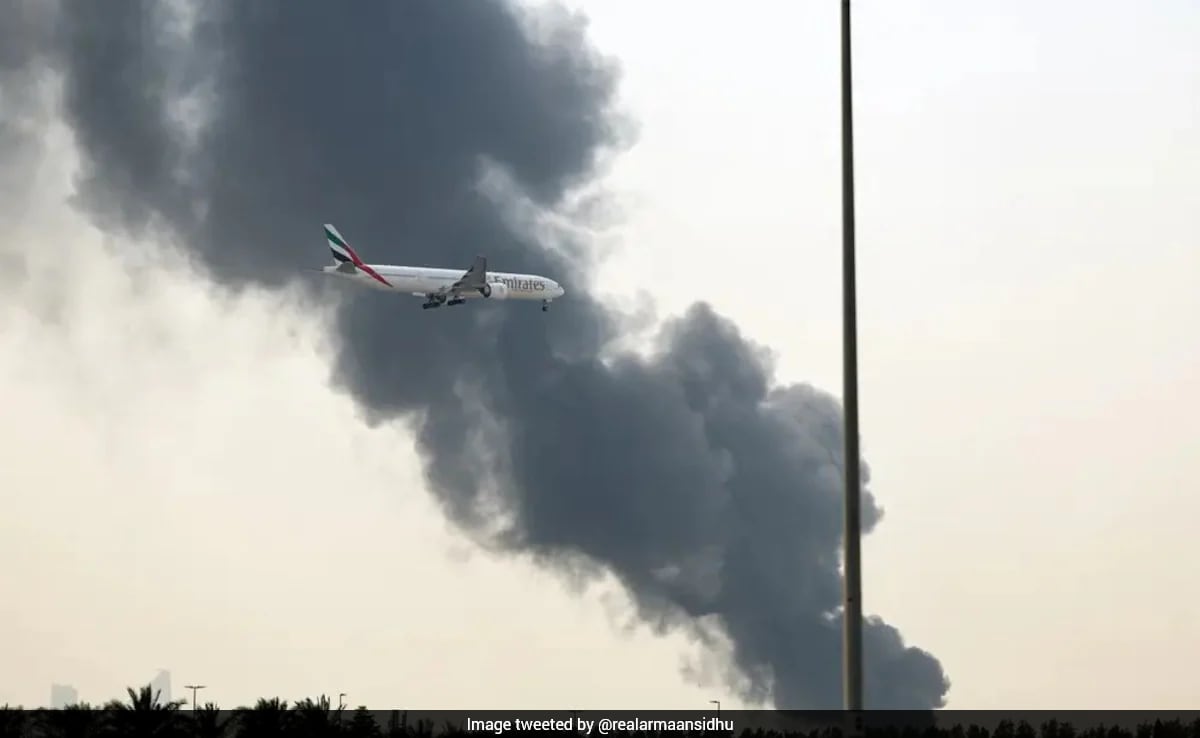
The detention of a 25-year-old British flight attendant in Dubai for disseminating imagery of a drone strike serves as a terminal case study in the collision between Western digital norms and the rigid internal security frameworks of the United Arab Emirates (UAE). This incident is not a deviation from standard Emirati legal practice; rather, it is the logical output of a legal system that prioritizes "public order" and "national reputation" over individual expression. For international professionals operating within these hubs, the failure to recognize the shift from liberal digital environments to sovereign-controlled networks creates a high-probability risk of state intervention.
The UAE Cybercrime Architecture and the Precautionary Principle
The UAE’s Federal Decree-Law No. 34 of 2021 on Combatting Rumors and Cybercrimes provides the legal mechanism for such arrests. Unlike Western legal systems that typically require proof of intent to cause harm or actualized damages, the Emirati framework utilizes the Precautionary Principle of State Security. Under this logic, the mere act of recording or sharing sensitive imagery—such as military hardware, government installations, or strike zones—is codified as an existential threat to the state’s economic and social stability. You might also find this similar article useful: The $2 Billion Pause and the High Stakes of Silence.
The legal friction exists in three primary domains:
- Informational Sovereignty: The state claims absolute ownership over the narrative regarding its security. Sharing a drone strike image—even if the strike is an objective fact—is classified as "disseminating false rumors" or "harming the state’s reputation" because it disrupts the carefully curated image of the UAE as a secure, risk-free global node.
- The Privacy Paradox: Article 44 of the Cybercrime Law criminalizes the "breach of privacy" via electronic means. In the UAE, this extends beyond individuals to include government entities and tactical operations. Recording a site of conflict is viewed as a breach of the state’s private operational sphere.
- Ambiguity as a Control Variable: The law’s language is intentionally broad. Terms such as "public interest" and "social peace" are not strictly defined, allowing the Public Prosecution office to exercise maximum discretion during the investigative phase.
The Cost of Narrative Contradiction
The tourism and aviation sectors are the primary engines of Dubai’s GDP. Any imagery suggesting military vulnerability or regional instability carries a direct economic cost. When a flight attendant—an employee of a sector tied to the state’s global connectivity—shares imagery of a kinetic strike, they are not merely "posting a photo." They are introducing volatility into a market that trades on the perception of absolute safety. As highlighted in detailed articles by NBC News, the effects are significant.
This creates a Cost-Effect Chain of Detention:
- Action: Publication of sensitive geopolitical imagery.
- Intermediate Effect: Potential de-risking by foreign investors or a dip in tourism sentiment.
- State Reaction: Immediate removal of the source and a punitive legal response to signal a "Zero Tolerance" policy to other expatriates.
The detention process in the UAE is characterized by a "Guilty Until Disproved" operational phase. Once an individual is accused of a cybercrime involving national security, the state utilizes administrative detention powers to seize passports and limit communication while digital forensics are conducted on the seized devices.
Structural Bottlenecks in International Diplomacy
Consular assistance for British nationals in the UAE is frequently misunderstood by the public as a legal shield. In reality, the UK Foreign, Commonwealth & Development Office (FCDO) operates under a severe structural constraint: the Principle of Non-Interference in Sovereign Judicial Processes.
The FCDO cannot provide legal advice, pay for lawyers, or demand a release if local laws have been technically breached. This creates a bottleneck where the individual remains in legal limbo, often for months, while the Emirati Public Prosecution builds a case. The diplomatic leverage is minimal because the UAE views these cases as matters of internal security, which they hold as a higher priority than bilateral diplomatic optics with the West.
The Digital Forensic Trap
Expatriates often operate under the "Erasure Fallacy"—the belief that deleting a post or an image mitigates the legal risk. Within the UAE’s technical infrastructure, the following variables ensure that digital actions are permanent:
- Signal Interception: Major telecommunications providers like Etisalat and Du operate under state oversight. Data packets containing sensitive imagery can be flagged in real-time.
- Platform Cooperation: While Western social media companies claim to protect user data, the UAE has sophisticated methods for tracking local IP addresses to physical identities through SIM card registration (Every SIM must be linked to an Emirates ID).
- Device Seizure Logic: Upon arrest, the "chain of custody" for digital devices allows state forensic experts to recover deleted data, including cached thumbnails of photos shared via encrypted apps like WhatsApp or Telegram.
Quantification of Risk for Expatriate Personnel
The risk profile for a foreign national in Dubai can be modeled as a function of their proximity to state-sensitive information and their digital visibility.
$$Risk = (Visibility \times Sensitivity) + (Jurisdictional Gap)$$
Where:
- Visibility is the size of the individual’s social media following or the public nature of the platform.
- Sensitivity is the degree to which the content contradicts the official state narrative.
- Jurisdictional Gap is the distance between the user’s home-country speech laws and the UAE’s Cybercrime Law.
For a flight attendant, the Visibility variable is heightened because they represent the aviation industry, a core pillar of the state's identity. Sharing imagery of a strike (High Sensitivity) while operating under a system with no First Amendment-style protections (High Jurisdictional Gap) results in a near-certainty of state intervention once the content is detected.
The Strategic Shift to Private-Public Surveillance
The UAE has moved toward a "Whole-of-Society" surveillance model. This is not just about cameras on street corners; it is about the "Reporting Culture" fostered by apps like Dubai Police's 'Police Eye'. Citizens and residents are incentivized to report "suspicious activity" or "illegal content" directly from their smartphones.
This creates a decentralized surveillance network where an expatriate’s greatest threat is not a government agent, but a bystander or a "friend" who views their social media feed. The British flight attendant’s arrest likely originated from a report by an automated filter or an individual user, rather than a proactive manhunt. Once the report enters the system, the bureaucratic momentum of the UAE’s security apparatus makes it nearly impossible to halt the process without a high-level royal pardon—a rare occurrence usually reserved for major holidays or significant diplomatic concessions.
The Jurisdictional Arbitrage Fallacy
A common error among Westerners is the belief in "Extraterritorial Norms"—the idea that because they are British or American, they carry their home country's rights with them. In the UAE, the law is territorial. The moment a device connects to a local tower and an image is uploaded, the act is consummated within Emirati jurisdiction.
This leads to a specific legal bottleneck: The Recharacterization of Intent. In a UK court, the defense would argue the individual had no "criminal intent" and was simply a witness to an event. In a UAE court, the "intent" is often inferred from the "act." The act of posting the photo is, in itself, the intent to share it, which constitutes the crime of disseminating unauthorized imagery. The "why" is legally secondary to the "what."
Mitigating Geopolitical Exposure
Organizations employing expatriates in high-risk jurisdictions must transition from "Cultural Awareness" training to "Legal Hardening" protocols. The current strategy of relying on employees to exercise "common sense" is failing because "common sense" is culturally relative.
- Operational Digital Silence (ODS): Personnel must be trained to treat their personal devices as professional liabilities. In jurisdictions like the UAE, the distinction between private life and public legality does not exist.
- Infrastructure Awareness: Understanding that local Wi-Fi and cellular networks are state-monitored. Any data transmitted is essentially data surrendered.
- The Immediate Response Protocol: If a digital breach occurs (e.g., an employee posts sensitive content), the only viable strategy is immediate deletion followed by an immediate physical exit from the country before a travel ban can be registered in the system. Once the Public Prosecution initiates a file, the window for exit closes.
The detention of the flight attendant is a signal of the UAE's hardening stance on information control as regional tensions rise. As drone technology and regional conflicts make "witnessing" more common, the friction between the individual’s urge to document and the state’s urge to conceal will only intensify. The primary risk is no longer the event being documented, but the act of documentation itself.
Expatriate professionals must adopt a "Zero-Trust" approach to their digital presence. Any content that does not align with the state’s strategic narrative—even if that content is a factual representation of reality—is a potential trigger for indefinite detention and the total loss of personal liberty. The state does not distinguish between a journalist, a tourist, and a flight attendant; it only distinguishes between those who adhere to the narrative and those who disrupt it.