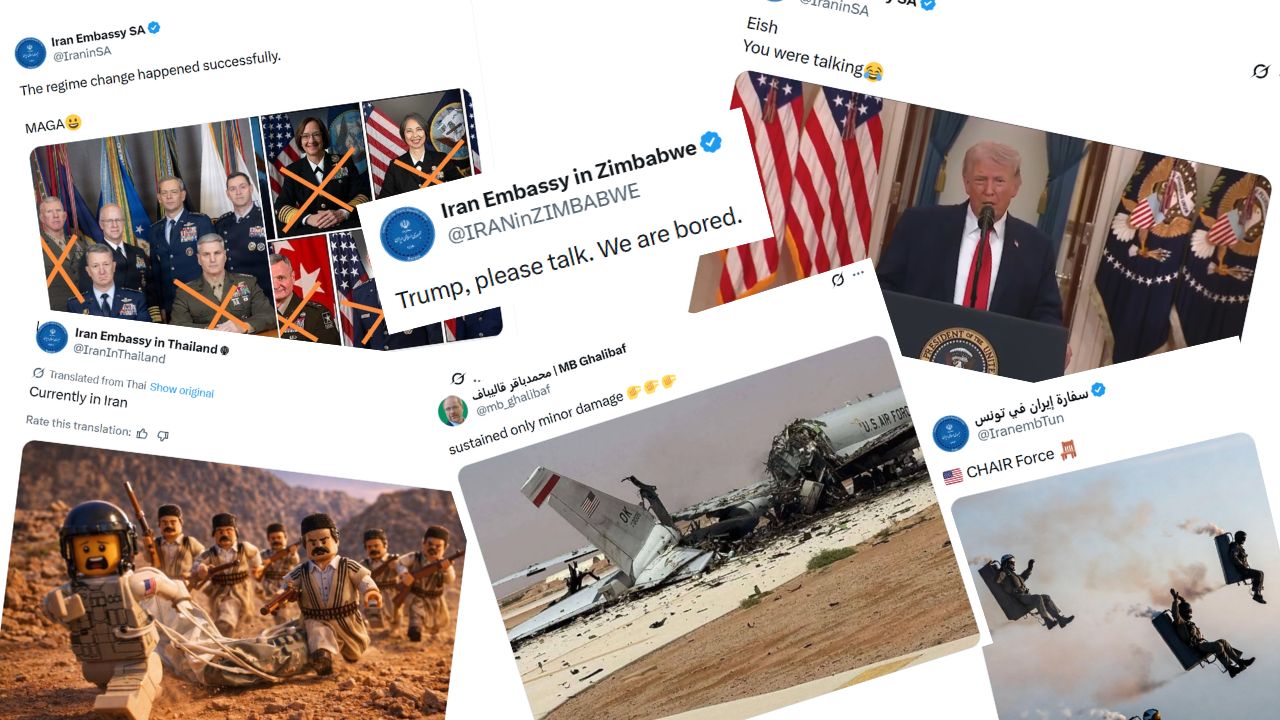
The missiles are flying in the physical world, but the real psychological damage is happening on your phone screen. While the U.S. and Israel pound Iranian infrastructure in "Operation Epic Fury," Tehran isn't just sitting in a bunker waiting for the dust to settle. They're laughing at us. Or at least, they’re trying to make us think they are.
If you’ve seen the "Trump, please talk, we are bored" memes or the targeted leaks of FBI Director Kash Patel’s personal cigar-smoking photos, you’re looking at a very specific kind of asymmetrical warfare. Iran knows it can’t win a dogfight against an F-35. It can’t win a naval battle in the Strait of Hormuz if the U.S. Navy decides to clear the path. So, they’ve moved the goalposts. They’re fighting a war of embarrassment, distraction, and digital exhaustion. For a different look, check out: this related article.
The Strategy of Digital Humiliation
Most people think of cyber warfare as "The Matrix"—green code scrolling down a screen followed by a power grid failing. Sure, that happens. But Iran’s most effective tool right now is "hack-and-leak." They don't just want to steal your data; they want to show the world they have it.
Take the recent breach of Kash Patel’s personal Gmail. The hackers, a group calling themselves Handala, didn't just take his emails. They published photos of him making faces in a mirror and smoking cigars. It sounds trivial. It’s not. The message is: We are inside your house. We see your private moments. Your billion-dollar defense systems can’t protect your own inbox. Further analysis on the subject has been shared by ZDNet.
This is designed to:
- Make high-ranking officials feel physically and socially vulnerable.
- Create a sense of "security theater" where the public loses faith in government protection.
- Distract the media from actual military progress with "viral" gossip.
Why the Boredom Narrative is a Trap
The "We are bored" messaging isn't an accident. It’s a calculated psychological operation (PSYOP). By framing the conflict as a joke or a nuisance, Iran attempts to devalue the impact of U.S. and Israeli strikes. When President Trump says Iran is "decimated," and the Iranian response is a meme asking him to talk more because they’re "bored," it creates a cognitive dissonance for the Western public.
It’s a classic "David vs. Goliath" tactic. If Goliath hits David and David just yawns, Goliath looks like a bully and a failure at the same time. This narrative travels fast on TikTok and X (formerly Twitter), where nuance goes to die. It’s particularly effective because it targets the U.S. domestic divide. Half the country wants to see the mission finished; the other half is exhausted by "forever wars." Iran is poking that bruise as hard as they can.
Beyond the Memes: Real Infrastructure Threats
Don't let the jokes fool you. While the front-facing "trolls" are making memes, the technical units are hitting hard. We've seen a massive uptick in attacks on Israeli industrial control systems (ICS).
Iran uses what experts call "living-off-the-land" techniques. They don't always use custom, fancy malware. Instead, they use the system's own tools—like PowerShell or remote desktop protocols—to move around. This makes them incredibly hard to spot because they look like a regular IT guy doing his job.
Recent Targets and Tactics
- Religious Apps: They’ve hacked apps like BadeSaba (a prayer calendar with 5 million users) to push anti-regime messages or, conversely, to track user locations for counter-intelligence.
- Water and Power: Small-scale intrusions into Israeli water treatment plants aren't meant to poison the water today. They're meant to show they could do it tomorrow.
- Election Interference: During the 2024 cycle, they aggressively targeted both the Trump and Harris campaigns. They weren't necessarily picking a side; they were looking for dirt to dump at the most chaotic moment.
The Mosaic Defense is Real
On the ground, the IRGC uses something called "Mosaic Defense." It’s the digital and physical equivalent of a hydra. Since 2008, they’ve decentralized their command. If a strike hits Tehran and takes out a command center, 31 provincial commands have the autonomous authority to keep fighting.
This translates to their cyber strategy, too. You aren't fighting one "Cyber Command." You're fighting dozens of independent hacker collectives, some patriotic volunteers, some state-contracted, all operating with a "fire at will" mentality. This makes traditional deterrence—the idea that "if you hit us, we hit you back"—almost impossible. Who do you hit back when the attack came from a decentralized group of hackers in a basement in Mashhad?
Stop Falling for the Spin
The biggest mistake you can make is thinking this is just "trolling." It's a layer of war that feeds the physical conflict. When Iran hacks a defense contractor like Lockheed Martin and leaks employee data, they’re not just being annoying. They’re putting names and faces on the people who build the weapons hitting them. It’s an intimidation tactic that works.
If you want to protect yourself or your organization from being a pawn in this, start with the basics. MFA (Multi-Factor Authentication) isn't a suggestion anymore; it’s a requirement. If you’re in a high-profile position, your personal Gmail is a liability.
Don't share the "funny" memes without realizing they’re part of a broader strategy to make the U.S. and Israel look incompetent. The war isn't just being fought in the Strait of Hormuz. It's being fought in your feed. Turn off the "boredom" narrative and look at the data. Iran is losing ground physically, which is exactly why they're screaming—and laughing—so loud online.
Check your privacy settings. Rotate your keys. Don't let the "bored" trolls into your head.