A Shiver Across the Pyrenees
The border between France and Spain is more than a map coordinate. It is a shared breath. In the high, jagged passes of the Pyrenees, the air is thin and the silence is heavy, but down in the valleys, the lives of millions are woven together by commerce, culture, and a common European dream. Yet, a cold wind is blowing from Paris. It isn't the natural chill of the mountain peaks, but a political frost.
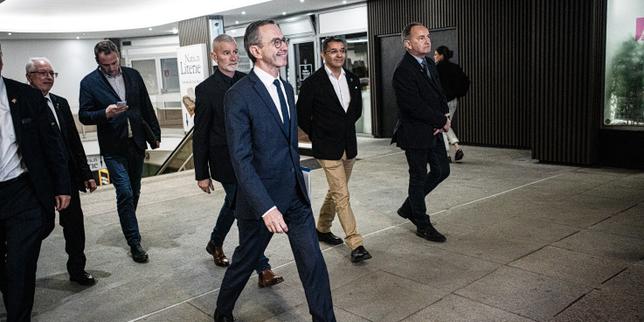
Bruno Retailleau, the candidate for the Les Républicains (LR) party, has cast a stone into the water, and the ripples are turning into waves. His recent declaration—that Spain should be placed "at the ban of European nations"—has transformed a complex policy debate into a visceral confrontation. He isn't just talking about quotas or maritime patrols. He is talking about ostracization. He is suggesting that a founding pillar of the modern European project should be treated as a pariah.
The reason? Migration.
Retailleau looks south and sees a back door left wide open. He sees a Spanish government that, in his view, has traded European security for a lenient, even welcoming, approach to those crossing the Mediterranean. To him, this isn't just a disagreement over paperwork. It is a betrayal of the collective.
The Architect and the Shore
Consider a hypothetical official in a coastal town like Algeciras. Let’s call him Mateo. Mateo watches the horizon every morning. He sees the orange dinghies, the exhausted eyes of men and women who have gambled everything on a stretch of salt water. For Mateo, the crisis isn't a talking point. It is a physical reality. It is the smell of wet clothes and the sound of sirens.
Now, shift the lens to a desk in Paris. Retailleau sits there, looking at spreadsheets and maps. He sees a different reality. He sees a demographic shift he believes France cannot sustain. He sees the "Spanish model" as a contagion that threatens the social fabric of his own country. When he speaks of putting Spain "at the ban," he is trying to build a wall of words where a wall of stone cannot exist.
The tension lies in how we define a neighbor. Is a neighbor someone who shares your burden, or someone you blame for the rain leaking through your roof?
Spain’s recent policies—including moves toward regularizing the status of hundreds of thousands of undocumented migrants—are seen by Madrid as a pragmatic solution to a labor shortage and a humanitarian necessity. They argue that bringing people out of the shadows makes society safer and more productive. Retailleau views this same act as a "call to air," a signal to the rest of the world that the gates are down.
A House Divided by a Door
Europe is often described as a common house. If one roommate leaves the front door unlocked, the others feel the draft. Retailleau’s rhetoric is designed to make the French voter feel that draft. He wants them to feel the vulnerability of a border that is essentially a line in the sand.
But the stakes go far deeper than the next election cycle. If a major French political figure can openly call for the isolation of Spain, the very idea of European solidarity begins to crumble. This isn't just about migration; it is about the "Schengen" spirit. It is about whether we are a union of partners or a collection of rivals looking for someone to blame.
The facts are stark. Spain has seen a massive increase in arrivals, particularly in the Canary Islands. The pressure is real. The local infrastructure is bucking under the weight. But the solution Retailleau proposes—a diplomatic excommunication—is a sledgehammer where a scalpel is required.
The Human Cost of Isolation
What happens when a nation is placed "at the ban"?
In the short term, it creates a diplomatic vacuum. Cooperation on security, counter-terrorism, and trade slows to a crawl. But the long-term cost is psychological. It fosters a "us versus them" mentality that extends beyond politicians to the people in the streets. It turns the holidaymaker in San Sebastián and the businessman in Lyon into representatives of opposing camps.
Imagine the young student from Barcelona studying in Paris. Suddenly, the rhetoric shifts. They are no longer a fellow European; they are a citizen of the country that "compromised" the continent. This is how the invisible lines are drawn. They aren't made of barbed wire, but of suspicion.
Retailleau’s gamble is that the French public is scared enough to want a villain. By casting Spain in that role, he simplifies a dizzyingly complex global issue into a morality play. It is a classic narrative technique: find a scapegoat, define the threat, and offer yourself as the protector.
The Mediterranean Mirror
The sea doesn't care about political speeches. The Mediterranean is a mirror, reflecting the failures and the hopes of two continents. Spain is on the front line of a global movement of people that no single nation can stop, no matter how many bans they propose.
When Retailleau speaks of Spain’s "migratory policy" as a reason for exclusion, he ignores the reality that Spain is often doing the heavy lifting for the rest of the continent. The migrants landing on the shores of Andalusia or the beaches of Tenerife rarely intend to stay there. They are moving toward the centers of Europe—toward Berlin, toward Brussels, and yes, toward Paris.
By attacking Spain, Retailleau is essentially attacking the messenger. He is shouting at the lighthouse because the storm is coming.
The real problem lies in the absence of a unified European response. Instead of a cohesive strategy, we have a patchwork of national anxieties. We have Italy pushing back, Spain reaching out, and France, through figures like Retailleau, threatening to shut the door on everyone.
The Weight of the Word
"Ban."
It is a heavy, medieval word. It suggests a stripping of rights, a casting out into the wilderness. In a modern context, it is an absurdity. Spain is the fourth-largest economy in the Eurozone. It is a cultural powerhouse. The idea of "banning" it from the European conversation is a rhetorical firework—bright, loud, but ultimately hollow.
Yet, hollow words can still cause damage. They shift the "Overton Window," making the once unthinkable seem like a viable policy. They prepare the ground for more radical actions. If we accept the premise that a neighbor can be discarded for having a different approach to a shared crisis, then the Union is already over.
We are living through a period of profound uncertainty. The old certainties of open borders and endless growth are being questioned. In that vacuum of confidence, the loudest voice often wins the day. Retailleau is betting that his voice, harsh and uncompromising, is the one the French people want to hear.
The View from the Bridge
If you stand on the bridge that connects Hendaye in France to Irun in Spain, you see people walking back and forth with groceries, suitcases, and dogs. They don't look like people who are at war. They look like people who have forgotten that the border even exists.
That forgetfulness is the greatest achievement of the last seventy years of European history. It is a fragile, beautiful thing. It took decades of diplomacy, billions of euros, and a massive shift in the human heart to make that bridge feel like just another street.
Retailleau’s proposal is a reminder of how easily that can be undone. It is a reminder that the "common house" is only as strong as the trust between the people living in it. If we start putting locks on the internal doors, we will eventually find ourselves trapped in our own rooms, alone.
The migrants seeking a better life are the catalyst for this debate, but they are not the only ones whose futures are at stake. Every European citizen who believes in the project of a borderless continent is being challenged by this rhetoric. We are being asked to decide what matters more: the comfort of a closed door or the courage of an open one.
As the sun sets over the Pyrenees, the shadows grow long. They stretch across both sides of the border, indistinguishable from one another. In the dark, the lines on the map vanish, leaving only the land and the people who inhabit it, waiting to see if their leaders will choose to build a bridge or a wall.
The silence in the mountains is no longer peaceful; it is expectant.

:strip_icc()/pic2513216.jpg)