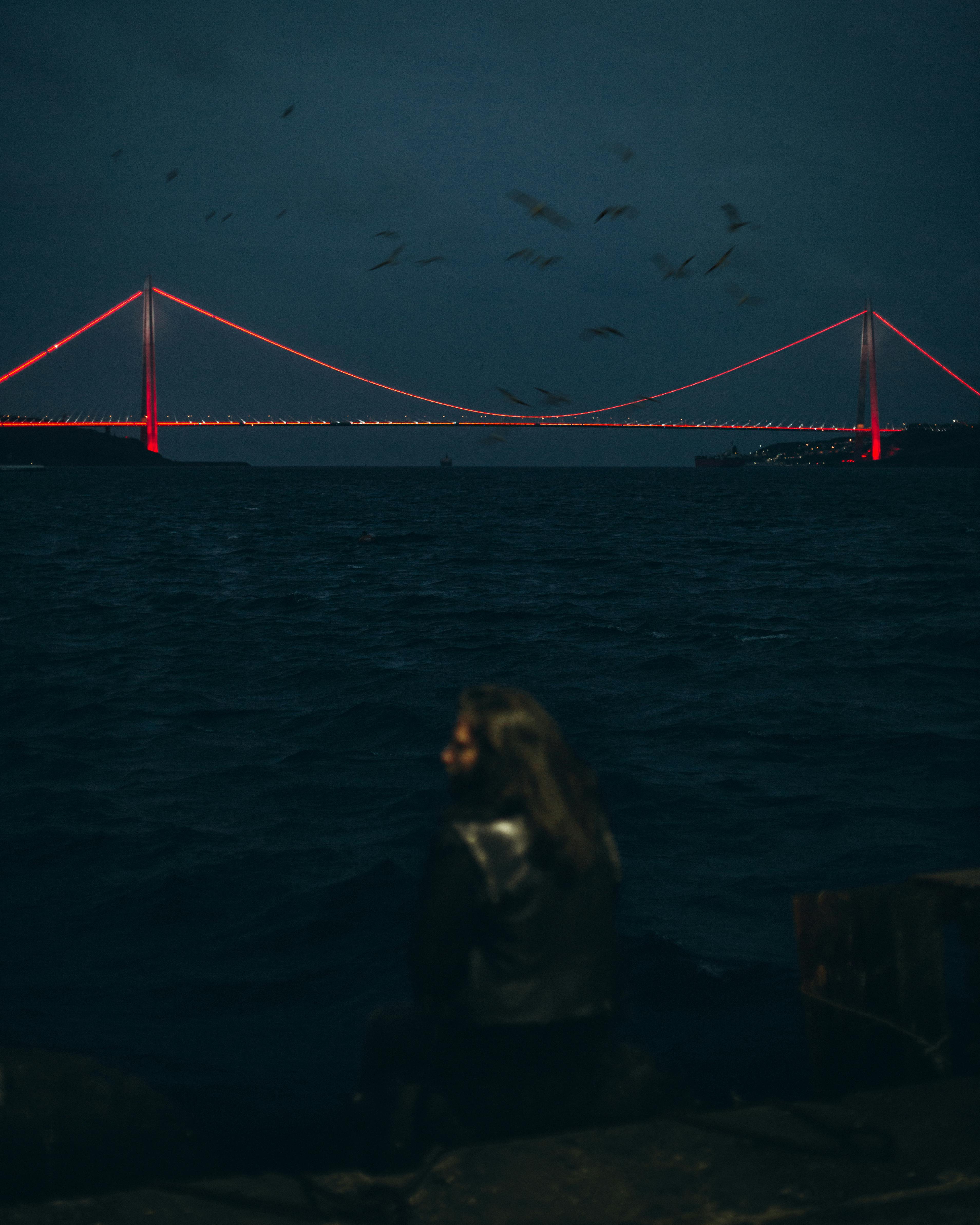
The sea is not just water. To a merchant mariner standing on the bridge of a Very Large Crude Carrier (VLCC) in the predawn mist, the sea is a ticking clock. It is a series of narrow doors, some of which are held open by nothing more than the fragile word of distant politicians.
Right now, the narrowest door in the world is the Strait of Hormuz.
Imagine a single steel artery. Through it pulses twenty percent of the world’s petroleum consumption every single day. If that artery spasms, the lights in a hospital in Tokyo flicker. The price of a gallon of milk in a Nebraska supermarket climbs by fifty cents. The geopolitical temperature of the planet rises until the mercury shatters the glass.
Washington recently broadcast a signal of optimism. From the White House, the messaging was clear: there is "good news" regarding the standoff with Iran. It was a statement designed to soothe the markets, to project a sense of controlled momentum and diplomatic finesse. But across the world, in the heat-shimmer of the Persian Gulf, the rhetoric from Tehran told a different story. The Iranian leadership reiterated a familiar, chilling threat: the Strait of Hormuz is closed.
The Geography of Anxiety
To understand why a few miles of salt water can dictate the fate of global economies, you have to look at the map through the eyes of a strategist. The Strait is a bottleneck. At its narrowest point, the shipping lanes are only two miles wide. On one side lies the Arabian Peninsula; on the other, the rugged, jagged coastline of Iran.
It is a place where the gargantuan meets the microscopic. A tanker carrying two million barrels of oil—a vessel longer than the Eiffel Tower is tall—must navigate waters where a single, relatively inexpensive naval mine or a swarm of fast-attack boats can cause a catastrophe.
For the crew on these ships, the "good news" from Washington feels a long way off. They live in the tension between two realities. One reality is the diplomatic dance, where words like de-escalation and dialogue are tossed around in air-conditioned briefing rooms. The other reality is the sight of an Iranian Revolutionary Guard patrol boat shadowing their wake, a silent reminder that the door can be slammed shut at any moment.
The Weight of a Word
When a President speaks of "good news," the world listens for the subtext. Is there a back-channel deal? Has the shadow war of tankers and drones reached a temporary stalemate? The administration’s confidence suggests a breakthrough in intelligence or a shift in Tehran’s internal calculus.
But Tehran’s insistence that the Strait is closed—or can be closed at will—is a performance of its own. It is a reminder of their ultimate leverage. Iran knows that it cannot win a conventional blue-water war against the United States Navy. However, it doesn't have to win a war to win a point. It only has to make the cost of passage too high for the world to bear.
Consider the hypothetical case of a logistics manager in Rotterdam named Elias. Elias doesn't care about the nuances of the JCPOA or the specific phrasing of a State Department press release. He cares about "war risk insurance" premiums. When Iran threatens the Strait, those premiums spike. The cost of moving a single barrel of oil increases. That cost is passed to the refinery, then to the distributor, and finally to you.
The Strait of Hormuz is the world’s most expensive toll booth, and the currency isn't just money. It's stability.
The Ghost in the Machine
The conflict isn't just about ships and missiles. It is a psychological war. By claiming the Strait is closed while the U.S. claims progress, both sides are vying for control of the global narrative.
Iran’s strategy is one of "calculated ambiguity." By keeping the threat of a blockade alive, they ensure that they remain the central protagonist in the Middle Eastern drama. They want the world to feel their hand on the valve. It is a way of saying: You cannot ignore us.
The U.S. strategy is the inverse. By projecting "good news," Washington attempts to drain the tension from the room. If the markets believe peace is coming, the leverage of the threat diminishes. It is a battle of wills played out in the headlines, while the actual physical vessels continue to plow through the waves, their captains watching the radar with white-knuckled intensity.
The Human Cost of High Stakes
We often talk about these events as if they are moves on a chessboard. We speak of "assets," "capabilities," and "strategic interests." But these abstractions mask a very human vulnerability.
There are thousands of sailors currently in the Gulf. These are men and women from the Philippines, India, Eastern Europe, and the United States. They are not combatants. They are workers. When the rhetoric heats up, their daily lives become a gauntlet. They are the ones who have to look at the horizon and wonder if the next fast-moving speck is a fishing boat or something far more lethal.
There is a specific kind of silence that happens on a ship when the crew knows they are in contested waters. It is the sound of people listening for what isn't there. They aren't listening for the news from Washington. They are listening for the sound of a drone engine or the splash of a diver.
The "good news" is a luxury of the land-bound.
The Fragility of the Status Quo
Why does this cycle repeat? Why are we stuck in this loop of threat and counter-threat?
The problem is that the Strait of Hormuz is a geographic reality that no amount of technology can fully bypass. While pipelines have been built across Saudi Arabia and the UAE to move oil to the Red Sea or the Gulf of Oman, they can only handle a fraction of the total volume. The world is addicted to the Strait.
This dependency creates a perverse incentive. For Iran, the ability to threaten the Strait is their most effective tool for sanctions relief. For the U.S., protecting the Strait is the cornerstone of its role as the guarantor of global commerce.
It is a deadlock.
When Washington reports "good news," it might mean that the immediate pressure has eased. Perhaps a seized tanker is being released, or a private message has signaled a willingness to talk. But as long as the geography remains unchanged, the threat remains. Tehran's claim that the Strait is "closed" is a theological statement as much as a military one. It is an assertion of sovereignty over a chokepoint that the rest of the world considers international water.
Beyond the Headlines
If you look past the immediate headlines, you see a deeper struggle for the future of energy and influence. The transition to renewable energy is, in some ways, a long-term attempt to escape the tyranny of the Strait. Every wind turbine in the North Sea and every solar farm in Arizona is a tiny step toward a world where a single narrow passage in the Middle East cannot dictate the global economy.
But that world is decades away.
Today, the reality is a VLCC moving at fifteen knots through a two-mile lane. The reality is a radar sweep showing a dozen unidentified contacts. The reality is a diplomatic cable that says one thing while the reality on the water says another.
The "good news" might be real. It might be a genuine thaw in a decades-long cold war. Or it might be a momentary lull, a breath taken before the next scream.
In the offices of London and Singapore, the analysts will continue to crunch the numbers. They will model the impact of a thirty percent reduction in flow. They will calculate the "Hormuz Premium." They will write reports with titles like Geopolitical Risk in the 21st Century.
But on the bridge of that tanker, the captain doesn't need a report. He looks at the narrow strip of blue between the brown hills of the coastlines. He sees the sun hitting the water. He knows that as long as the world needs what is in his cargo hold, he will be sailing through a doorway that someone is always trying to shut.
The sea is not just water. It is a nervous system. And right now, the world is waiting to see if the next pulse is a heartbeat or a tremor.
The sun sets over the Gulf, turning the water the color of bruised plums. For tonight, the ships keep moving. The "good news" holds, however thin it may be. But the men on the bridge keep their eyes on the horizon, knowing that in this part of the world, the silence is rarely as peaceful as it seems.