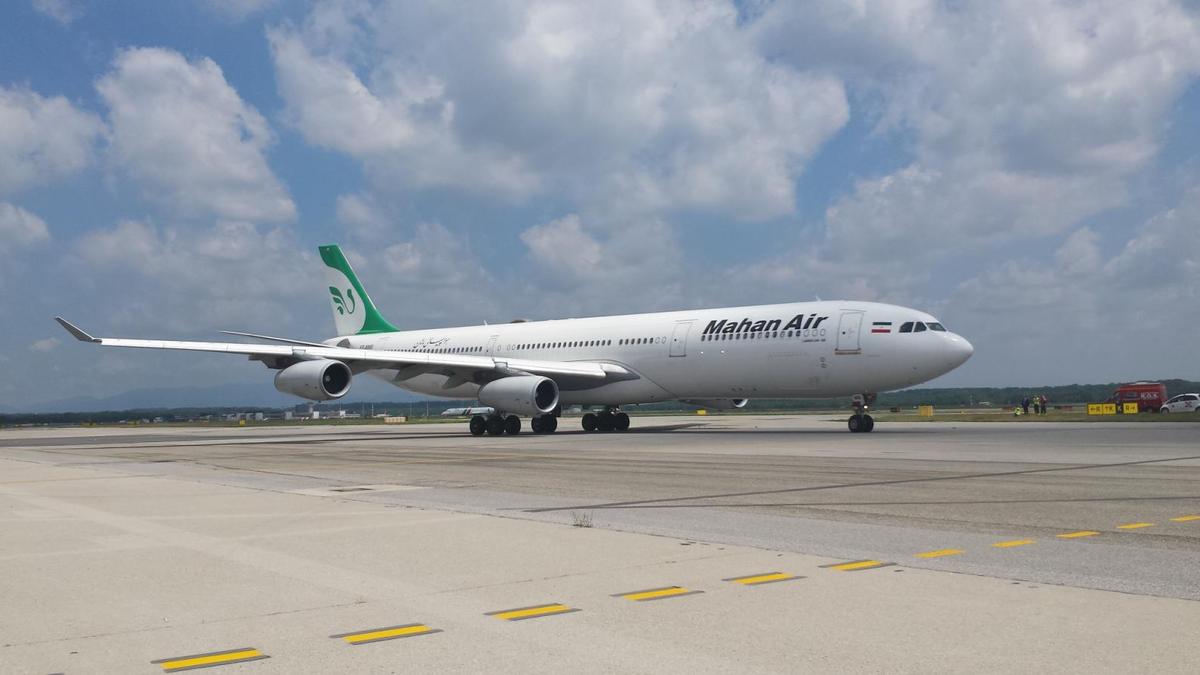
The headlines are bleeding with the same tired narrative. An Iranian aircraft, allegedly destined for a "humanitarian mission" to India, takes damage in a U.S. strike. The world reacts with the choreographed outrage of a low-budget theater troupe. If you believe this was a tragic disruption of a charity run, you are failing to grasp the basic mechanics of modern kinetic diplomacy.
International relations isn’t a bake sale. It is a high-stakes shell game where the labels on the boxes rarely match the contents inside.
The Humanitarian Label is a Tactical Camouflage
In the world of strategic logistics, "humanitarian aid" is often the most effective electronic countermeasure available. It is a linguistic jammer. When a nation under heavy sanctions or intense military scrutiny needs to move assets, personnel, or sensitive tech across contested borders, they don't mark the crate "Advanced Guidance Systems." They mark it "Supplies for the Impoverished."
I’ve watched logistics chains for a decade. The moment a regime under pressure starts shouting about the sanctity of a cargo flight, you should be looking at the flight path, not the press release.
Why India? Why Now?
India occupies a unique, often frustrating position as a non-aligned powerhouse. It’s the perfect destination for a "humanitarian" flight because it provides the sender with maximum plausible deniability. If the U.S. strikes a plane headed to a known conflict zone, the PR fallout is manageable. If they strike a plane headed to the world’s most populous democracy under the guise of "aid," the diplomatic friction is a feature, not a bug, for the Iranian state.
- The Trap: Forces the U.S. to choose between intelligence-led strikes and a PR nightmare.
- The Payload: Often irrelevant to the actual mission. The mission is the flight itself—testing response times, probing radar gaps, and measuring the political appetite for escalation.
The Myth of the Accidental Strike
Military hardware at the level of U.S. Central Command does not "accidentally" clip a civilian-standard aircraft during a strike unless that aircraft is positioned as a human shield for high-value targets. Modern munitions use sophisticated targeting systems. We are talking about CEP (Circular Error Probable) measured in single-digit meters.
If that plane was damaged, it was either:
- A deliberate shot across the bow to signal that the "humanitarian" cloak has been seen through.
- Collateral damage resulting from the plane being parked on top of something the intelligence community actually cared about.
The competitor reports treat the aircraft as an innocent bystander. In reality, in a theater like this, there are no bystanders. There are only assets and targets.
Logistical Reality vs. Narrative Fiction
Let’s talk about the math of "aid." If you wanted to move massive amounts of humanitarian supplies to India, you wouldn't use a single, likely aging, sanctioned Iranian airframe. You would use commercial shipping, sea freight, or established international NGOs with the infrastructure to actually distribute the goods.
A single flight is a gesture. A gesture is a message. And messages sent via military-grade aircraft in a war zone are never just about "help."
The "People Also Ask" Delusion
When people ask, "Why would the U.S. risk hitting a humanitarian flight?" they are asking the wrong question. The correct question is: "Why would a state put a humanitarian flight in the middle of a kinetic target zone?"
The answer is simple: to stop the strikes.
It’s the oldest trick in the book. You park the ambulance in front of the ammunition dump. If the enemy hits it, they are monsters. If they don't, your ammo stays safe. To call this "aid" is to insult the intelligence of anyone who has ever managed a supply chain or a tactical map.
The Sanctions Evasion Playbook
We have to address the technical reality of the Iranian fleet. These aircraft are flying museums. Due to decades of sanctions, maintaining these birds requires a black-market supply chain that would make a heist movie look like a trip to the grocery store.
Every flight is a risk. Every flight is a logistical nightmare. You do not waste those flight hours on a whim.
- Dual-Use Tech: Components meant for "civilian" aviation are frequently diverted to the drone programs that are currently reshaping global warfare.
- Asset Relocation: Moving key personnel under the cover of a diplomatic or humanitarian mission is a standard maneuver for any intelligence service worth its salt.
By focusing on the "damage" to the plane, the media ignores the intent of the flight. They are looking at the finger pointing at the moon and complaining about the fingernail.
Challenging the Status Quo of "Outrage"
The standard industry take is to lament the "escalation" and the "risk to civilian life." This is lazy analysis. Escalation is a tool. The U.S. knows the risks. Iran knows the risks. Both sides are communicating in a language of metal and fire.
If you want to understand the true state of the world, stop reading the "Humanitarian" stickers. Look at the tail numbers. Look at the companies that own the ground handling equipment. Look at the specific hangar where the plane was hit.
The plane wasn't "damaged ahead of a mission." The plane was neutralized because its presence was part of a larger, more cynical calculation.
The Professional’s Perspective
I have seen operations where millions were spent just to move a single suitcase of hardware. The idea that a government facing existential pressure would prioritize a charity run to a country that doesn't actually need their charity is laughable. India is a global leader in pharmaceuticals and logistics; they aren't waiting on a single Iranian cargo plane for "relief."
This wasn't an aid mission. It was a test of resolve.
Stop Falling for the Script
The narrative of the "damaged aid plane" is a gift to those who want to simplify complex geopolitical friction into a "good vs. evil" binary. It ignores the reality of how restricted airspace works. It ignores the reality of how intelligence-driven targeting works.
Most importantly, it ignores the fact that in 2026, information is as much a weapon as a Hellfire missile. The "report" of the damage is the final stage of the mission. If the plane couldn't deliver its cargo, it could at least deliver a headline that makes the opposition look reckless.
If you’re still mourning the loss of the "mission," you’ve already been outmaneuvered. The real mission was the headline you just read.
The sky isn't falling; the masks are just slipping. Stop looking for heroes in a logistics report. There are only players, and you are currently the audience they are trying to manipulate. If a plane is in the way of a strike, it’s because someone wanted it there. Damage to the airframe is just the cost of doing business in a world where "humanitarian" is just another word for "undetected."