The Blockade That Isn't
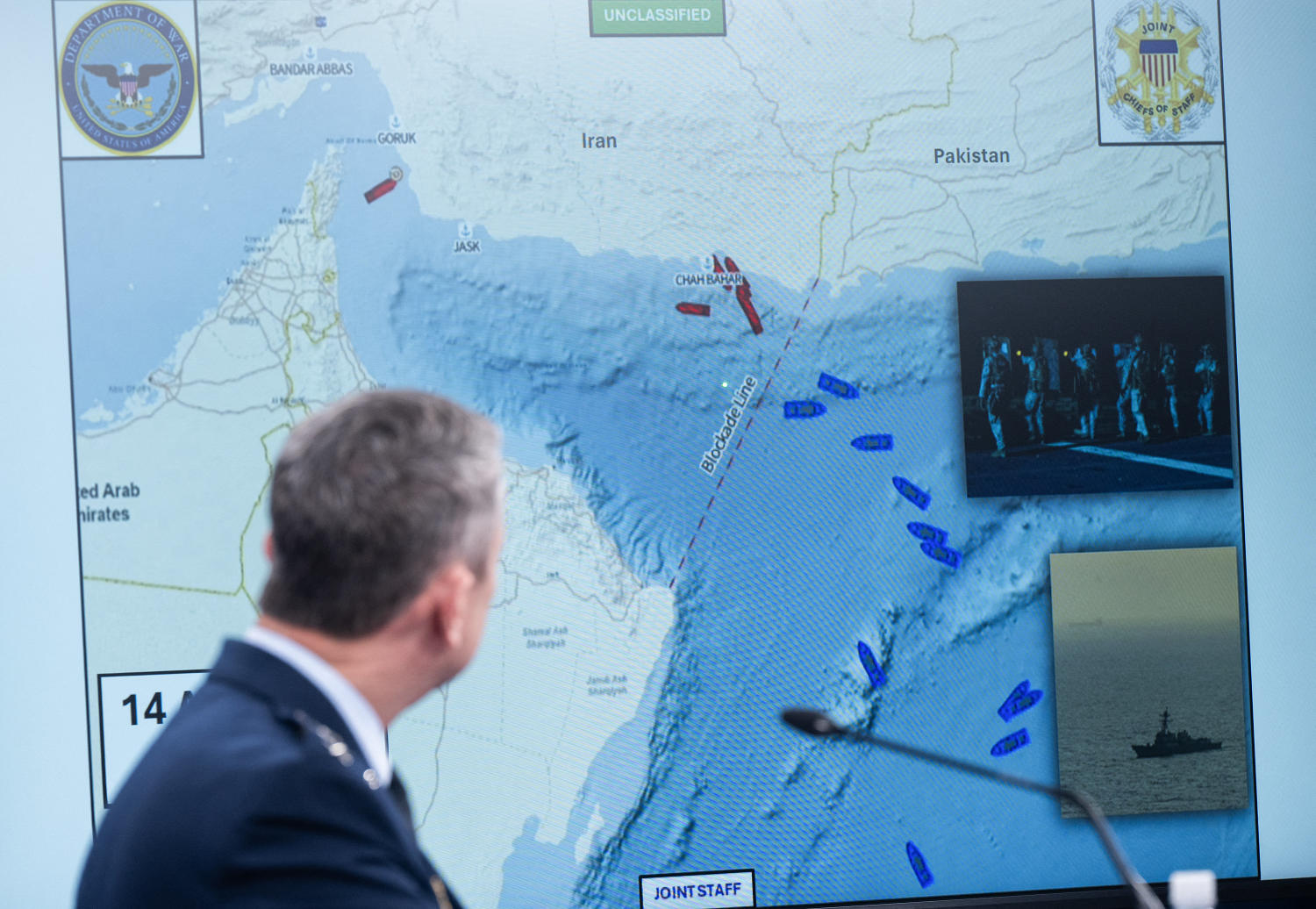
The mainstream media is currently obsessed with the narrative of a "stranglehold" on the Strait of Hormuz. They want you to believe that Iran has successfully reimposed strict control in response to U.S. naval pressure. This narrative is a comfortable lie. It serves Tehran’s desire to look powerful and Washington’s desire to justify increased defense spending.
The reality? Iran isn't controlling the Strait; they are managing a theater production.
I have tracked maritime logistics and regional security patterns for over a decade. I have seen how "blockades" are often just glorified photo ops for the Iranian Revolutionary Guard Corps (IRGC). If you look at the actual AIS (Automatic Identification System) data for global shipping, you will find that the tankers are still moving. The insurance premiums are spiking, yes, but the oil is flowing.
The "strict control" mentioned in the headlines is a logistical impossibility. To truly block the Strait, Iran would have to commit an act of economic suicide that would alienate its only remaining lifeline: China.
The Myth of the Chokepoint
Everyone calls the Strait of Hormuz a "chokepoint." It’s the favorite word of every armchair general. They point to the narrow shipping lanes and say, "One sunken tanker and the world economy stops."
This ignores the physics of modern naval warfare and the reality of salvage operations. The Strait is approximately 21 miles wide at its narrowest point. The actual shipping lanes are two miles wide in each direction, separated by a two-mile buffer.
- Myth: Sinking a ship blocks the path.
- Reality: You cannot "block" a 21-mile wide body of water by sinking a few vessels. You create a navigation hazard, not a wall.
Furthermore, the idea of a "U.S. naval blockade" is equally flawed. The U.S. isn't blocking the Strait; it’s attempting to enforce sanctions through interdiction. There is a massive difference between stopping a specific sanctioned vessel and a total maritime blockade. When the media conflates these two, they do the IRGC's PR work for them.
The China Factor The Real Power in the Strait
If you want to understand why Iran’s "strict control" is a bluff, stop looking at the Pentagon and start looking at Beijing.
China is the primary customer for Iranian crude. They are also the largest importer of oil moving through the Strait from Saudi Arabia, Iraq, and Kuwait. If Iran actually shut down the Strait, they wouldn’t just be hurting the "Great Satan." They would be plunging their only significant economic partner into an energy crisis.
Imagine a scenario where the IRGC actually fires on a neutral tanker heading to a Chinese port. The diplomatic fallout would be instantaneous. Iran’s "resistance economy" cannot survive without the gray-market oil sales that China facilitates. Tehran knows this. Therefore, the "strict control" they claim to have is a leash they are wearing, not a whip they are cracking.
The Tanker War 2.0 Fallacy
History buffs love to cite the 1980s Tanker War as a blueprint for today. They are wrong. In the 80s, ships were targeted with relatively primitive missiles and mines. Today, we exist in an era of drone swarms and precision-guided munitions.
However, the technology has also improved on the defensive side. The Aegis Combat System and modern electronic warfare suites make the "swarm" tactic far more difficult to execute than it was even five years ago.
The Cost of Posturing
- Insurance Rates: This is where the real war is fought. When Iran moves a few fast boats near a tanker, Lloyd’s of London reacts faster than the U.S. Navy.
- Freight Volatility: The goal of "control" isn't to stop the oil; it’s to make it expensive.
- Geopolitical Leverage: Iran uses the threat of closure to negotiate sanctions relief. Actually closing it ends the negotiation.
If you are a trader or an analyst betting on a total shutdown, you are falling for the theater. The tension is the product. The actual conflict would be the end of the business model for everyone involved.
Why the U.S. Navy Wants You to Be Afraid
Let’s be blunt: The U.S. Navy needs a high-stakes villain in the Persian Gulf to justify the carrier strike groups. If the Strait of Hormuz were suddenly deemed "safe and boring," the budget for the 5th Fleet would be much harder to defend in front of a skeptical Congress.
We are seeing a feedback loop of hyperbole. Iran claims they have seized the initiative. The U.S. responds by sending more assets. Both sides use the media to broadcast "strength."
The "People Also Ask" sections of search engines are filled with questions like "Is the Strait of Hormuz closed?" or "Will gas prices double?" The answer is no. Gas prices fluctuate based on the fear of closure, not the physical reality. If you want to invest based on this, stop looking at the ships and start looking at the VIX (Volatility Index).
The Nuance of "Control"
What does "control" actually look like in 2026? It isn't a line of battleships. It’s a series of harassing maneuvers designed to create a "gray zone" conflict.
- Drones as Messengers: Iran uses UAVs to shadow ships, not necessarily to strike them, but to signal that they could.
- Cyber Interdiction: Why sink a ship when you can spoof its GPS and lead it into territorial waters?
- Legal Warfare: Iran cites "environmental regulations" or "maritime law violations" to seize tankers. It’s a bureaucratic blockade.
This is where the competitor's article fails. It treats the situation like a 20th-century naval standoff. It’s not. It’s a 21st-century psychological operation.
The Downside of the Contrarian View
I’ll admit the risk in my stance. The danger isn't a calculated move by Tehran. The danger is a tactical error by a 22-year-old IRGC commander on a fast boat who gets too close to a nervous U.S. Destroyer.
Miscalculation is the only way this "theater" becomes a "war." But miscalculation is not "strict control." It is the opposite of control. It is chaos.
We have spent decades expecting a bang in the Strait of Hormuz. Instead, we are getting a perpetual, expensive whimper.
Stop Monitoring the Strait, Start Monitoring the Pipelines
The ultimate proof that the "Hormuz Stranglehold" is a dying concept lies in infrastructure. Saudi Arabia and the UAE have spent the last decade building and expanding bypass pipelines.
The East-West Pipeline in Saudi Arabia can move millions of barrels per day directly to the Red Sea, completely bypassing Hormuz. The Habshan–Fujairah pipeline in the UAE does the same, terminating outside the Strait.
The world has already built the bypass. Iran is threatening a heart that has already had its vessels rerouted. They are guarding a door that the world has already stopped using as its only exit.
The "strict control" narrative is a ghost story told to keep the oil markets jumpy. If you look at the steel in the ground—the pipelines—you see the truth: Hormuz is becoming a secondary concern.
Stop reading the headlines about naval standoffs. Start looking at the throughput of the Red Sea terminals. The theater in the Gulf is just that—a play with no third act, performed for an audience that is already walking out of the theater.