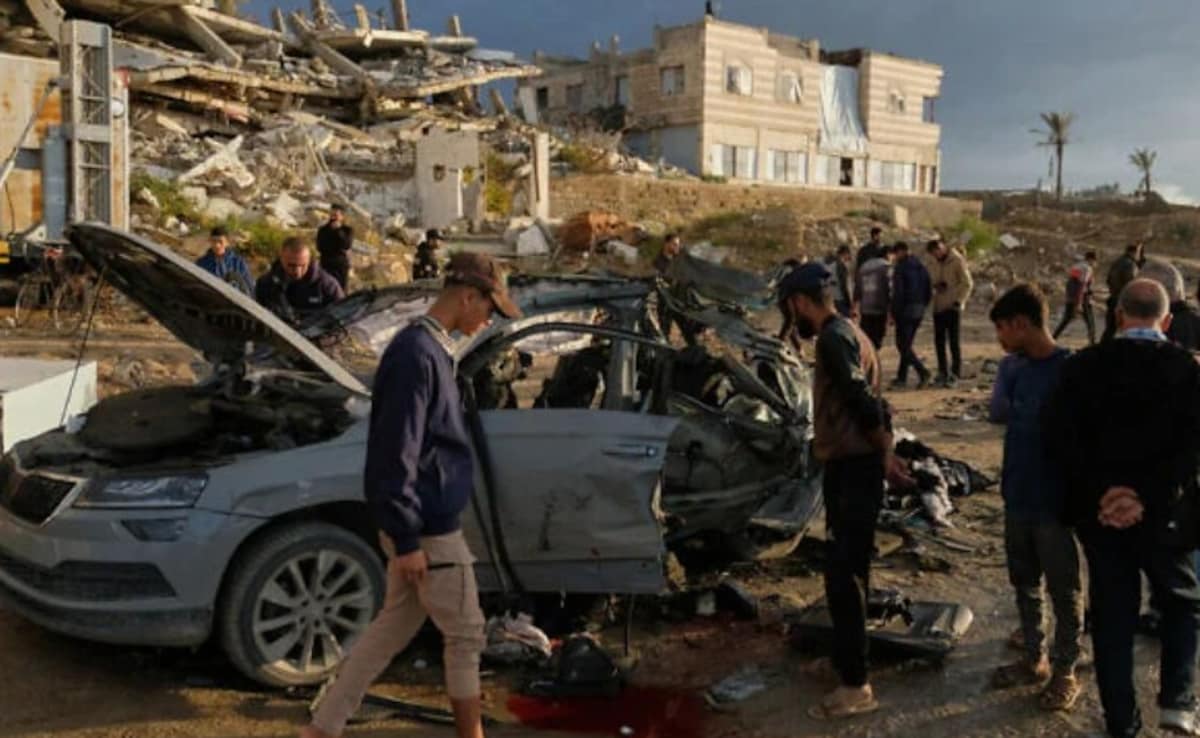
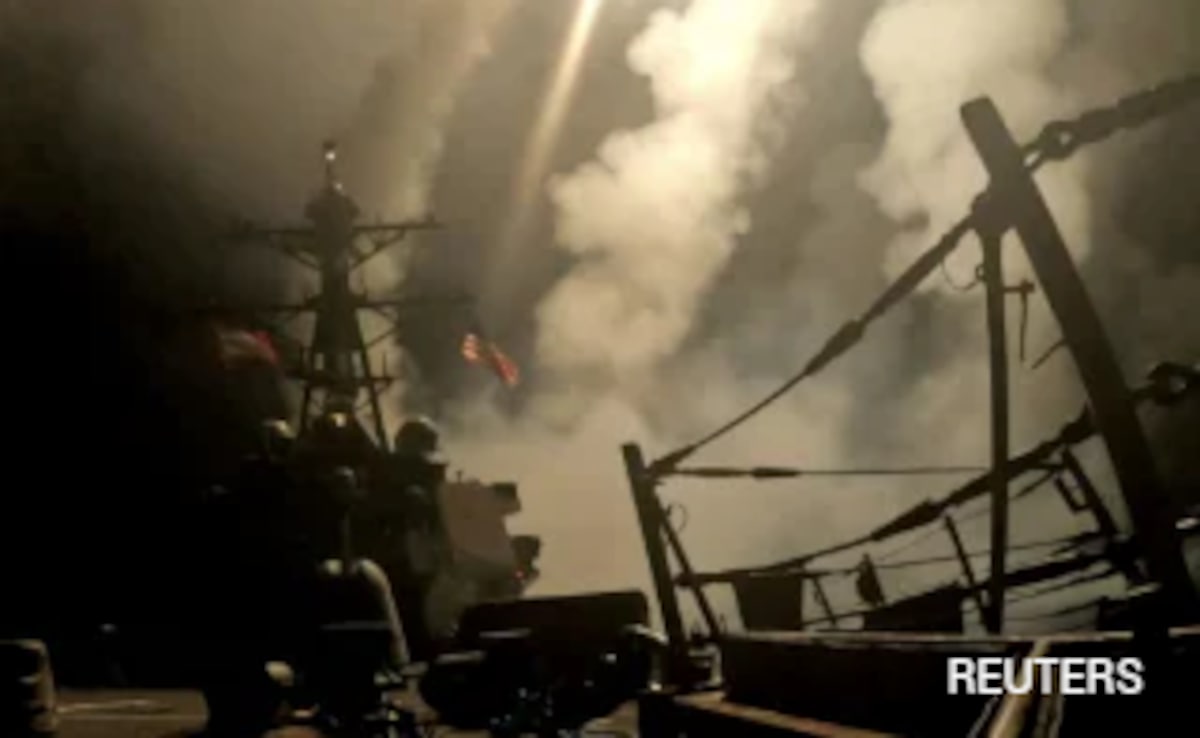
The smoke has cleared from the integrated strike zones, the carrier strike groups are repositioning, and the pentagon briefers are checking boxes. Operation Epic Fury is officially over. If you listen to the official narrative, the mission was a surgical success that degraded Iranian proxy capabilities and restored a fragile sense of deterrence. But anyone who has spent thirty years watching the Middle East knows that "deterrence" is often just a polite word for a temporary pause in a permanent fight. The war is not over. It has simply changed its shape.
To understand why the conclusion of this specific operation is a transition rather than a finale, we have to look past the thermal footage of exploding warehouses. Epic Fury was designed to be a high-intensity message, a demonstration of kinetic reach intended to force Tehran back from the brink of a regional conflagration. It succeeded in the short term by silencing specific batteries and draining localized stockpiles. However, the underlying architecture of the Iranian security state—the asymmetrical networks and the "ring of fire" strategy—remains largely untouched. We have treated the symptoms with a sledgehammer while the virus continues to adapt. For a different look, see: this related article.
The Mirage of De-escalation
The fundamental mistake made by analysts who believe the cessation of Epic Fury marks the end of the conflict is a misunderstanding of Iranian military doctrine. For the Islamic Revolutionary Guard Corps (IRGC), war is not a binary state. It is a dial. By ending the operation now, the West assumes that the absence of active bombing equates to a return to peace. In reality, Tehran sees this as a moment to recalibrate.
While the United States and its allies focus on the "Day After" scenarios, the IRGC is already focused on the "Year After." The hardware lost in the recent strikes—drones, short-range ballistic missiles, and radar arrays—is cheap and replaceable. The strategic geography, however, is not. Iran still maintains its land bridge through Iraq and Syria. It still holds the keys to the Bab al-Mandab through its Houthi subordinates. The kinetic phase of Epic Fury may have ended, but the logistical and political war is accelerating. Related coverage on the subject has been shared by The Washington Post.
The Cost of Surgical Restraint
Military planners went to great lengths to ensure that Epic Fury did not trigger a total war. This restraint is sensible from a diplomatic perspective, but it creates a strategic paradox. By hitting hard enough to hurt but not hard enough to topple, the operation may have inadvertently taught Tehran exactly what it can get away with.
We saw a similar pattern in previous decades. Limited strikes often provide the adversary with a free masterclass in Western targeting priorities and electronic warfare signatures. If the goal was to end the threat of a broader war, Epic Fury needed to address the command-and-control hubs inside Iranian territory. By keeping the strikes confined to the periphery—to the proxies in Yemen, Lebanon, and Iraq—the operation essentially confirmed that the Iranian mainland remains a sanctuary. This is a green light for future provocations, provided they are filtered through a third party.
The Economic Shadow War
War today is rarely decided by who has the best flight deck. It is decided by who can endure the most economic pain while inflicting the most disruption. While Epic Fury focused on physical targets, the real theater of operations was the global shipping lanes and energy markets.
Iran has realized that it doesn't need to win a naval battle to win a conflict. It only needs to make insurance premiums for oil tankers so high that the global economy begins to shudder. Operation Epic Fury did little to solve this vulnerability. Even with the IRGC’s regional infrastructure taking a hit, the ability to harass the Strait of Hormuz remains their ultimate trump card.
The Western coalition spent millions of dollars on interceptor missiles to shoot down drones that cost less than a used sedan. This math is unsustainable. In a war of attrition, the side that spends the most to achieve the least is the side that eventually retreats. Tehran knows this. They are playing a game of financial exhaustion, and the end of Epic Fury allows them to reset their ledger while the West continues to burn through its precision-guided munitions.
Intelligence Gaps and the Proxy Problem
One of the most concerning aspects of the post-Epic Fury landscape is the resilience of the proxy network. The operation was touted as a "decapitation" of various militia leadership structures. History suggests we should be skeptical. In these organizations, the loss of a commander is a promotion opportunity for a more radical subordinate.
The intelligence community often struggles with the decentralized nature of these groups. We are looking for a pyramid, but we are fighting a fungus. You can kick over the mushroom, but the mycelium stays in the dirt. Epic Fury hit the mushrooms. To actually end the threat, there would need to be a sustained, multi-year campaign to dry up the funding and ideological pathways that sustain these groups. There is currently no political appetite in Washington or London for that kind of commitment.
The Nuclear Wildcard
We cannot discuss the end of this operation without addressing the elephant in the room: Iran’s nuclear program. There is a school of thought that Epic Fury was a distraction, a way to keep the world’s eyes on the Red Sea while the centrifuges in Natanz and Fordow spun faster.
If the goal of the operation was to deter Iranian aggression, we must ask if it influenced their nuclear ambitions. Usually, when a regional power feels conventional military pressure, it accelerates its search for a nuclear deterrent to ensure its survival. If Epic Fury convinced the Iranian leadership that they are vulnerable to Western air power, the logical move for them isn't to surrender; it is to sprint for a warhead. The war isn't over; it's just moving into a more dangerous, invisible phase.
The Failure of Regional Diplomacy
The end of active hostilities provides a window for diplomacy, but the window is currently boarded up. The regional players—Saudi Arabia, the UAE, Jordan, and Israel—all have vastly different ideas of what "victory" looks like.
- Israel views the end of Epic Fury as a missed opportunity to deal a final blow.
- The Gulf States are caught between wanting Iranian wings clipped and fearing the inevitable retaliation on their own soil.
- Iraq is desperately trying to maintain its sovereignty while being used as a parking lot for both sides' missiles.
Without a unified regional security framework, any military operation is just a temporary fix. Epic Fury did not create a new status quo; it merely hit the pause button on the old one. The underlying grievances and territorial disputes that fueled the rise of these tensions remain as potent as they were six months ago.
The Shift to Subversion
As the heavy bombers return to their bases, expect to see an uptick in non-kinetic warfare. This is where Iran excels. Cyberattacks on critical infrastructure, disinformation campaigns aimed at Western elections, and the targeted assassination of dissidents abroad are all tools that Epic Fury could not touch.
The Iranian leadership is adept at playing the long game. They understand that Western democracies have short attention spans and are driven by election cycles. By "ending" the war now, the West is declaring victory because it wants to move on to other domestic priorities. Tehran has no such distractions. For them, the struggle is existential and permanent.
We are entering a period of "Grey Zone" conflict. This is the space between peace and war where rules are murky and the enemy is hard to identify. Operation Epic Fury was a twentieth-century solution to a twenty-first-century problem. It assumed that if you break enough of the enemy’s toys, they will stop playing. But the enemy isn't playing; they are rebuilding.
The hardware destroyed in the last few weeks is being replaced as you read this. The shipping containers are moving, the money is flowing through back-channel havens, and the engineers are refining their drone designs based on the data they gathered while we were shooting at them. To ask if the war is over is to fundamentally misunderstand the nature of the modern Middle East. War is the constant. Only the volume changes.
The real test of Operation Epic Fury won't be found in the after-action reports or the satellite imagery of charred hangars. It will be found in whether the next drone launch happens in six weeks or six months. Until the fundamental incentives of the Iranian regime are changed, every "operation" is just a comma in a very long, very bloody sentence.
Stop looking at the mission end date. Start looking at the replenishment schedules.