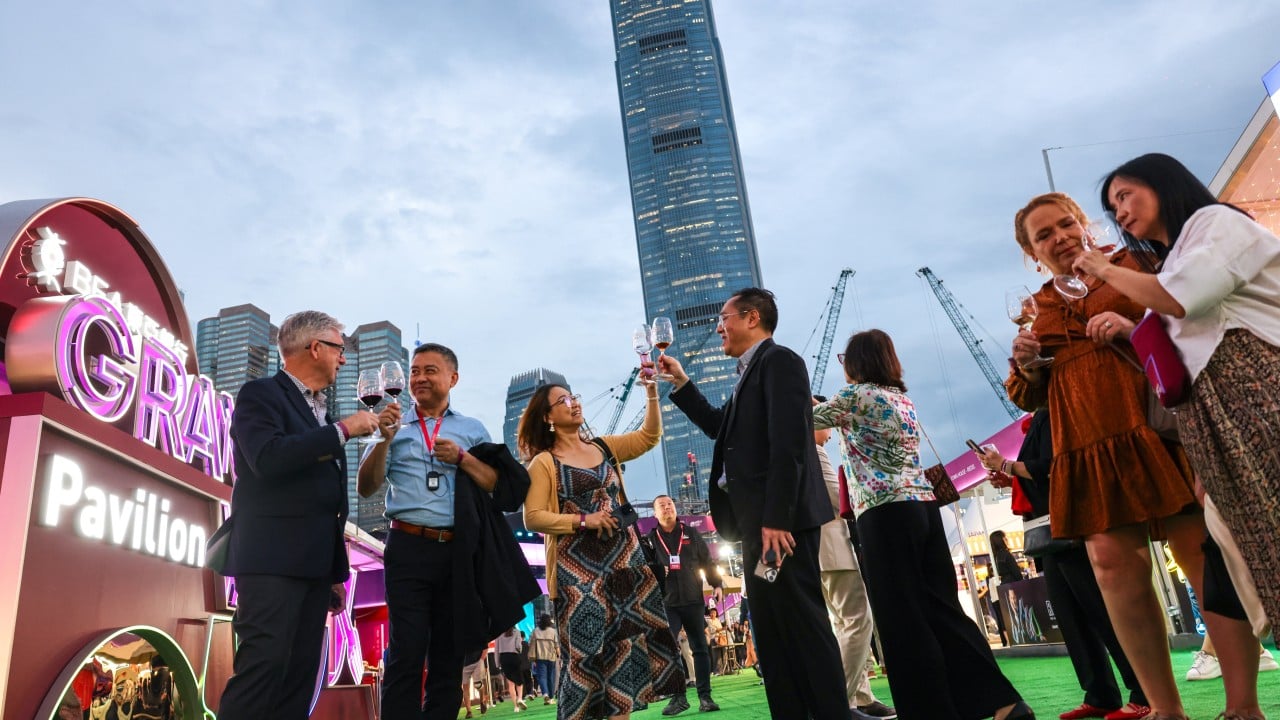
The battle for the soul of Hong Kong’s skyline has a new victor, and it isn't the public. Henderson Land Development, through its joint venture with Serious Staging, has secured the rights to operate the Central Harbourfront Event Space for the next three years. While the move is framed as a win for "vibrancy," it represents a calculated consolidation of power over the most valuable 3.6 hectares of dirt on the planet. This isn't just about concerts or art fairs. It is about a developer-led ecosystem where public space becomes a curated extension of corporate interests.
The Mechanics of a Crown Jewel Capture
Henderson Land didn’t just stumble into this. Their victory in the short-term tender for Site 3 of the New Central Harbourfront effectively grants them a monopoly over the visual and commercial narrative of the waterfront. By controlling both the permanent development at Site 3 and the temporary event space adjacent to it, the firm ensures that no competing interest can disrupt the aesthetic or economic flow of their multibillion-dollar investment.
The tender process itself remains a black box for many observers. While the government emphasizes the "openness" of the bid, the requirements for managing a site of this scale naturally favor the city’s established oligarchs. You need more than just money to run a site that faces the Victoria Harbour. You need the political weight to navigate the labyrinth of noise ordinances, crowd control permits, and the unspoken expectations of the Lands Department.
Why the Event Space Matters More Than the Mall
Most people look at Site 3 and see a future shopping mall. That is a mistake. The real value lies in the programmable void—the empty space that can be flipped into a Dior runway, a Clockenflap stage, or a private corporate gala at a moment’s notice.
In a city where every square inch is monetized, "empty" space is the ultimate luxury. By holding the keys to this void, Henderson dictates who gets to stand in front of the skyline. They are no longer just landlords. They are the gatekeepers of the city’s global image. If an event doesn't align with the "premium" branding of the surrounding Henderson assets, it likely won't find a home on the grass.
The Illusion of Public Utility
The term "Public Open Space" is one of the great deceptions of modern urban planning. When a private developer operates a public site, the definition of "public" begins to warp. We have seen this across London’s Canary Wharf and New York’s Hudson Yards. The security is tighter. The "undesirables" are moved along faster. The art is safer.
For Henderson, the event space acts as a loss leader or a brand enhancer for their permanent commercial blocks. They can afford to host "community" events that break even if those events drive foot traffic to their high-end retail outlets nearby. It is a closed-loop economy. The public is invited to participate, but only as consumers within a pre-approved framework.
The Financial Gravity of the Harbourfront
We have to talk about the numbers, even if the government keeps the specific rent figures close to the chest. The previous operator, Central Venue Management (CVM), set a high bar for occupancy. But Henderson has something CVM didn't: vertical integration.
Henderson can internalize the costs of marketing and infrastructure. They can bundle the event space with their other office towers in Central, offering "lifestyle" perks to blue-chip tenants. "Rent an office in our tower, and your annual general meeting can happen on the harbourfront." This is a level of leverage that an independent event operator simply cannot match. It creates a tilted playing field where the only entities capable of managing public assets are the ones who already own the private ones.
The Silent Erosion of Cultural Spontaneity
The risk of this corporate stewardship is the death of the weird. Hong Kong’s harbor was once a place of grit and unplanned utility. Under the management of a property titan, every activation must be "brand-safe."
Will we see experimental, non-commercial art that challenges the status quo? Probably not. We will see "Instagrammable" installations that look good in a brochure for the neighboring Grade-A office space. The management of the site becomes an exercise in risk mitigation rather than cultural expression. When a developer runs the park, the park becomes a product.
The Regulatory Blind Spot
The government’s reliance on the private sector to manage these spaces stems from a desire to offload maintenance costs. It is cheaper for the taxpayer in the short term. However, the long-term cost is a loss of agency. Once a developer integrates a public space into their corporate identity, clawing it back becomes nearly impossible.
The terms of the three-year contract are a blink of an eye in real estate terms, but they provide enough time to set a precedent. By the time the next tender comes around, Henderson will have built the infrastructure and the relationships to make themselves the only logical choice. It is a slow-motion annexation of the commons.
The Global Blueprint
This isn't a local anomaly. It is a symptom of the "Business Improvement District" (BID) model taken to its logical extreme. In this model, the city government acts as a mere facilitator, while the real work of city-making is outsourced to boards of directors.
The Central Harbourfront is the test case for whether Hong Kong can maintain a soul that isn't for sale. If the most iconic view in the city is managed by the same people who own the malls, the city stops being a city and starts being a campus.
A Monopoly on the Horizon
Henderson Land’s grip on the waterfront is now almost total. From the $50 billion land premium paid for Site 3 to this latest operational win, they have effectively bought the horizon. The "vibrancy" promised will likely be real, but it will be a sanitized, profitable vibrancy that serves the share price first and the citizen second.
We are watching the transformation of the public square into a private lobby. The grass might be greener, and the lights might be brighter, but the fence is higher than it looks. The next time you walk along the Central Harbourfront, remember that you are a guest in a boardroom, not a resident in a park.