In the mist-heavy valleys of Speyside, there is a sound that defines the passage of time better than any clock. It is the rhythmic, metallic clink-clink-clink of a cooper’s hammer against iron hoops, securing the staves of an oak barrel. For generations, this sound signaled a steady, liquid promise. But for a few long, lean years, that rhythm faltered. The air in the warehouses grew heavier, not just with the "angel’s share" of evaporating spirit, but with the weight of unsold stock and the cold calculus of international trade wars.
Distilling is an exercise in radical patience. You pour resources into a copper pot today, hoping that the person you become in twelve, eighteen, or twenty-five years will find the result worthy. It is perhaps the only industry where the primary ingredient is time itself. So, when a 25% tariff was slapped onto single malt Scotch whiskey back in 2019, it wasn't just a tax on a luxury good. It was a puncture wound in a centuries-old bridge between the rugged hills of Scotland and the high-end bars of New York and Chicago. Also making waves lately: The Twilight of the Blue Flame.
The trade dispute had nothing to do with spirits. It was a proxy war over airplane subsidies, a bureaucratic skirmish between Boeing and Airbus that somehow ended up penalizing a family-run distillery in Islay.
The Empty Glass
Consider a small-scale producer. Let’s call him Alistair. He doesn't have a massive marketing budget or a global distribution network. He has five employees, a few copper stills that look like something out of a Jules Verne novel, and a ledger that suddenly stopped making sense. When the tariffs hit, the American market—the largest and most lucrative for Scotch in the world—essentially went dark. Orders dried up. Small businesses that had spent decades building relationships with American importers saw those bridges burn overnight. More insights into this topic are explored by The New York Times.
Losses weren't measured in abstract percentages. They were measured in millions of pounds of lost revenue every month. It meant equipment upgrades were deferred. It meant the next generation of apprentices didn't get hired. The whiskey kept aging in the dark, but the lights were flickering in the counting houses.
The industry held its breath. There was a temporary truce, a suspension of those tariffs that offered a glimmer of hope, but the threat remained. It was a "Sword of Damocles" hanging over every bottle. In the world of high finance, uncertainty is the true poison. How do you plan for a ten-year aging cycle when the rules of the game might change by the time you pull the cork?
A Royal Hand and a Heavy Pen
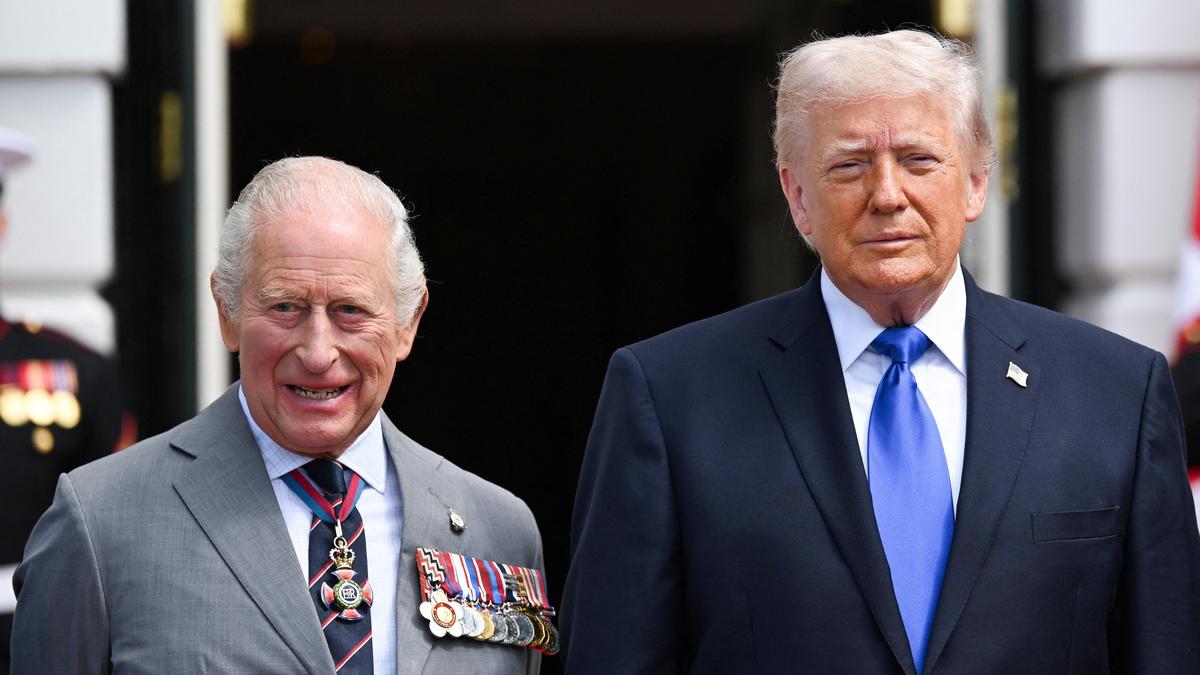
Everything changed with a visit. When King Charles III made his recent trip to the United States, the atmosphere was thick with the pomp of diplomacy, but the real work was happening in the quiet spaces between the ceremonies. Diplomacy is often seen as a series of handshakes and photo opportunities, but it is also the art of finding common ground in the most unlikely of places.
The King has long been an advocate for traditional crafts and rural economies. He understands that a distillery is more than a factory; it is the heartbeat of a Highland village. Reports indicate that the discussions during this visit went beyond mere formalities. They touched on the deep, historic ties that bind the two nations—ties that are often best toasted with a glass of something amber and aged.
The result was swift and, for the Scottish whiskey industry, monumental. Donald Trump announced the lifting of those looming tariffs, effectively ending the trade war for the "water of life."
The numbers tell one story. Removing a 25% barrier means hundreds of millions of dollars flowing back into the Scottish economy. It means Scotch can once again compete on a level playing field with American bourbon or Irish whiskey. But the human story is about the restoration of a relationship.
The Invisible Stakes of a Sip
Why does a tax on whiskey matter to someone who doesn't even drink the stuff?
It matters because trade is the nervous system of the modern world. When it works, it creates a silent, invisible prosperity. When it breaks, the pain is felt by the cooper in Dufftown, the truck driver in New Jersey, and the bartender in Los Angeles. The Scotch whiskey industry supports over 40,000 jobs in the UK, many of them in remote areas where there is no "Plan B" for employment.
When you remove a tariff, you aren't just lowering a price. You are validating the labor of the maltsters, the mashmen, and the warehouse workers. You are saying that their craft has value that transcends political bickering.
The American consumer feels this, too. For years, the price of a favorite bottle had crept toward the "special occasion only" shelf. Now, the path is cleared for the return of the affordable luxury. The "dram" is a social lubricant, a way of marking a milestone or settling an argument. By making it accessible again, a small but significant friction in the cultural exchange between the US and the UK has been oiled away.
The Chemistry of Resolution
There is a specific chemical reaction that happens when you add a drop of water to a high-proof whiskey. It’s called "opening up" the spirit. The water breaks the surface tension, releasing volatile aromatics that were previously trapped. Suddenly, the nose is filled with scents of heather, smoke, sea salt, or dried fruit.
This diplomatic resolution feels like that drop of water.
The tension of the last several years had kept the industry tightly wound, defensive, and anxious. Now, the surface tension has broken. There is a sense of expansion. Distilleries that had been cautious about their "New World" strategies are suddenly dusting off their expansion plans.
But there is a lingering lesson in the dregs of the glass. The volatility of the last decade has proven that no industry, no matter how historic or beloved, is immune to the whims of global politics. The whiskey stayed the same—the peat was just as smoky, the water just as pure—but the world around it became hostile.
The Quiet Return to the Cask
Back in the Highlands, the hammer of the cooper continues its beat. But the rhythm feels different now. There is a purpose to it that felt fragile just a few months ago. The barrels being filled today won't be ready until the mid-2030s. They are being tucked away in cool, damp stone warehouses to sleep through whatever political cycles come next.
The lifting of the tariffs is a victory for the pragmatists. It acknowledges that while countries may disagree on aircraft parts or digital taxes, there is a shared heritage in the bottle that is worth protecting. It is a rare moment where a "win" for a billionaire politician and a "win" for a King translates directly into a "win" for a guy named Hamish who spent his morning shoveling grain in a small town nobody can find on a map.
The Scotch is flowing again. The ships are crossing the Atlantic with hulls full of liquid gold. In the bars of Manhattan, the bottles are being moved back to the front of the shelf.
The air in the Speyside warehouses is still heavy with the scent of maturing spirit. But the weight of the "what if" has lifted. The angels will still take their share, but for the first time in a long time, the rest of the bottle belongs to the people who made it and the people who have waited to taste it.
The peace is golden, it is aged in oak, and it is finally, blissfully, tax-free.