Rahul stares at the same cracked screen of his smartphone every April. He is a senior software architect in Sunnyvale, the kind of person who keeps the backbone of global commerce from snapping under the weight of a billion transactions. He has lived in the United States for twelve years. He pays property taxes, coaches his daughter’s soccer team, and knows exactly which local bakery makes the best sourdough. Yet, every year, his entire existence feels like it is being processed through a rusted lottery machine.
The debate in Washington usually centers on a number. Recently, that number has been $100,000.
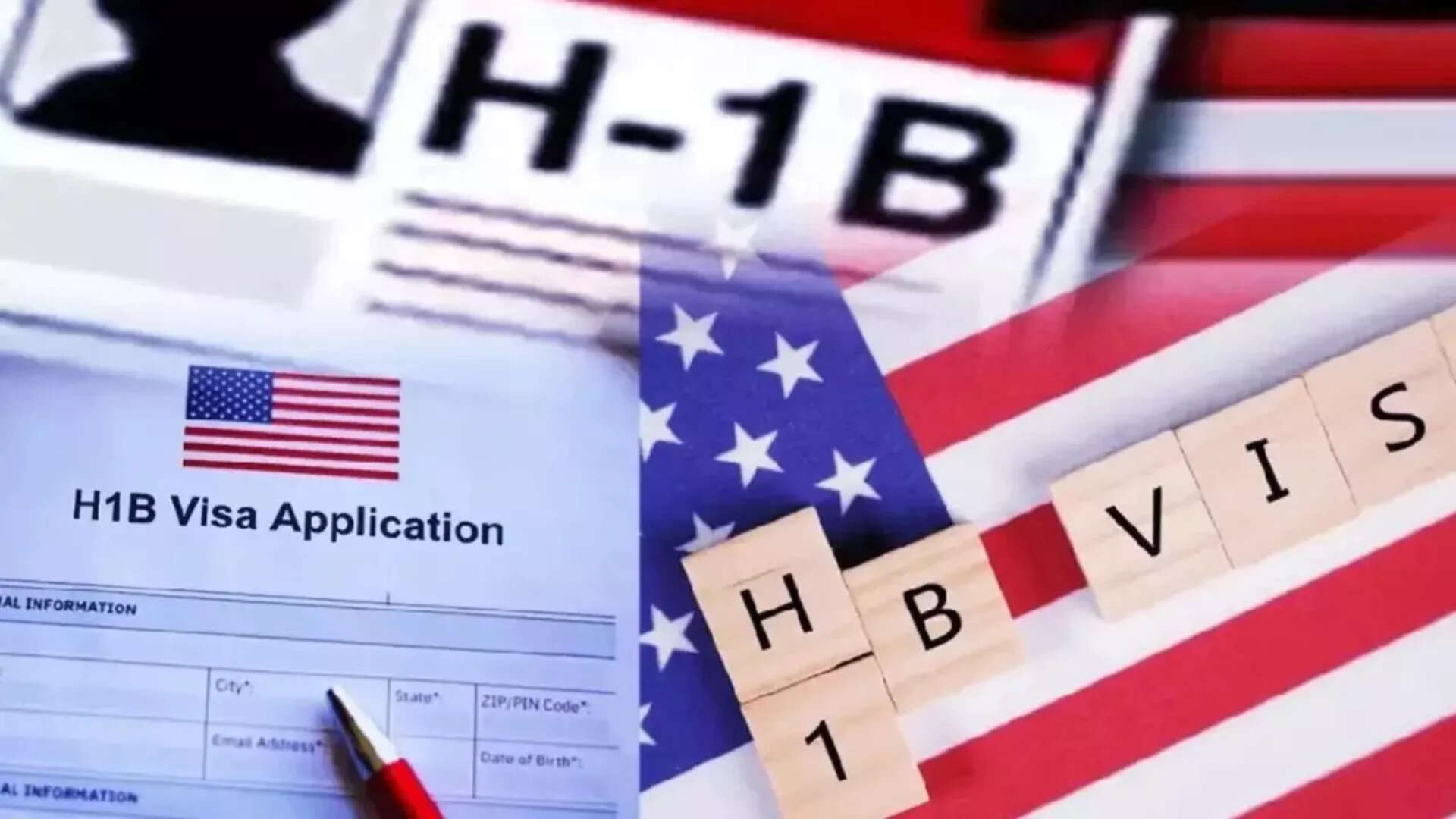
Some policymakers proposed a radical idea: hike the H-1B filing fee to a staggering six figures. The logic is simple, or so it seems on paper. If you make the "entry fee" for foreign labor prohibitively expensive, companies will stop looking abroad and start hiring locally. It is a classic supply-and-demand lever. If the price of the permit exceeds the value of the worker, the system resets.
But there is a fundamental flaw in this math. It treats the H-1B program as a revolving door of new arrivals fresh off a plane from Bangalore or Guangzhou. It assumes that a fee hike acts as a border wall.
It doesn't.
The reality is that the vast majority of these "applicants" are already sitting in cubicles in Mountain View, Austin, and Charlotte. They are not strangers at the gate. They are the neighbors who have been here for a decade, trapped in a transitionary limbo that the law never intended to be permanent.
The Myth of the Newcomer
Consider the math of a corporate recruiter. If a company has already spent years training an engineer, integrating them into a proprietary tech stack, and watching them become indispensable, a $100,000 fee is not a deterrent. It is an insurance premium.
Foreign labor experts have pointed out that a massive fee hike would likely fail to reduce the number of applicants for the simple reason that these individuals are already embedded in the American economy. They are often switching from a student visa (F-1) to an H-1B, or they are renewing an existing status while they wait for a Green Card that may not arrive for another thirty years.
For a trillion-dollar tech giant, $100,000 is a rounding error. For a mid-sized firm, it is a painful but necessary cost of doing business to avoid the catastrophic loss of a lead developer. The fee doesn't "save" a job for an American; it merely taxes the existing infrastructure of the American tech sector.
The ghost in the machine is the "adjustment of status." We talk about immigration as if it is a physical movement of bodies across a line. In the high-tech sector, it is more often a digital update to a government database for someone who is already buying groceries at the Safeway down the street.
A Tax on Stability
When we look at the H-1B lottery, we see a frantic scramble. In recent years, the number of registrations has surged toward half a million for a mere 85,000 spots. Critics point to this as evidence of "cheap labor" flooding the market.
Look closer.
The surge isn't driven by a sudden influx of people. It is driven by desperation. Because the system is so backed up, and because the path to permanent residency is a clogged pipe, people stay on H-1B status far longer than the program’s creators ever imagined. This creates a stagnant pool of talent that cannot move easily between jobs, cannot start their own companies, and cannot truly settle.
A massive fee doesn't break this cycle. It tightens the grip.
If a company pays $100,000 to secure a worker’s visa, they aren't going to let that worker go easily. But that worker is also less likely to leave. It creates a modern form of indentured servitude where the debt is invisible but the walls are very real. The employee knows that no other company will want to "buy out" that $100,000 investment. They are locked in.
This lack of mobility is what actually hurts the American labor market. When workers are free to move to the highest bidder, wages go up for everyone. When a segment of the workforce is anchored to a single desk by a massive bureaucratic fee, it creates a downward pressure on the entire ecosystem.
The Human Toll of the Ledger
Imagine being the person behind the file.
You are "Hypothetical Maya." She is a data scientist. She has a Master’s degree from Georgia Tech. She has been in the U.S. since she was 22. She is now 34. She wants to buy a house, but her visa is up for renewal, and the rumors of a six-figure fee are swirling. Her manager likes her, but the CFO is looking at the bottom line.
Maya isn't competing with an American graduate for a "new" job. She is fighting to keep the life she has built over twelve years.
If the fee is implemented, Maya’s company might pay it, but they will likely skip her year-end bonus to compensate. Or they will pass on the cost by freezing the department's hiring budget. The "foreign labor expert" quoted in the dry headlines is right: the fee doesn't stop the application because Maya is already here. She isn't going to just vanish. She will either be squeezed or she will be forced into an even more precarious legal position.
The $100,000 figure is a political blunt instrument used to solve a surgical problem. It aims at the border but hits the backyard.
The Cost of Misunderstanding
We often hear that "the system is broken." It’s a phrase so common it has lost its teeth.
The system isn't just broken; it is misaligned with the physics of the modern world. We are trying to use mid-20th-century logic—the idea that people move to a country, get a job, and stay—to manage a 21st-century reality where talent is global, mobile, and often already resident long before the paperwork catches up.
Adding a massive fee to the H-1B process is like trying to stop a leak in a dam by painting the wall a different color. It changes the appearance of the problem without addressing the pressure behind it. The pressure is the fact that we have a massive population of highly skilled, highly integrated people who are stuck in a legal "no-man's-land."
If the goal is truly to protect American workers, the answer isn't a fee that locks competitors into place. The answer is a streamlined path to residency that allows those workers to compete on a level playing field, where they can demand market wages and move freely, removing the "discount" that some employers currently exploit.
The Invisible Stakes
Every April, the lottery happens.
Thousands of lives are tossed into a digital tumbler. For the people inside the machine, it isn't about policy or macroeconomics. It is about whether they can stay in the only home their children have ever known.
When we talk about $100,000 fees, we are talking about putting a price tag on a human life's work. We are telling people who have spent a decade contributing to the American experiment that they are essentially a luxury good—a high-end import that must be taxed like a Ferrari or a crate of fine champagne.
But Rahul isn't a Ferrari. He is the guy who fixes the server at 3:00 AM so your banking app works when you wake up.
The fee won't stop the applications. It won't clear the backlog. It will only ensure that the people who stay are the ones whose companies are rich enough to own them, and that the people who leave are the ones we can least afford to lose.
The sun sets over Silicon Valley, casting long shadows across the campuses of companies that hold the futures of thousands in their databases. Somewhere in a small suburban house, a man prints out a form, his hand shaking slightly, wondering if this is the year the price of his presence finally exceeds his worth.
The lottery is about to begin, and the house always wins, even when it loses its best players.