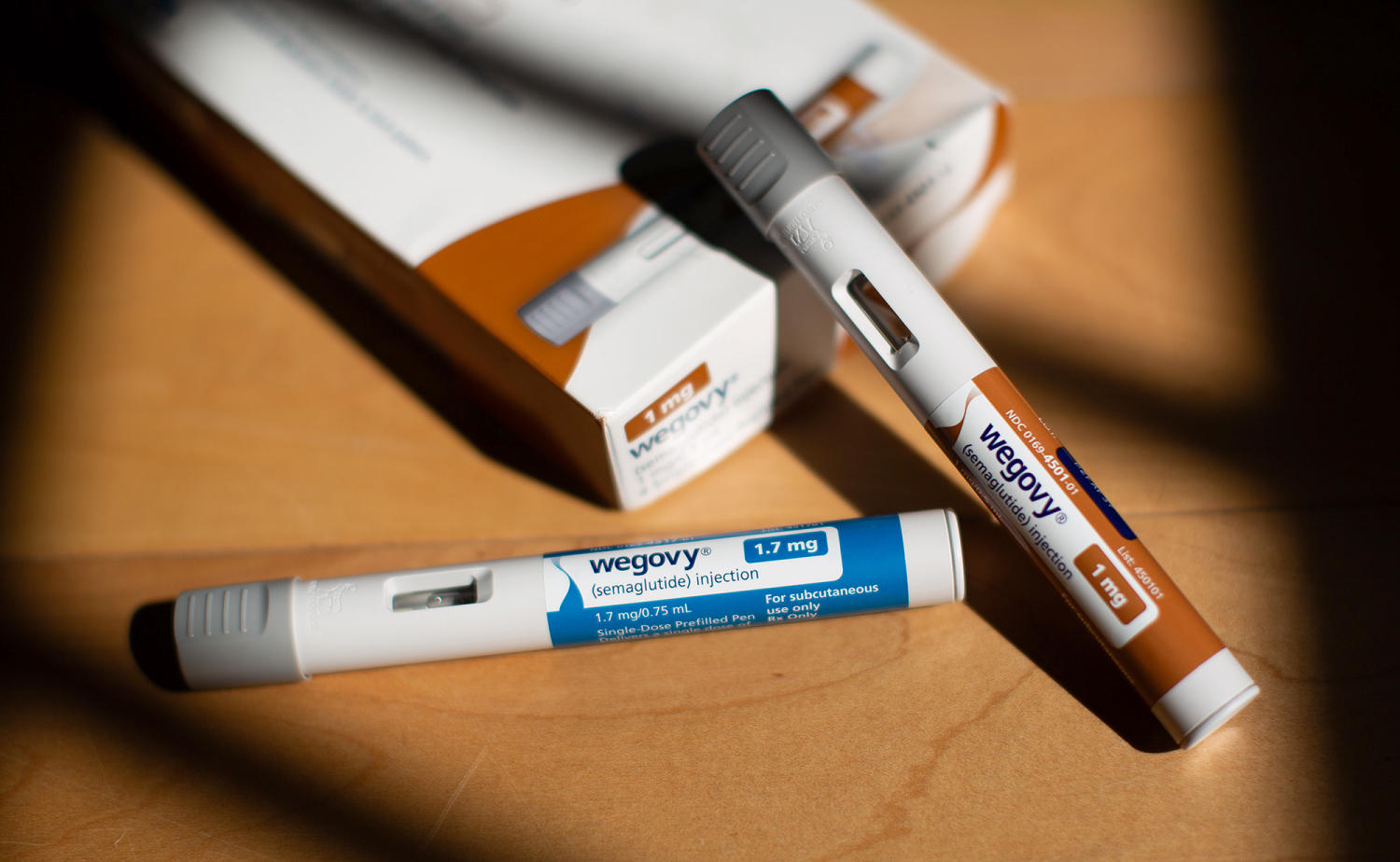
Employer-sponsored health insurance currently faces a structural deficit: the clinical efficacy of Glucagon-like peptide-1 (GLP-1) receptor agonists for weight loss has decoupled from the fiscal capacity of the private sector to fund them. While CEOs express a philosophical desire to mitigate obesity-related comorbidities, the actual math of self-insured plans reveals a "cliff effect" where the high acquisition cost of these drugs exceeds the short-term premium savings derived from a healthier workforce. This analysis deconstructs the friction between medical necessity and balance-sheet reality, identifying the specific variables that make broad GLP-1 coverage a mathematical impossibility under current pricing models.
The Trilemma of Metabolic Intervention
To understand why a CEO’s intent fails during implementation, one must examine the metabolic intervention trilemma. Benefit managers are forced to choose between three competing priorities, only two of which can exist simultaneously:
- Clinical Efficacy: Providing access to high-tier medications (e.g., semaglutide, tirzepatide) that yield 15% to 20% weight loss.
- Universal Access: Ensuring all employees meeting BMI or comorbidity criteria can receive the treatment.
- Fiscal Sustainability: Maintaining a plan spend that does not trigger double-digit premium increases for the entire employee population.
Most organizations currently sacrifice Universal Access by implementing "clinical hurdles" or "step therapy." These are defensive mechanisms designed to reduce the denominator of eligible claimants. By requiring months of documented lifestyle intervention or the failure of cheaper, less effective drugs, companies create a friction-heavy funnel that protects the budget at the expense of early-stage intervention.
The Cost Function of Weight Loss Coverage
The financial burden of GLP-1 drugs is not merely a matter of the sticker price; it is a function of duration and the lack of a "bridge to exit." Unlike an acute infection treated with a five-day course of antibiotics, obesity is managed as a chronic condition. The cost function $C$ can be modeled as:
$$C = (P \times Q) + (A \times Q)$$
Where $P$ represents the monthly net price after rebates, $Q$ represents the number of months on therapy, and $A$ represents the administrative and monitoring costs associated with the drug (e.g., lab work, physician visits).
The primary driver of insolvency is $Q$. Current clinical data suggests that when GLP-1 therapy is discontinued, a significant portion of the weight is regained. This transforms the benefit from a one-time investment into a permanent line-item expense. For a company with 10,000 employees and a 30% obesity rate, covering 1,000 participants at a net cost of $800 per month results in an annual unforecasted spend of $9.6 million. In a low-margin industry, this requires a massive increase in revenue just to maintain the status quo of the benefits package.
The Asymmetric Payback Period
The logic for covering these drugs usually rests on the assumption that lower weight leads to fewer heart attacks, strokes, and type 2 diabetes cases. While true, the timeline for these savings—the Return on Investment (ROI) period—is fundamentally misaligned with the average employee's tenure.
- The Mobility Problem: The average US employee stays at a job for 4.1 years.
- The Savings Lag: The significant medical cost offsets from weight loss (reduced cardiovascular events) often materialize 5 to 10 years after the initial weight loss.
This creates a "free-rider" effect. Company A pays for the expensive two-year weight loss phase, but Company B (the future employer) reaps the financial benefit of a healthier, lower-risk employee. Under current insurance structures, there is no mechanism for Company A to recoup that investment. This makes GLP-1 coverage a charitable contribution to the broader healthcare system rather than a rational business expense for a single entity.
Structural Bottlenecks in the Supply Chain
Beyond the direct cost, the lack of transparency in Pharmacy Benefit Manager (PBM) rebates creates a distorted market. A CEO might see a list price of $1,300 for a drug, while the actual net cost after rebates is $700. However, those rebates are often tied to "formulary placement," where the PBM receives a larger kickback for keeping the expensive brand-name drug on the preferred list.
This creates a perverse incentive:
- The PBM has little incentive to lower the drug's price because their percentage-based fees or shared-savings models thrive on higher gross spend.
- The Employer is left with "opaque pricing," making it impossible to calculate a precise ROI.
The second bottleneck is the "Compounding Loophole." To circumvent high costs, some employers have turned to compounded versions of these drugs. While cheaper, this introduces significant legal and medical risk. Compounded medications do not undergo the same FDA pre-market review for safety and efficacy as the branded counterparts. A single adverse event from a compounded drug could result in a liability that far outweighs the savings gained by avoiding the branded manufacturer.
Precision Tiering: A Strategy for Survivability
For an organization to offer these drugs without risking a catastrophic spike in premiums, they must move away from binary "Cover/No Cover" policies. A rigorous strategy involves "Precision Tiering," which segments the employee population based on Risk-Adjusted Metabolic Impact.
1. High-Risk Prioritization
Coverage is restricted to employees where the immediate medical ROI is highest—specifically those with a BMI over 35 and at least two active comorbidities (e.g., hypertension, sleep apnea, or pre-diabetes). This narrows the focus to the population most likely to incur high-cost claims in the next 12 to 24 months.
2. Mandatory Integration with Digital Health
Medication alone is a "leak." Without behavioral modification, the employer is paying for a chemical fix that will fail once the drug is stopped. Effective strategies mandate participation in a metabolic health program that tracks protein intake and resistance training to preserve lean muscle mass. If an employee fails to engage with the digital platform for more than 30 days, drug coverage is suspended. This ensures the employer is only funding "active participants," not "passive recipients."
3. Outcomes-Based Contracting
Large employers are beginning to demand "value-based" or "outcomes-based" contracts from manufacturers. In this model, the manufacturer provides a partial refund if the patient does not achieve a specific percentage of weight loss within six months. This shifts a portion of the financial risk from the employer back to the pharmaceutical company.
The Disconnect Between HR Sentiment and CFO Reality
HR departments often view GLP-1 coverage through the lens of recruitment and retention—the "Tapestry of Total Rewards." They argue that not offering these drugs makes the company uncompetitive. However, CFOs view it as a volatility risk.
If a company experiences a "high-cost claimant" surge due to GLP-1s, the resulting premium increases for the following year hit the entire workforce. This creates an internal equity issue: the 90% of employees who do not use the drug are effectively subsidizing the 10% who do, often through higher deductibles or lower wage growth. This is the "Social Cost of Wellness" that many leaders fail to address in public statements.
The Predicted Shift to "Carve-Out" Models
The current trajectory suggests that standard health plans will increasingly "carve out" weight loss drugs entirely, moving them to a separate, elective benefit. Similar to how pet insurance or identity theft protection is offered, weight loss coverage may become a voluntary benefit where the employee pays a larger share of the premium specifically for GLP-1 access.
This solves the "Free-Rider" and "Equity" problems. It allows the employees who value the medication most to access it via a group rate, while protecting the core health plan from the massive volatility of metabolic drug pricing.
The most viable path forward for a CEO is not "Universal Coverage," but "Data-Driven Limitation." Companies must implement strict "Stopping Rules"—clinical protocols that dictate when a drug is no longer being paid for because it has either achieved its goal or failed to show progress.
The strategic play is to treat GLP-1s as a specialized clinical tool for the highest-risk 5% of the population, rather than a general wellness benefit for the 30% who may want it. Failure to make this distinction will result in a forced withdrawal of the benefit entirely once the cumulative spend hits the corporate bottom line.