The Mechanics of Under-Reported Conflict Data
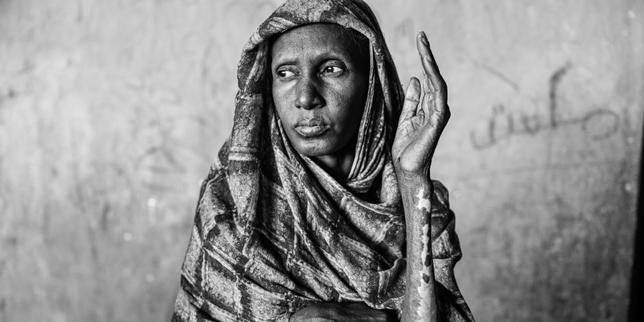
The selection of the 2026 World Press Photo (WPP) winner regarding the Sudanese civil war signifies more than an appreciation of aesthetic composition; it represents a formal verification of a conflict that has largely bypassed the central nervous system of Western media attention. While traditional reporting often fails to penetrate the logistical barriers of the SAF-RSF (Sudanese Armed Forces vs. Rapid Support Forces) conflict, photojournalism functions here as a proxy for raw data. The five-photo series analyzed serves as a structural blueprint for understanding the kinetic reality of urban warfare, the collapse of agrarian supply chains, and the systematic displacement of civilian populations.
The fundamental disconnect in the Sudan narrative is the "Information Asymmetry" gap. Because the theater of war is geographically isolated and physically dangerous for international observers, the imagery produced by the rewarded photographer acts as the primary evidentiary record. We must categorize these visual assets into three distinct analytical pillars: Kinetic Impact, Logistics of Displacement, and the Erosion of Civic Infrastructure.
The Kinetic Impact Pillar: Mapping Urban Attrition
The first two images in the WPP series provide a granular look at the degradation of Khartoum’s urban center. To understand the strategic value of these frames, one must look at the Density of Destruction.
- Structural Failures: The images highlight the use of heavy artillery in high-density residential zones. This isn't random violence; it represents a tactical shift where the city itself becomes the weapon.
- The Proximity Factor: The photographer documents the frontline not from a distance, but within the "active kill zone." This proximity provides data on the types of munitions being utilized, specifically identifying Soviet-era hardware and modern drone-assisted strikes.
The cause-and-effect relationship here is clear: the militarization of residential architecture leads to the permanent erasure of the middle-class economic base. When a home becomes a sniper nest, the subsequent "clearing" operation ensures that the structure is rendered uninhabitable for a generation. The WPP series captures this transition from a living city to a tactical grid.
The Logistics of Displacement: Quantifying Human Flux
The third and fourth photographs move the lens from the kinetic front to the logistical tail of the war. These frames focus on the migration patterns toward the Chadian border and the "Adre" bottleneck.
The Vector of Forced Migration
The imagery defines a specific mechanism of displacement. Unlike the organized evacuations seen in other global conflicts, the Sudanese movement is characterized by Radical Decentralization. Families move in fragmented units, avoiding main roads to bypass RSF checkpoints where looting is systemic.
Nutritional Depletion Models
The photographer’s focus on the physical condition of children in the camps provides a visual metric for the "Integrated Food Security Phase Classification" (IPC). We see the transition from IPC Phase 3 (Crisis) to Phase 5 (Famine). The visual evidence of muscle wasting and lethargy in the subjects acts as a lead indicator for mortality rates that official NGOs are currently unable to count in real-time. The photos validate the hypothesis that the weaponization of hunger is a primary tactical objective, rather than a byproduct of the fighting.
The Erosion of Civic Infrastructure: The Death of the "Third Space"
The final photograph in the series depicts the remnants of a university or hospital—the "Third Space" that exists between the military and the domestic spheres. This represents the Total War Paradox: the destruction of non-combatant infrastructure does not accelerate the end of the conflict; instead, it removes the baseline requirements for a post-war state.
- Human Capital Flight: By documenting the ruins of educational institutions, the photographer records the destruction of the professional class’s future.
- Medical Collapse: The absence of operational medical equipment in these frames highlights the "zero-sum" nature of the medical supply chain in Sudan. Every seized hospital is a logistical gain for a militia and a permanent loss for the civilian population.
The photographer’s narrative underscores a critical failure in international intervention. The logic of the images suggests that the conflict has moved beyond the "Negotiation Phase" and into a "Systemic Liquidation Phase," where the goal is the total control of resources rather than political legitimacy.
The Strategic Failure of Global Attention
The WPP award highlights a significant flaw in the global "Attention Economy." Sudan represents one of the highest casualty counts of the 21st century, yet it receives a fraction of the digital footprint compared to conflicts with higher geopolitical leverage.
The mechanism of this neglect is The Threshold of Relatability. International audiences often fail to engage with conflicts that lack a clear "David vs. Goliath" narrative or those that occur in regions perceived as perpetually unstable. The rewarded photographer attempts to bypass this by utilizing "Universal Visual Cues"—a mother's grief, a child's hunger—to trigger a physiological response that the data alone has failed to provoke.
However, visual empathy has a short half-life. The strategic limitation of photojournalism is its inability to sustain policy pressure. While these five photos may win awards and generate a week of headlines, they do not inherently alter the flow of arms or the delivery of humanitarian aid.
Strategic Recommendation: Leveraging Visual Evidence for Accountability
To move from passive observation to active intervention, the visual data provided by the World Press Photo series must be integrated into a broader Accountability Framework.
- Geospatial Verification: International bodies should use these ground-level photographs to "ground-truth" satellite imagery. The specific damage patterns shown in the WPP series can be used to identify the specific units responsible for war crimes based on their known weapon systems.
- Economic Sanction Mapping: The presence of specific high-end consumer goods or military hardware in the background of these photos provides clues to the illicit supply chains fueling the RSF and SAF.
- The "Last Mile" Aid Strategy: Given the collapse of infrastructure shown in the photographs, aid must move away from centralized distribution (which is easily hijacked) to a decentralized, "micro-logistics" model that mimics the displacement patterns of the civilians themselves.
The conflict in Sudan is not a chaotic accident; it is a calculated dismantling of a nation-state for the benefit of competing kleptocratic interests. The 2026 World Press Photo series is the autopsy report of that process. The final move for the international community is to treat these images not as art, but as intelligence. The objective is no longer to "witness" the tragedy, but to disrupt the economic and logistical engines that make the tragedy profitable for the combatants.