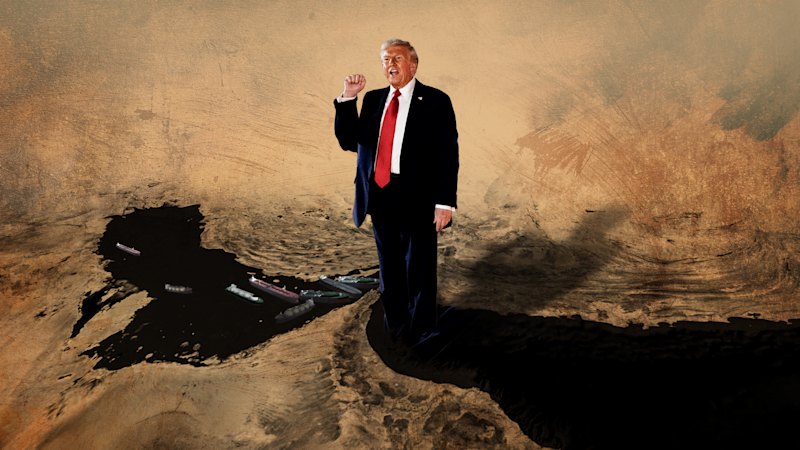
The fundamental friction in American foreign policy under a transactional framework is the mismatch between short-term tactical deterrence and long-term strategic stability. In the context of the persistent confrontation with Iran, the United States operates within a paradox: it possesses overwhelming kinetic superiority but suffers from a chronic deficit in credible commitment. This deficit acts as an "Achilles heel," where the preference for high-impact, one-off actions—such as targeted strikes or maximum pressure sanctions—fails to account for the escalatory logic of an adversary that views survival through the lens of asymmetric attrition.
The Mechanism of Escalation Inelasticity
Standard deterrence theory suggests that an increase in the cost of aggression should lead to a decrease in the frequency of that aggression. However, the US-Iran relationship exhibits high escalation inelasticity. Iran’s regional strategy is built on a "proxy-buffer" system, where the cost of US kinetic action is often absorbed by third-party actors (militias in Iraq, Syria, or Yemen) rather than the central Iranian state apparatus.
When the US applies high-intensity pressure without a defined diplomatic off-ramp, it creates a "cornered-rat" utility function. For the Iranian leadership, the risk of domestic collapse under sanctions outweighs the risk of regional escalation. This creates a feedback loop where:
- The US applies maximum pressure to force a behavioral shift.
- Iran perceives this as an existential threat aimed at regime change, not behavioral change.
- Iran increases regional friction to demonstrate that US pressure is not cost-free.
- The US responds with tactical strikes, which Iran interprets as further proof of hostile intent, reinforcing the cycle.
The Three Pillars of Transactional Vulnerability
The current American approach relies on three pillars that, while effective in isolation, create a systemic vulnerability when combined.
1. The Primacy of Domestic Optics over Geopolitical Endurance
Transactional foreign policy is often calibrated for domestic consumption. Success is measured by the immediate visibility of an action—a drone strike or a signed executive order—rather than the decade-long maintenance of a regional balance of power. This creates a "predictability gap." Adversaries know that US policy is subject to the four-year electoral cycle, allowing them to simply wait out "maximum pressure" campaigns.
2. Asymmetric Cost Structures
The cost function for the US to maintain a presence in the Middle East is significantly higher than the cost for Iran to disrupt that presence. A single $20,000 loitering munition (drone) can force a multi-billion dollar US carrier strike group to reposition or require the expenditure of $2 million interceptor missiles. This fiscal asymmetry means that Iran can achieve strategic parity through persistent, low-cost harassment, even while its economy is technically "broken" by sanctions.
3. The Absence of a Credible "Middle Path"
Deterrence requires two components: a credible threat of punishment and a credible promise of reward for compliance. The transactional model excels at the former but fails at the latter. If Iran believes that even total compliance will not result in permanent relief from US hostility, it has zero incentive to negotiate. This turns diplomacy into a zero-sum game of endurance.
The Kinetic Fallacy and the Proxy Buffer
Military analysts often mistake tactical success for strategic victory. The removal of high-value targets provides a temporary disruption in Iranian command and control, but it does not dismantle the underlying "Axis of Resistance" infrastructure. Iran’s decentralized command structure allows local commanders significant autonomy, meaning the death of a single leader does not stop the launch of rockets in the Levant or the Red Sea.
This creates the "Kinetic Fallacy": the belief that enough physical destruction will eventually lead to a psychological shift in the adversary. In reality, Iran’s ideology is predicated on resistance against a "hegemonic power." Every US strike is integrated into the state’s internal propaganda as validation of its defensive posture. The US is essentially funding the very narrative that Iran uses to maintain domestic cohesion despite economic hardship.
Quantitative Analysis of the Maximum Pressure Failure
While sanctions have successfully reduced Iran's GDP and restricted its access to hard currency, they have not achieved the primary stated goal: a reduction in regional destabilization. If we track the correlation between Iranian oil export volumes and the frequency of proxy attacks, the data shows an inverse relationship or, at best, no correlation at all.
- Period A (Increased Sanctions): Iranian oil exports drop below 500,000 barrels per day. Proxy activity in the Red Sea and Iraq increases as Iran seeks to create "cost points" for the global economy.
- Period B (Sanctions Relaxation/Leakage): Revenue increases. Iran may fund more activities, but the immediate urgency to strike US assets decreases as the regime focuses on internal stabilization.
This suggests that the "Achilles heel" is the assumption that economic pain translates linearly into political capitulation. In autocratic, ideologically-driven regimes, the pain is externalized to the population while the security apparatus remains prioritized.
The Strategic Bottleneck of Sanctions Over-Reliance
The US has reached "peak sanctions." When a target is already 90% disconnected from the global financial system, the remaining 10% provides diminishing returns. This creates a bottleneck where the US has no further non-kinetic tools to deploy.
Once sanctions are maxed out, the only remaining escalatory steps are cyber-warfare or direct military conflict. Both carry high risks of unintended consequences. Cyber-attacks on Iranian infrastructure often invite reciprocal attacks on US financial or energy sectors, while direct military conflict risks a global energy price shock that would be politically catastrophic for any US administration.
Structural Misalignment in Intelligence and Policy
A secondary vulnerability lies in the misalignment between intelligence assessments of Iranian capabilities and the political desire for "quick wins." Intelligence suggests that Iran is a rational actor focused on survival. However, policy often treats Iran as an irrational actor that can be bullied into submission.
This misalignment leads to "strategic surprise." The US is frequently caught off guard by the sophistication of Iranian proxies because it underestimates the technical transfer between Tehran and its partners. The Houthis, for instance, transitioned from a localized insurgent group to a regional maritime threat using Iranian blueprints. The US response—periodic bombing of launch sites—addresses the symptom but ignores the factory, which is the ideological and technical bridge between Tehran and Sana'a.
Mapping the Iranian Counter-Strategy
Iran’s strategy is designed to exploit the specific weaknesses of a transactional US president. It utilizes three primary tactics:
- Strategic Ambiguity: Attacking via proxies allows Iran to maintain "plausible deniability," making it difficult for the US to justify a direct strike on Iranian soil to a skeptical domestic and international public.
- The "Slow Burn": Increasing tensions incrementally (the "boiling frog" method) to avoid triggering a massive US response while still making the US presence in the region untenable.
- Third-Party Intermediation: Using China and Russia as diplomatic shields. By pivoting its energy exports to the East, Iran reduces the leverage of Western sanctions and ensures that the US cannot build a truly global coalition against it.
The Failure of the "New Deal" Framework
The expectation that a "better deal" can be reached through sheer force of will ignores the internal politics of the Islamic Republic. The hardline factions in Tehran benefit from Western isolation. It justifies their grip on power and their suppression of reformist elements. By pursuing a strategy that relies solely on external pressure, the US inadvertently strengthens the very elements of the Iranian regime it seeks to weaken.
The "Achilles heel" is not just a lack of consistency; it is a lack of empathy for the internal incentives of the adversary. A strategist who does not understand what the opponent fears most—and what they value most—cannot effectively negotiate or deter.
Operational Redesign for Regional Stability
To move beyond the transactional trap, US strategy must shift from a "pressure-only" model to an "integrated containment" model. This requires:
- Decoupling Proxy Response from State Escalation: Treating proxy attacks as a constant environmental hazard rather than a trigger for regional war. This involves hardening US bases and improving point-defense systems (C-RAM, directed energy) to make proxy attacks militarily irrelevant.
- Establishing a Binary Incentive Structure: Clearly defining the specific actions that will lead to specific, incremental sanctions relief. This relief must be verifiable and reversible, creating a "tit-for-tat" game theory model rather than an "all-or-nothing" gamble.
- Regional Burden Sharing: Moving away from the US as the primary security guarantor. Strengthening the independent defense capabilities of Gulf allies reduces the US "target surface" and forces Iran to negotiate with its neighbors rather than using the US as a proxy for its regional grievances.
The current trajectory indicates that without a shift toward structural endurance, the US will remain caught in a cycle of tactical victories and strategic retreats. The "Achilles heel" is the belief that the Middle East can be "solved" with a single decisive action. True mastery of this theater requires the patient management of a permanent, low-intensity rivalry.
The immediate requirement is the establishment of a "hotline" or secondary channel to prevent accidental escalation during tactical maneuvers. Without a mechanism for crisis de-escalation, the next "tactical success" could inadvertently trigger a systemic collapse of regional order that the US is neither prepared to manage nor willing to fund.



