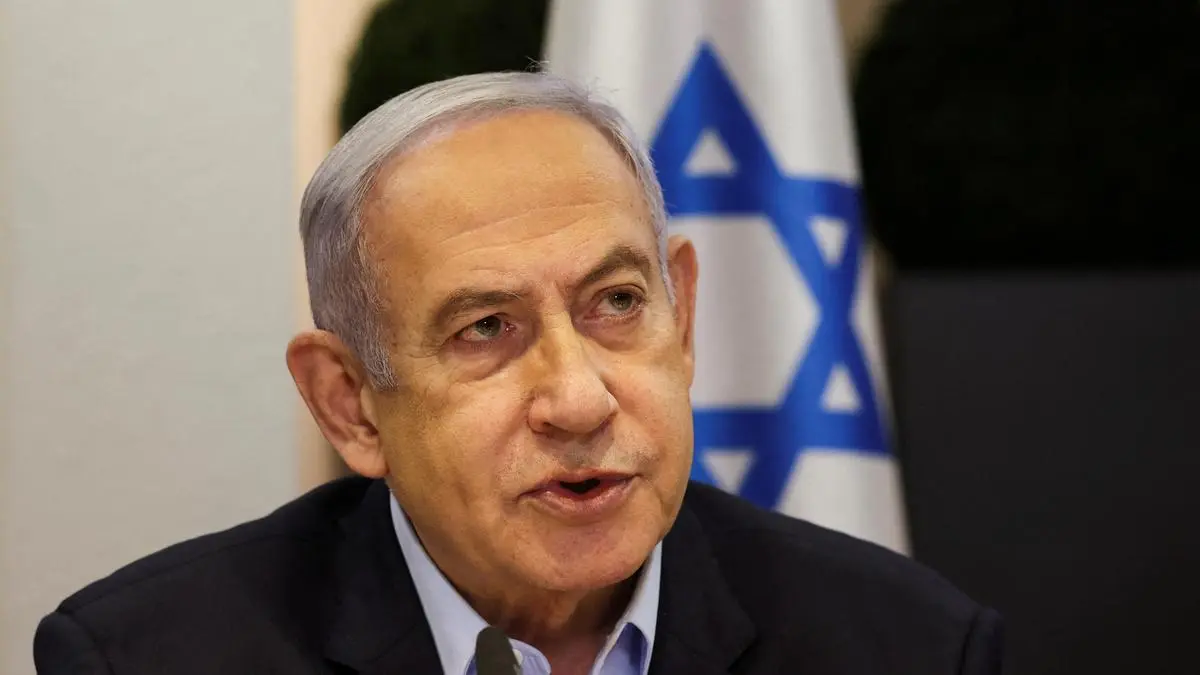
The current movement toward a ceasefire between Israel and Hezbollah, facilitated by U.S. and Iranian backchannels, represents a pivot from kinetic exhaustion to a strategic recalibration of regional deterrence. While media narratives focus on the immediate cessation of hostilities, the underlying mechanism is a complex negotiation of sovereignty, buffer zones, and the enforcement of UN Security Council Resolution 1701. The viability of any agreement rests on a tripartite framework: the physical separation of combatants, the verifiable degradation of non-state military infrastructure, and the political survival of the mediating regimes.
The Tri-Frontal Attrition Model
Israel’s authorization of negotiations with Lebanon is not a humanitarian pivot but a response to the diminishing returns of a multi-front conflict. To understand the strategic shift, we must examine the cost functions currently weighing on the Israeli Defense Forces (IDF) and the Hezbollah command structure.
- Operational Overstretch: Maintaining high-intensity operations in both Gaza and Southern Lebanon creates a logistical bottleneck. The IDF’s reserve-heavy model faces economic depletion as prolonged mobilization drains the domestic labor market.
- The Asymmetric Burn Rate: Hezbollah’s reliance on short-range rocket fire and anti-tank guided missiles (ATGMs) allows for a low-cost, high-frequency disruption of Northern Israel. Conversely, Israel’s interceptor missiles and precision airstrikes operate at a significantly higher price point per engagement.
- Diplomatic Capital Depletion: The United States’ role as a security guarantor is increasingly strained by the domestic political costs of a regional conflagration during an election cycle. This creates a hard ceiling on the duration of unrestricted military operations.
The Enforcement Gap and Resolution 1701
The primary friction point in ceasefire talks is the historical failure of the "buffer zone" concept. Resolution 1701, established in 2006, mandated that the area between the Blue Line and the Litani River be free of any armed personnel other than the Lebanese Army and UNIFIL. In practice, this zone became a dense network of Hezbollah fortifications.
The current negotiations seek to solve the "Enforcement Gap" through three specific mechanisms:
The Monitoring Mechanism Expansion
Previous iterations relied on UNIFIL, which lacked a mandate for proactive disarmament. The proposed framework introduces a Western-led monitoring committee, likely involving the United States and France, with the authority to conduct independent inspections. This shift moves the burden of proof from the victim of a violation to an international third party.
The Litani Withdrawal Constraint
For Israel, a "ceasefire" is a misnomer if Hezbollah maintains its Radwan Force within striking distance of the border. The strategic requirement is a physical retreat of heavy weaponry and elite units north of the Litani River. This creates a geographic "reaction time" buffer, essential for the return of displaced Israeli civilians to the Galilee.
The Lebanese Armed Forces (LAF) Capacity Build
The LAF is currently under-equipped to act as a primary security provider. A key pillar of the talks involves significant financial and hardware injections into the LAF. The objective is to transform the national army into a legitimate counter-weight to Hezbollah’s internal military hegemony, though this remains the most precarious variable in the equation.
Iranian Interests and the "Unity of Fronts" Doctrine
Tehran’s willingness to engage in ceasefire talks through intermediaries signals a shift in the "Unity of Fronts" strategy. Iran views Hezbollah as its most critical deterrent against a direct strike on its nuclear infrastructure. If Hezbollah’s core capabilities are threatened with total destruction through an Israeli ground maneuver that reaches the Litani, Iran’s regional insurance policy expires.
- The Preservation of Assets: Iran likely calculates that a tactical retreat in Southern Lebanon is preferable to the total dismantling of Hezbollah’s long-range missile arsenal, which remains mostly intact.
- The Sanctions Relief Lever: Engagement in regional de-escalation is often used by Tehran as a bargaining chip in broader negotiations with Washington regarding frozen assets and oil export enforcement.
- The Internal Stability Variable: Both the Iranian and Lebanese domestic economies are under extreme duress. Prolonged war risks internal unrest that could destabilize the proxy-patron relationship.
The Netanyahu Authorization: A Domestic Calculus
Prime Minister Netanyahu’s decision to authorize talks is a calculated maneuver within the Israeli political landscape. It provides a pressure valve for the military leadership while simultaneously testing Hezbollah’s willingness to decouple the Lebanese front from the Gaza conflict.
The "Gaza Linkage" remains the primary obstacle. Hezbollah has long maintained that no peace will exist in the north until a permanent ceasefire is reached in the south. By entering negotiations specifically for the Lebanese front, the Israeli government is attempting to "salami-slice" the conflict—resolving the immediate threat to the north while maintaining operational freedom in Gaza. This creates a logical trap for Hezbollah: remain in a war of attrition that risks its existence, or abandon its "resistance" allies in Hamas for the sake of Lebanese self-preservation.
Infrastructure of De-escalation: Technical Requirements
For a ceasefire to transition from a temporary pause to a durable security arrangement, specific technical milestones must be achieved:
- De-escalation Zoning: Establishing a tiered security zone where the density of Lebanese Army troops increases as the proximity to the Blue Line decreases.
- Airspace Sovereignty Agreements: Israel currently utilizes Lebanese airspace for intelligence gathering and strikes on supply lines from Syria. A ceasefire would require a defined protocol for "defensive overflights," a point of contention that Lebanon views as a violation of sovereignty.
- Tunnel Neutralization: Verifiable destruction of cross-border infrastructure is a non-negotiable Israeli demand. The "Mechanism" must include technical subterranean monitoring to ensure no new tunnels are excavated during the peace phase.
The Strategic Fragility of Third-Party Guarantees
The reliance on U.S. and French guarantees introduces a layer of geopolitical risk. If the United States shifts its foreign policy focus toward Eastern Europe or East Asia, the enforcement of the Lebanon-Israel border will inevitably soften. This "guarantor fatigue" is precisely what allowed the erosion of the 2006 status quo.
Furthermore, the Lebanese government’s lack of executive power remains a systemic bottleneck. A ceasefire signed by a caretaker government may not hold the legal or kinetic weight to restrain a non-state actor like Hezbollah, which maintains its own independent command and control.
Projecting the Settlement Probability
The probability of a durable settlement is currently hampered by the lack of a "Final Status" agreement on disputed border points, such as the Shebaa Farms. Without resolving these territorial claims, Hezbollah retains a rhetorical justification for continued "resistance," even within a ceasefire framework.
The most likely outcome is a "Cold Freeze"—a cessation of heavy artillery and airstrikes, accompanied by a partial withdrawal of Hezbollah forces, but without the formal recognition of a border or the full disarmament of the militia. This state of "non-war" allows all parties to claim a victory of sorts: Israel returns its citizens to the north, Hezbollah preserves its core structure, and Iran avoids a direct confrontation with the West.
The strategic play now is the establishment of the international monitoring body. Its composition and mandate will be the true indicator of whether this is a genuine peace process or merely a tactical pause to allow all parties to re-arm for a more intensive second phase of the conflict. The integration of high-resolution satellite monitoring and ground-based seismic sensors into the UNIFIL/Western mandate will be the first verifiable sign of a commitment to the "Litani Buffer" integrity.
Failure to secure these technical enforcement measures will result in a return to kinetic operations within a 12-to-18-month window, as the underlying drivers of the conflict—the Iranian proxy presence and the Israeli "Security First" doctrine—remain fundamentally unresolved.