The desert silence of West Texas is different from any other quiet on Earth. It is a heavy, expectant stillness, often broken only by the low hum of cooling fans or the distant whistle of wind through scrubbrush. But when a rocket engine fails, that silence doesn't just return. It shatters.
A few miles away from the launch site, a hypothetical engineer—let’s call her Sarah—watches the telemetry data flicker across her screen. She has spent three years of her life on a single valve. She knows its weight, its metallic scent, and the exact pressure at which it begins to scream. When the Blue Origin booster suffered its recent structural failure, Sarah didn't just see a line on a graph dip. She felt the vibration in her teeth. She saw a decade of collective human ambition stall in a cloud of orange smoke and debris.
This was not just a mechanical hiccup. It was a fracture in the timeline of our species.
The Weight of a Falling Star
We have become accustomed to the "fail fast, break things" philosophy of the modern space race. We watch grainy livestreams of explosions and call them "rapid unscheduled disassemblies," a polite euphemism that masks the terrifying reality of controlled explosions. But this particular failure carries a weight that doesn't dissipate with the smoke.
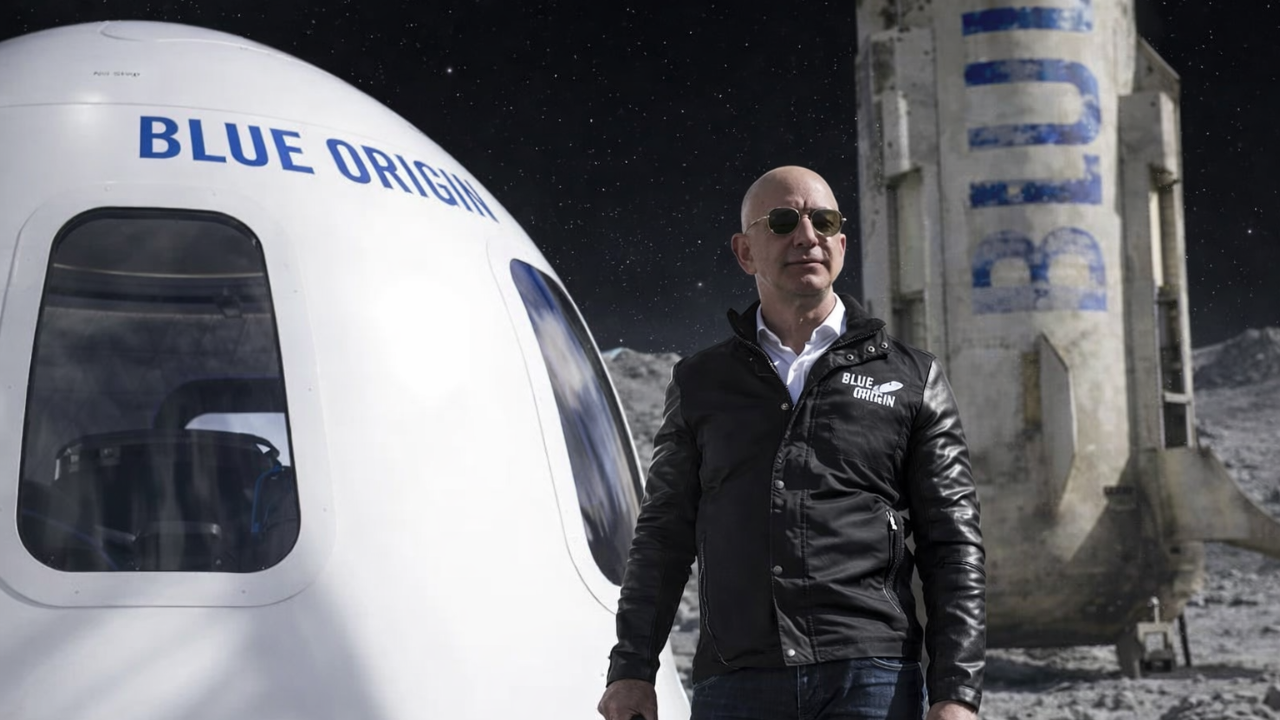
Blue Origin, Jeff Bezos’s ambitious venture into the cosmos, isn't just playing with hobbyist toys. They are a linchpin in NASA’s Artemis program, the grand architectural plan to put boots back on lunar soil. When a New Shepard booster fails, the shockwaves travel 1,500 miles east to Washington D.C., where budget committees and mission planners realize that the 2026 deadline for a lunar landing is no longer a goal. It is a ghost.
The math of spaceflight is unforgiving. Every month spent investigating a charred engine nozzle is a month stolen from the training schedules of the astronauts who are currently measuring their lives in mission milestones.
The Invisible Stakes of the Lunar South Pole
Why does it matter if we get there in 2026 or 2028? To the average person, the Moon is a constant, a silver coin that has hung in the sky for four billion years. A few years' delay feels like a rounding error.
But consider the geopolitical reality on the ground. We are not the only ones looking up. China’s space agency is moving with a rhythmic, military precision toward the same lunar south pole that NASA has claimed as its primary interest. This isn't just about planting a flag for the sake of ego; it’s about the ice. The shadows of the lunar craters hide water—precious, life-sustaining, fuel-creating water.
Whoever controls that ice controls the gas station for the rest of the solar system.
When Blue Origin’s hardware falters, the lead we’ve maintained since the 1960s narrows. It is a race where the track is made of vacuum and the stakes are the next hundred years of human energy independence. We are watching a high-stakes chess game where one side just knocked over their own rook.
The Human Cost of Delay
Think of the astronauts. Not as icons in shimmering suits, but as parents and partners.
Take a hypothetical commander, a veteran pilot who has spent thousands of hours in simulators. For him, a delay isn't a "schedule adjustment." It is the difference between flying his dream mission in his prime and being "aged out" of the program. Every time a booster fails, the window of opportunity for a generation of explorers begins to creak shut.
They live in a state of perpetual readiness, their lives on hold, their families bracing for a launch that keeps receding into the future like a mirage. The emotional toll of these setbacks is rarely discussed in the press releases. NASA talks about "redundancy" and "safety protocols." They don't talk about the quiet dinner conversations where a pilot has to tell his daughter that, no, Daddy won't be going to the Moon this year after all.
The engineering challenge is equally visceral. When a rocket fails, the collective psyche of the team takes a hit. Doubt is a corrosive substance in an industry where 99% success is a total failure. You have to be perfect. Every. Single. Time.
The Complexity of the Machine
To understand why this failure is so devastating, you have to understand the sheer complexity of the New Glenn and New Shepard systems. We aren't just building bigger engines; we are trying to build reusable cathedrals of fire.
Imagine a machine where liquid oxygen and liquid hydrogen are pumped at rates that could fill a swimming pool in seconds, all while being ignited in a chamber that reaches temperatures hot enough to melt any known metal. We keep that metal from melting by "regeneratively" cooling it—essentially running the freezing cold fuel through tiny veins in the engine wall before it burns.
It is a delicate, violent dance. If one vein clogs, the engine eats itself.
Blue Origin’s setback suggests that the dance isn't as choreographed as we hoped. This creates a ripple effect. NASA’s Human Landing System (HLS) depends on a complex web of providers. If one thread snaps, the whole tapestry sags. We are relying on a synergy between private wealth and public oversight that has never been tested at this scale.
The Fragility of Public Will
The most dangerous consequence of these failures isn't technical. It’s political.
Space exploration is expensive. It is a target for every politician looking to trim the fat from a budget. When the headlines scream "Failure," the public’s appetite for the stars begins to wane. We hear the old arguments: Why are we spending billions up there when we have problems down here?
It’s a fair question, but it misses the point of why we go. We go because the technology developed to keep an astronaut alive in a lunar crater is the same technology that will eventually provide clean water to a drought-stricken village in sub-Saharan Africa. We go because a society that stops looking outward eventually starts turning on itself.
But try explaining that to a taxpayer who just saw a billion-dollar investment turn into a pyrotechnic display in the Texas sky. The failure provides ammunition to the skeptics. It weakens the resolve of the people holding the purse strings. Every setback makes the next "Go" vote a little harder to secure.
The Ghost of Apollo
We live in the shadow of the 1960s. We remember the Apollo era as a period of flawless triumph, forgetting the fire of Apollo 1, which claimed the lives of three men on the launchpad. We forget the near-disaster of Apollo 13.
The difference is that back then, we were a nation obsessed. Today, we are a nation distracted.
Blue Origin’s struggle is a reminder that the Moon is not a "solved" problem. It is 238,000 miles of lethal indifference. Gravity doesn't care about your net worth. Physics doesn't care about your stock price. The Moon is a harsh mistress, and she demands a level of perfection that we are clearly still struggling to achieve.
The delay isn't just about a calendar date. It’s about our identity. Are we the people who see a plume of smoke and decide to turn back? Or are we the people who sift through the charred remains, find the broken valve, and build it stronger?
The Lone Engineer
Back in the desert, Sarah sits in the dark. The telemetry screen is blank now. The recovery teams are out in the scrub, picking up pieces of alloy that were supposed to be the vanguard of a new era.
She isn't thinking about the billionaire who signs her checks. She isn't thinking about the geopolitical maneuvering in the South China Sea. She is thinking about the valve. She is thinking about the way the metal twisted under the heat. She is already redesigning it in her mind.
The path to the Moon is paved with broken parts. It is a trail of debris and disappointment that stretches back sixty years. But it is also a trail of people who refuse to look away from the wreckage.
The fire was a setback. A major one. But as the sun sets over the Texas horizon, the silence isn't empty anymore. It’s filled with the sound of thousands of people across the country picking up their tools and starting over. Because the Moon is still there, indifferent and silver, waiting for us to finally get the math right.
The stakes aren't just a landing. The stakes are whether we still have the heart to fail, to bleed, and to try again.