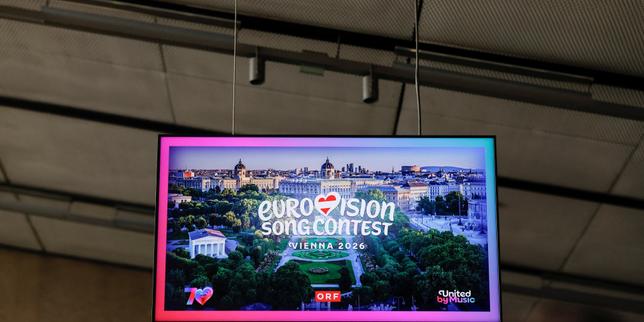
The headlines are predictable. They are boring. They are fundamentally lazy. Over 1,100 artists have signed a petition demanding the exclusion of Israel from Eurovision 2026, threatening a mass boycott if the European Broadcasting Union (EBU) doesn’t cave. The narrative is always the same: a moral crusade led by the "conscience" of the industry.
But look closer. This isn't a revolution. It’s a performative retreat.
For decades, the art world has clung to the delusion that "silence is violence" while simultaneously choosing to go silent whenever the stage gets too hot. By demanding a boycott, these artists aren’t fighting for change. They are fleeing the only arena where they actually have any influence. If you claim to be a communicator, a storyteller, or a provocateur, and your first instinct is to hand back the microphone and go home, you aren’t an activist. You’re a quitter with a publicist.
The Myth of the Non-Political Song Contest
The most frequent argument for exclusion is that Eurovision is a "non-political event" that is being "tainted" by the presence of a nation in conflict. This is a historical lie. Eurovision has been a geopolitical boxing match disguised as a disco since 1956.
From the Cold War voting blocs of the eighties to Ukraine’s win in 2022, the contest has always functioned as a soft-power barometer for the European continent. To claim it is "just about the music" is to ignore the reality of how cultural diplomacy works.
When you demand the removal of a participant, you aren't "saving" the contest's neutrality. You are weaponizing it. You are asking the EBU to become a supreme court of international ethics—a role it is neither qualified for nor capable of fulfilling without collapsing under the weight of its own hypocrisy. If we start banning every country involved in a border dispute, an occupation, or a human rights violation as defined by a shifting group of 1,100 musicians, the stage will be empty by 2030.
The Cowardice of the Empty Chair
A boycott is the lowest-stakes form of protest available to a modern artist. It costs nothing but a few hours of social media engagement and perhaps a missed flight. It requires zero creativity. It generates zero dialogue.
Contrast this with the history of actual artistic defiance. Think of the musicians who walked onto stages in oppressive regimes and played songs that broke the law. Think of the performers who used their three minutes of airtime to deliver messages that bypassed the censors.
Imagine a scenario where these 1,100 artists actually showed up. Imagine if they used their platforms to create art so undeniable, so poignant, or so challenging that it forced the audience to look at the world differently. Instead, they choose the "safe" path of absence. They prefer the comfort of a moral high ground where they don't have to face their ideological opponents.
The empty chair doesn't speak. It just sits there, being empty. And while you’re sitting at home feeling virtuous, the broadcast goes on. The millions of viewers still tune in. The only thing you’ve accomplished is making yourself irrelevant to the conversation.
The EBU’s Impossible Tightrope
The EBU is often cast as the villain in this drama—the rigid corporate entity ignoring the "will of the people." In reality, they are the only adults in the room trying to prevent the complete Balkanization of cultural exchange.
If the EBU bans Israel today based on artist pressure, they set a precedent that turns the contest into a revolving door of exclusions. Next year, it will be Azerbaijan. The year after, perhaps Turkey or Serbia. Any country with a controversial domestic policy or a contentious foreign intervention becomes a target.
The moment Eurovision becomes a platform where membership is determined by the "vibe" of the current artistic consensus, it dies. It ceases to be an international bridge and becomes a gated community for the politically aligned.
Soft Power vs. Hard Barriers
We need to talk about what "boycott" actually achieves in the context of soft power. Cultural isolation rarely leads to political reform; it leads to radicalization and the "fortress mentality."
When you cut off a nation’s artists from the global stage, you aren't punishing the government. You are punishing the cultural sector—the very people most likely to be critical of their own leadership. You are closing the windows and doors through which outside influence can flow.
I’ve seen this play out in various industries over the last twenty years. Whenever we build walls around a culture because we don't like their leaders, we lose our ability to communicate with their people. We trade influence for a fleeting sense of moral purity. It is a bad trade. It is a trade made by people who don't understand how long-term change actually happens.
The "People Also Ask" Delusion
People often ask: "Why was Russia banned but Israel isn't?"
The answer is brutal but necessary: Because the legal and institutional frameworks are completely different. Russia was banned because its state broadcasters were deemed to be in breach of the EBU’s membership obligations regarding media freedom and independence, coupled with the near-total consensus of the European political community.
Using one exclusion as a template for all future grievances is a logical fallacy. Every conflict is unique. Every legal standing is different. To demand a "one-size-fits-all" ban policy is to demand that the EBU ignores the complexity of international law in favor of populist sentiment. It’s asking for a mob rule of the arts.
Stop Signing Petitions and Start Writing Better Songs
If these 1,100 artists wanted to make an impact, they wouldn't be signing a PDF. They would be entering the contest. They would be writing lyrics that cut through the noise. They would be collaborating with peers from across the divide to show a different way forward.
But that’s hard. That takes work. It takes the risk of being booed, the risk of being misunderstood, and the risk of actually having to engage with a complex reality.
It is much easier to post a black square or a link to a petition. It provides the dopamine hit of "doing something" without the messiness of actually engaging.
We are witnessing the death of the artist as a public intellectual and the rise of the artist as a brand-manager. These boycotts aren't about the Middle East. They are about brand protection. They are about ensuring that an artist’s "values" remain untainted by the proximity of controversy. It is a sterile, corporate approach to a world that is anything but.
The stage is meant for the brave. It is meant for the people who have something to say and are willing to stand in the spotlight to say it. If you can't handle the heat of a shared stage, you shouldn't be in the business of public performance.
Go ahead and stay home in 2026. The rest of the world will be watching the people who actually showed up.