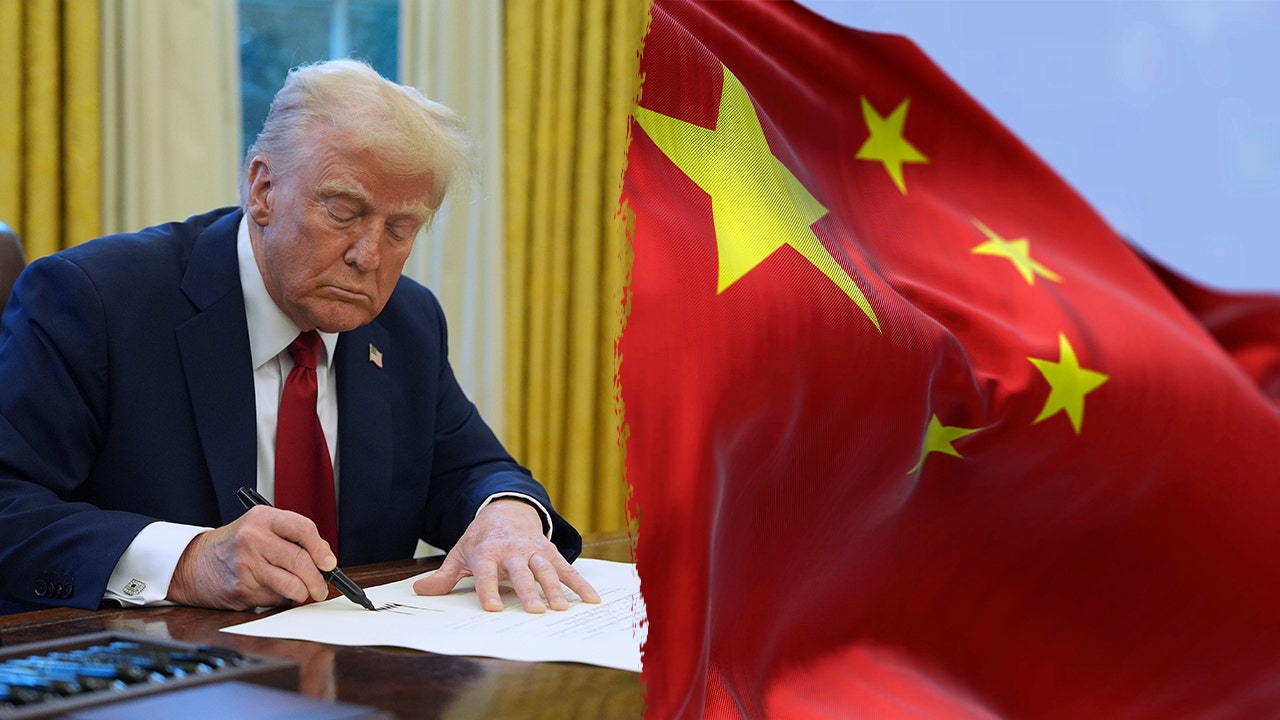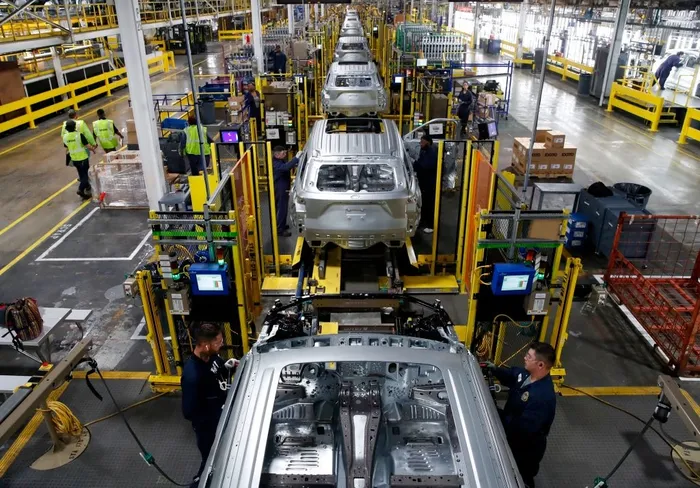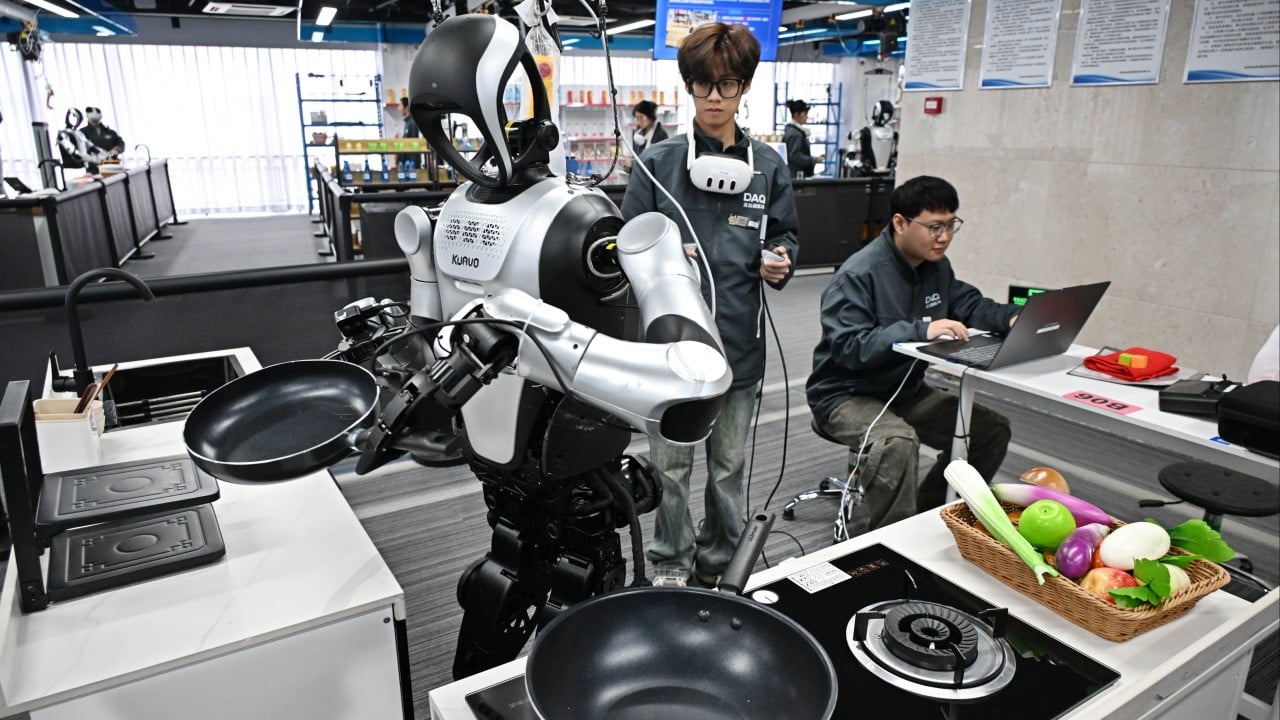
Western policymakers are currently obsessed with a single word. Subsidies. They point to state-backed credit and cheap land as the primary reasons why Chinese manufacturers are currently dismantling global market shares in everything from electric vehicles to high-end medical imaging equipment. This obsession is a tactical mistake. By focusing almost exclusively on the Chinese government’s checkbook, global competitors are ignoring the far more terrifying reality of China’s industrial dominance. The competitive edge isn't just bought. It is built through an unprecedented fusion of supply chain hyper-integration, brutal internal competition, and a massive surplus of engineering talent that works at speeds the West has largely forgotten.
If you want to understand why a Chinese EV can be profitable at half the price of a European equivalent, you have to look past the provincial grants. You have to look at the "four-hour circle." In industrial hubs like the Yangtze River Delta, a manufacturer can source every single component—from semiconductors to seat foam—within a four-hour drive. This isn't just convenient. It eliminates the logistical friction that kills Western startups. When your supplier is a thirty-minute drive away, the pace of prototyping shifts from months to days. This physical density creates a feedback loop where innovation happens on the factory floor rather than in a distant R&D lab.
The Darwinian Pressure Cooker
While Washington and Brussels view Chinese firms as "national champions" protected by the state, the internal reality is a bloodbath. The domestic Chinese market is perhaps the most cutthroat commercial environment on earth. For every BYD that makes international headlines, there are dozens of failed companies that were chewed up and spat out by the domestic market.
This internal competition creates a "survivor bias" on the global stage. The Chinese companies that eventually reach European or American shores aren't coddled monopolies. They are the battle-hardened victors of price wars and innovation races that would bankrupt most Western mid-caps in a single quarter. They have optimized their margins to a degree that seems impossible to those accustomed to the overhead costs of Silicon Valley or Stuttgart.
Consider the "996" culture. While the grueling schedule of 9 a.m. to 9 p.m., six days a week, has faced domestic pushback, the underlying work ethic remains a structural advantage. When a Chinese firm decides to pivot a product line, they don't wait for the next quarterly planning session. They do it over a weekend. This velocity is a form of capital in itself. It allows these firms to fail fast, learn faster, and iterate until the product is undeniable.
Engineering Surplus and the Talent Arbitrage
There is a persistent myth that China’s advantage is "cheap labor." That hasn't been true for a decade. Blue-collar wages in coastal China have soared, often surpassing those in parts of Eastern Europe. The real advantage now lies in "cheap intellect."
China is currently graduating millions of engineers every year. While a US startup might struggle to hire five specialized thermal management engineers without paying $300,000 each plus equity, a Chinese firm in Shenzhen can hire fifty for a fraction of the cost. This allows Chinese manufacturers to throw "human clouds" at technical problems.
If a battery cooling system isn't efficient enough, they don't just run simulations. They assign twenty different teams to build twenty different physical prototypes simultaneously. They brute-force innovation. This massive surplus of technical talent allows for a level of granular optimization that Western firms, constrained by high talent costs, simply cannot justify. They aren't just outworking the competition; they are out-iterating them by an order of magnitude.
The Vertical Integration Trap
Western companies spent thirty years "leaning out" their operations. They outsourced everything. They turned into brand management firms that happen to sell hardware. China did the opposite.
Companies like BYD or Xiaomi are aggressively vertical. BYD started as a battery company. They didn't just decide to make cars; they decided to make the batteries, the motors, the power electronics, and even the ships that carry the cars across the ocean. When you own the entire stack, you don't pay a supplier's margin at every step. You also don't get stuck in a queue when a specific chip or raw material becomes scarce.
This verticality is a shield against the very sanctions and trade barriers currently being erected. By the time a tariff is applied to a finished Chinese good, the manufacturer has often already found three different ways to shave that cost off the production process through internal efficiencies that an outsourced Western brand couldn't even identify.
The Infrastructure of Speed
The Chinese state doesn't just give money to companies. It builds the physical environment that makes those companies efficient. This is the "hidden" subsidy that is rarely captured in trade complaints.
When a new industrial park is designated, the high-speed rail, the 5G towers, the specialized power grids, and the worker housing are often completed before the first factory foundation is poured. This reduces the "time to market" for new ventures to a degree that is incomprehensible in the West, where a single environmental impact study for a new warehouse can take three years.
This physical infrastructure functions as a giant hardware accelerator. It lowers the barrier to entry for new players and forces incumbents to stay lean. In the West, geography is an obstacle. In China’s industrial clusters, geography is an accelerator.
Beyond the Carbon Copy
For years, the Western narrative was that China could only copy. That era ended while we were still arguing about intellectual property theft. Today, in sectors like commercial drones, ultra-high-voltage power transmission, and LFP battery chemistry, the West is the one playing catch-up.
This is not a result of "stealing" technology. You cannot steal the lead in LFP batteries when the West largely abandoned the tech years ago as "low-end." Chinese firms stayed with it, poured thousands of engineers into the chemistry, and optimized it until it became the global standard for affordable EVs. They didn't steal the future; they out-hustled everyone else to get there first.
The current trade wars are an attempt to use 20th-century tools—tariffs and quotas—to fight a 21st-century industrial logic. If a competitor can design, prototype, and mass-produce a new product in the time it takes a Western board of directors to approve a budget for a feasibility study, no amount of 10% or 25% tariffs will bridge that gap forever.
The real threat isn't that China is breaking the rules of global trade. It's that they've changed the speed of the game entirely. To compete, the West needs to stop looking at the Chinese government's bank account and start looking at its own sclerotic planning cycles, its fear of vertical integration, and its catastrophic shortage of mid-level technical talent.
Western leaders are currently preparing for a trade war. They should be preparing for an industrial revolution that they are currently losing not because of a lack of money, but because of a lack of velocity. The advantage isn't just in the wallet. It's in the walls of the factories and the minds of the millions of engineers who view a fourteen-hour workday as the baseline for survival. If you want to beat them, you have to move as fast as they do. And right now, the West is standing still.