The sun over the Sinjar Mountains does not provide warmth; it provides exposure. In August 2014, that sun became a witness to a clock rewinding a thousand years. It watched as a modern community was stripped of its phones, its cars, and its dignity, forced into a primitive struggle for breath.
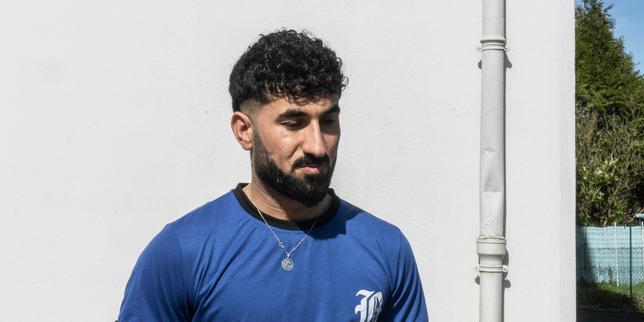
Khalaf remembers the sound of the tires first. It wasn't the roar of an organized army. It was the frantic, uneven rattling of pickup trucks speeding across the dry earth, kicking up a veil of grit that tasted like copper. He stood at the edge of his village, a place where the Yazidi faith had been whispered into the soil for generations, and realized that the world he knew had ended between one breath and the next.
The men in the trucks didn't come to negotiate. They came to harvest.
The Geography of a Nightmare
To understand what happened in Northern Iraq, you have to understand the isolation. The Yazidis are not merely a religious minority; they are a living piece of ancient history, practitioners of a faith that pre-dates the major monotheisms of the region. For the militants of the Islamic State, this ancient lineage was a target.
When the trucks stopped, the air went still.
The orders were delivered with a terrifying, bureaucratic calm. "Line up. One by one. We are going to kill everyone." This wasn't the heat of battle. It was an assembly line. Khalaf watched as his neighbors, men he had shared tea with only hours prior, were ushered into rows. There is a specific kind of silence that falls when hundreds of people realize there is no escape. It isn't a quiet silence. It is a heavy, pressurized thing that rings in the ears.
The militants didn't see people. They saw obstacles to a purified map. Logic dictates that such hatred requires a long gestation, but for the survivors, the transition from "neighbor" to "executioner" felt instantaneous. One moment, life was about the harvest and the heat; the next, it was about the cold weight of a rifle barrel.
The Choice That Wasn't
We often talk about "survivor’s guilt" as an abstract psychological concept found in textbooks. For those on the mountain, it was a physical weight.
As the shooting began, Khalaf did something the human brain isn't wired to do: he became a ghost while he was still alive. He fell before the bullet reached him, buried under the sudden, cooling weight of his friends. He lay there for hours. He learned the smell of iron and the sound of flies. He learned that the earth does not open up to swallow the wicked; it simply stays still and waits for the blood to soak in.
While the world's news cycles were focused on geopolitical shifts and oil prices, tens of thousands of Yazidis were retreating up the slopes of Mount Sinjar. They were trapped between a massacre below and a slow death by dehydration above.
Consider the math of a siege. A human can survive three minutes without air, three days without water, and three weeks without food. On Sinjar, the three-day mark arrived quickly. Mothers were forced to choose which child to give the last drop of moisture—often nothing more than a damp rag wiped across a cracked lip. The mountain, traditionally a place of sanctuary for the Yazidi people, had become a stone altar.
The Invisible Stakes of Memory
Why does this story matter now, years after the black flags were lowered? Because a genocide doesn't end when the shooting stops. It ends when the last person who remembers the names of the dead stops speaking.
The Yazidi genocide was a systematic attempt to erase a culture's DNA. When the men were killed and the women were taken into "sabaya"—a polite word the militants used for systemic, ritualized rape—the goal was to ensure that a Yazidi future could never exist. It was an attack on the very concept of lineage.
We like to believe that modern technology and global connectivity act as a shield against such medieval brutality. We were wrong. The militants used social media to sell human beings. They used modern logistics to coordinate mass graves. The "tapestry" of human progress we often boast about proved to be incredibly easy to shred.
The reality of the situation is often buried under statistics. We hear "5,000 killed" or "3,000 kidnapped" and the numbers become a blur. But numbers don't scream. Numbers don't feel the grit of the mountain sand in their wounds. Khalaf’s story reminds us that every "1" in those thousands is a world. It is a man who liked his coffee sweet, a woman who knew the best songs for a wedding, a child who was afraid of the dark.
The Long Walk Back
The rescue eventually came, a mix of Kurdish fighters and international airstrikes, but for the survivors, the "return" was to a home that no longer existed. Their houses were booby-trapped with IEDs. Their wells were poisoned. Their shrines were rubble.
But the most profound damage was internal.
How do you look at a sky that didn't help you? How do you speak a language that was used to command your execution? The Yazidi people have spent the last decade trying to answer these questions. They are not just seeking justice in a courtroom; they are seeking the right to exist in the collective memory of the world.
Khalaf survived the pit, the mountain, and the hunger. He lives now in a prefab container in a displacement camp, a "temporary" solution that has lasted years. He keeps a small bag of soil from his village under his bed. It is gray and unremarkable to anyone else, but to him, it is the only piece of the world that hasn't been corrupted.
The world moved on to new crises, new headlines, and new horrors. The trucks in Sinjar are rusted out now, and the tall grass is starting to cover the places where the lines were formed. But beneath that grass, the earth remains changed.
The wind still moves through the crags of the mountain, carrying the echoes of a people who were told to stand one by one so the world could forget them. We are the only thing standing between that silence and the truth.
Khalaf still wakes up before dawn, long before the heat of the Iraqi sun can find him. He sits in the doorway of his container and watches the horizon, waiting for a morning where he doesn't have to check the dust for the tracks of pickup trucks.

:strip_icc()/pic2513216.jpg)