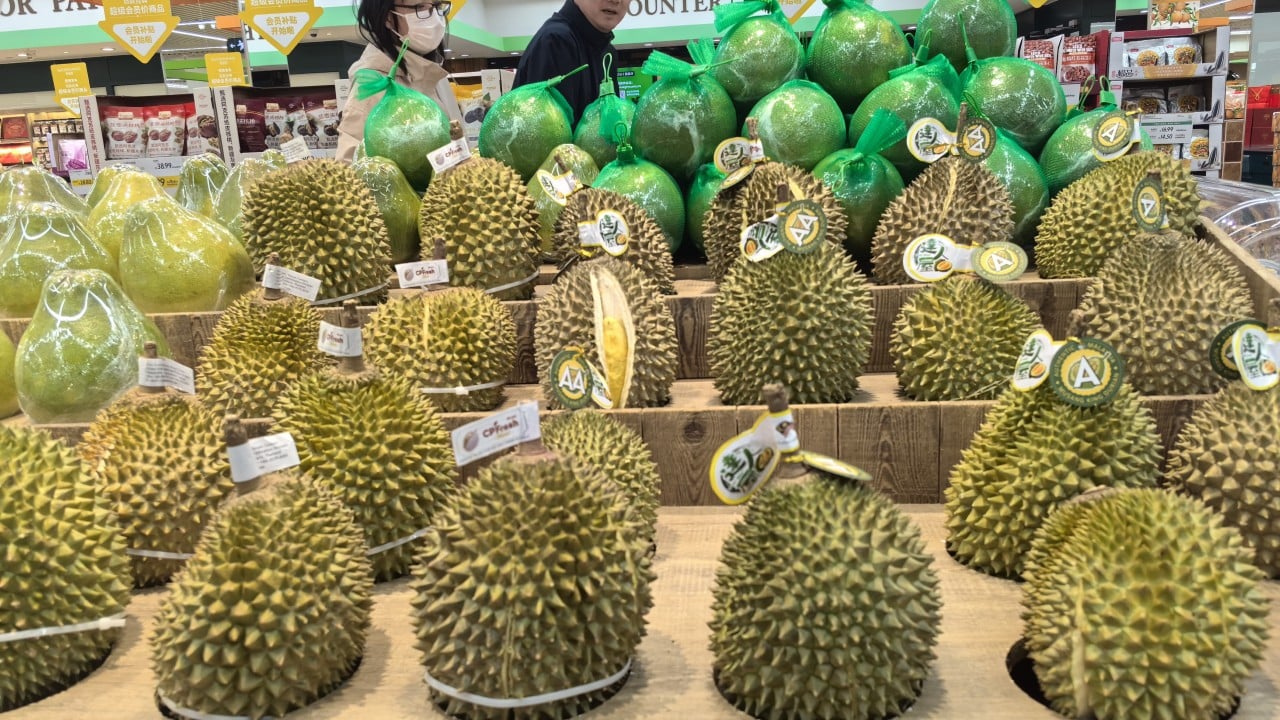
The headlines are predictable, panicked, and wrong. "Survival mode." "Trade hit by war." "Early glut." If you listen to the mainstream financial press, the Malaysian durian industry is staring into an abyss because of a slightly early harvest and some geopolitical friction in the Middle East. It is a classic case of short-termism masquerading as market analysis.
The "crisis" isn't a supply problem. It is a structural failure of imagination. For years, the industry has pampered a fragile export model that treats the King of Fruits like a bulk commodity rather than the Veblen good it actually is. If a few weeks of early ripening and a shipping lane disruption in the Red Sea can bring your industry to its knees, you don't have a business; you have a subsidized hobby.
The Myth of the Over-Supplied Market
The term "glut" is the first casualty of logic here. In any other industry, an abundance of high-quality product is called an opportunity. In the Malaysian durian trade, it is treated like a natural disaster. Why? Because the supply chain is a rigid, aging pipe that can only handle a specific flow. When the fruit drops early due to weather shifts, the pipe bursts.
We are told that prices are crashing because there is too much Musang King. That is a lie. Prices are dipping because the middlemen—the "collectors" who sit between the farm gate and the export terminal—refuse to modernize their cold-chain logistics. They rely on "just-in-time" shipping for a product that is notoriously volatile. When the fruit arrives early, they don't have the cryogenic freezing capacity to buffer the surge.
Instead of investing in liquid nitrogen flash-freezing (IQF) technology that could preserve the fruit for two years without losing a hint of its sulfuric complexity, they dump the stock. They blame the "glut" to justify paying farmers a pittance. I have seen exporters walk away from 40% of their potential revenue simply because they lacked the foresight to own their storage. If you can't hold your product for six months, you aren't a player in the global food market; you're a day trader in perishables.
Geopolitics is a Convenient Scapegoat
The narrative that the Iran-Israel tensions or the Red Sea crisis is "hitting the export trade" is a convenient distraction. Let’s look at the numbers. While the Middle East is an emerging market, it represents a fraction of the total export volume compared to China, Singapore, and Hong Kong.
Blaming a distant war for a drop in domestic farm-gate prices is a masterful piece of PR by the big distributors. It allows them to suppress the prices paid to local growers by citing "global instability." It is the same playbook used by oil companies and grain cartels. If a ship can’t go through the Suez, you pivot. You air-freight. You focus on the secondary processing market. You don't tell the farmer in Raub that his Musang King is worth half because of a drone strike 5,000 miles away.
The China Obsession is a Trap
The Malaysian durian industry has a single-point-of-failure: China. The obsession with gaining fresh-fruit access to the Chinese market has blinded stakeholders to the risks of a mono-buyer system.
Thailand has dominated the fresh durian market in China for decades with the Monthong variety. Malaysia’s edge was supposed to be quality—the tree-ripened Musang King and Black Thorn. But by chasing the Chinese consumer with such singular focus, Malaysia has ignored the domestic value-added sector and the high-end European and North American markets.
Relying on China means you are subject to their phytosanitary whims and their economic cooling. When China sneezes, the Malaysian durian farmer catches pneumonia. The "survival mode" currently being touted is the result of putting all the thorny fruit in one basket.
The Real Value is in the Pulp, Not the Husk
We need to stop talking about durian as a fruit and start talking about it as an industrial ingredient. The real money isn't in shipping a heavy, spiky, smelly ball of carbon across the ocean. The real money is in the derivative markets.
- Dehydrated Powders: For the global confectionery industry.
- Purees: High-brix content pulp for the global bakery and ice cream trade.
- Nutraceuticals: Extracting the bio-active compounds from the husk and seed.
Currently, we waste nearly 60% of the durian's weight—the husk and the seed. A "survival mode" industry complains about the cost of shipping husks. A thriving industry turns those husks into activated carbon or cellulose. I’ve watched companies in the palm oil sector make this transition; the durian sector is still stuck in the 1980s.
The Inefficiency of the Smallholder
Here is a hard truth that politicians hate to admit: The fragmented nature of Malaysian durian farming is a liability. Thousands of smallholders with two-acre plots cannot achieve the economies of scale required to compete with corporate plantations in Vietnam or Thailand.
When a "glut" happens, the smallholder is the first to suffer because they have zero bargaining power. They are price-takers. The solution isn't more government subsidies or "survival" grants. The solution is aggressive consolidation or the formation of hardcore cooperatives that own the entire value chain—from the tree to the retail shelf in Shanghai.
If you don't own the freezer, you don't own the profit.
Stop Trying to "Save" the Trade (Fix the Friction)
The current panic suggests that the government needs to step in and find new markets. That is the wrong move. The markets exist. The demand for Musang King in places like Tokyo, New York, and London is massive and undersupplied.
The problem is friction. The logistics of moving a high-odor, short-shelf-life product are immense. Instead of subsidizing farmers, the focus should be on:
- Dismantling the Middleman Cartel: Create digital exchanges where farmers can sell directly to international buyers, bypassing the local "collectors" who manipulate price data.
- Logistics Infrastructure: Cold-chain hubs located in the heart of Pahang and Johor, not just near the ports.
- Branding Beyond Variety: Stop selling "Musang King" and start selling "Pahang Gold" with geographic indication (GI) protections, similar to Champagne or Wagyu.
The Risk of the Contrarian Path
The downside to moving away from the "fresh fruit export" model is the high upfront capital cost. Building a world-class processing plant isn't cheap. It requires a move away from the "easy money" of selling crates of fruit at the roadside. It requires a shift in mindset from agriculture to manufacturing.
But staying the course is a slow-motion suicide. The weather will only get more unpredictable. Geopolitical tensions are the new normal. If your business model can't survive a rainy month or a closed shipping lane, you are already obsolete.
The "early glut" of 2024 is not a crisis. It is a stress test. And the Malaysian durian industry is failing it because it is addicted to the old ways of doing business. The farmers who will survive and thrive are those who stop looking at the sky for the weather and start looking at their balance sheets for the lack of processing power.
Stop whining about the war. Stop crying about the rain. Build a freezer. Build a brand. Or get out of the orchard.